 Malaysia
 Singapore
 Thailand

If there’s one thing we can’t get away from in Singapore, it’s the oppressive humidity. Clothes dry slowly, especially in the rainy months, and we find mould growing on walls and on our favourite outfits. Sure, you can let the air-conditioner run all day but that’s going to be terrible for your electricity bill. A simple and much cheaper alternative is to choose a dehumidifier that suits Singapore’s weather.
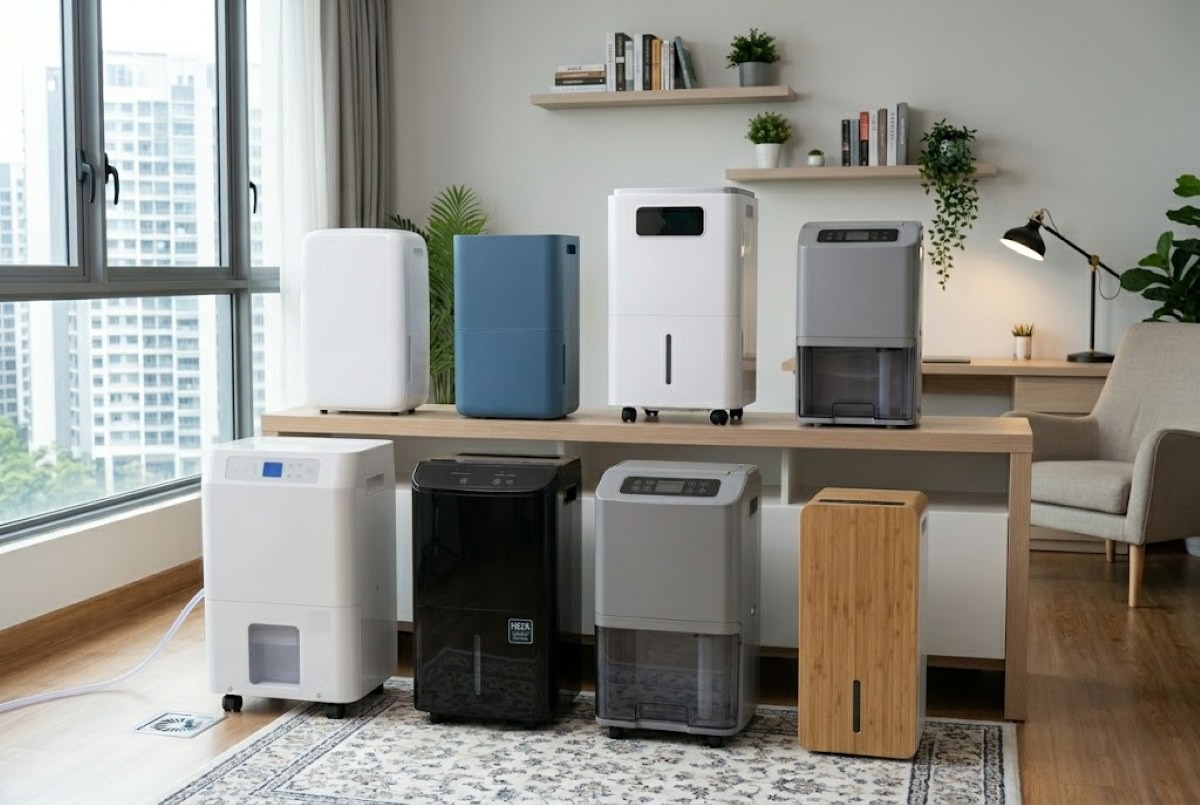
Choosing an effective dehumidifier isn’t as simple as selecting the most expensive model — what works well for one home or room may be ineffective in another. In this guide, we show you how to look past the marketing terms and flashy ads to find the best dehumidifier for specific rooms or situations. Use it to buy the right dehumidifier for the right price.
The right dehumidifier matters (more than you think)
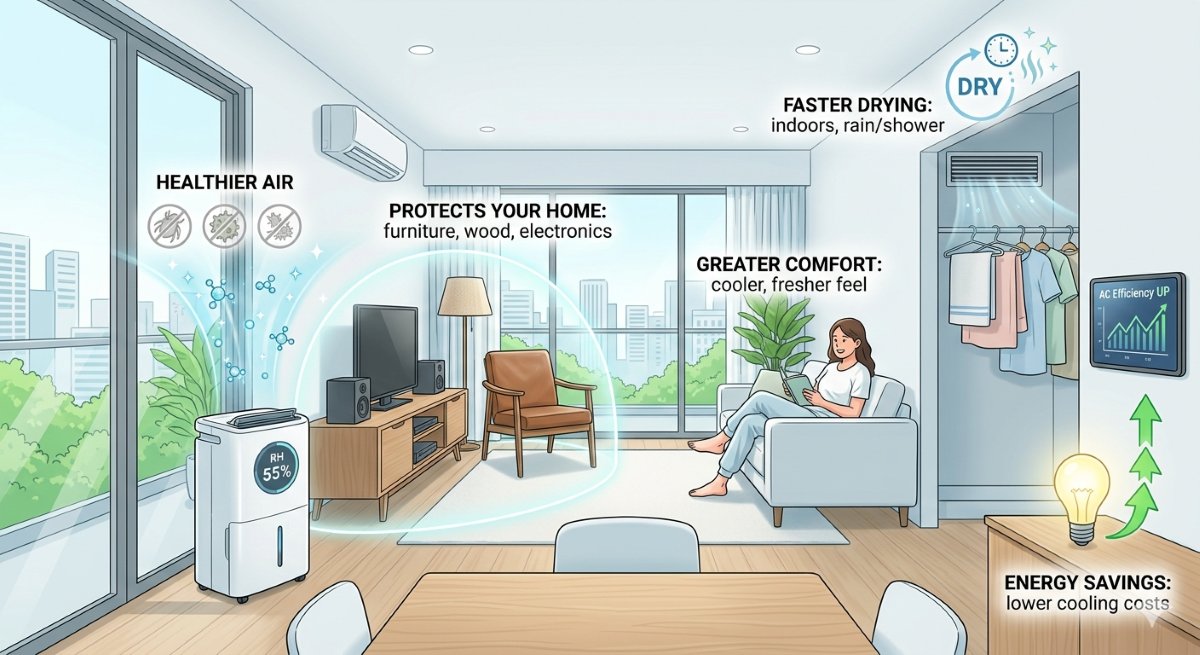
A good dehumidifier comes with benefits that go beyond simply making a room feel less damp:
- Healthier air: By reducing excess humidity, dehumidifiers discourage the growth of mould, mildew and dust mites, which are common triggers for allergies and respiratory problems.
- Protects your home: High humidity can damage furniture, wooden flooring, electronics, clothing and even walls over time. A dehumidifier helps preserve your belongings and prevent costly repairs and replacements.
- Greater comfort: Humid air often feels hotter and stickier than it actually is. Lower humidity can make your home feel cooler, fresher and more comfortable throughout the day.
- Faster drying: Whether it’s laundry drying indoors when it’s raining or damp towels after a shower, a dehumidifier can significantly speed up drying times while reducing musty odours.
- Energy savings: Drier air allows your air conditioner to work more efficiently, potentially lowering cooling costs and reducing overall energy consumption.
Investing in a good dehumidifier can give you a healthier living environment, protect your home and belongings, lower energy bills and create a more comfortable space all year-round.
5 things to know before buying a dehumidifier
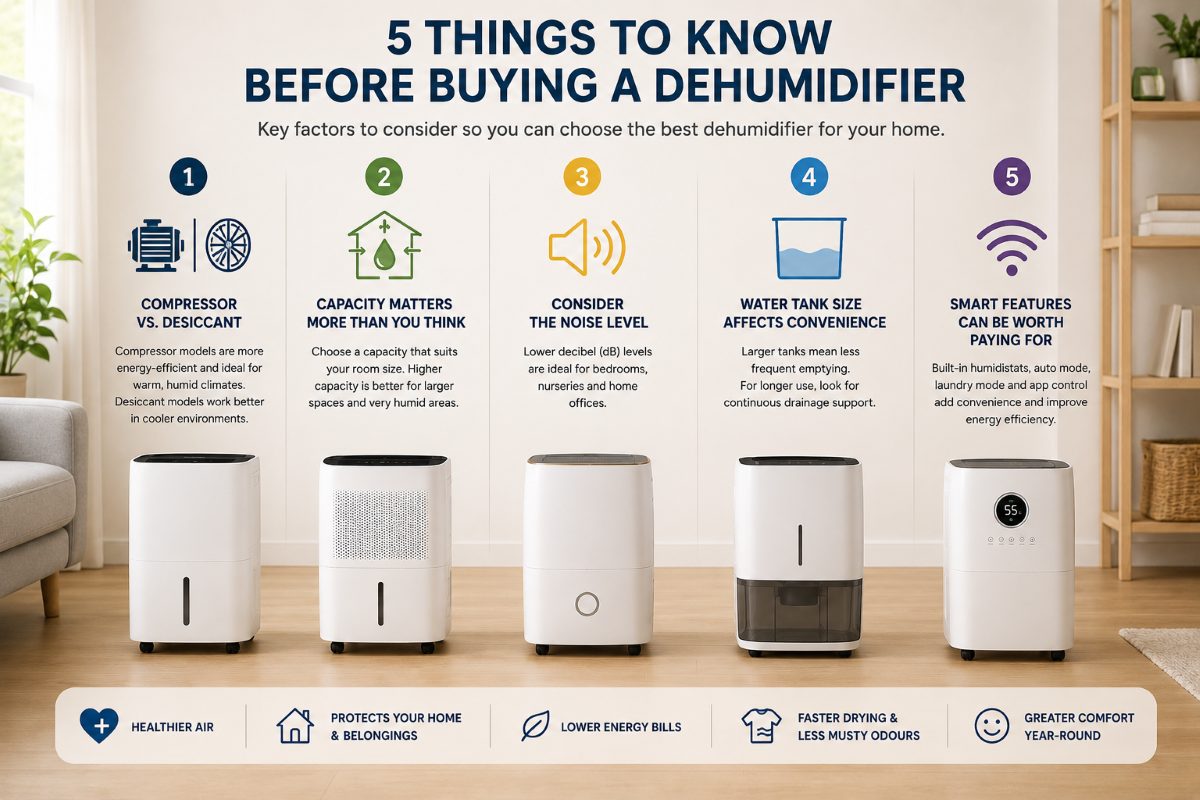
Here are 5 factors that will help you narrow down the best dehumidifier for your home. I use this list myself before buying a dehumidifier.
1. There are compressor dehumidifiers and desiccant dehumidifiers
Most dehumidifiers fall into one of these 2 categories. Compressor models are generally more energy-efficient and work best in Singapore’s hot and humid climate. Desiccants perform better in cooler environments and are often quieter, but they usually consume more electricity.
-
Compressor: Works like a mini air conditioner by drawing air over a cold coil to condense moisture into a tank.
-
Best for: Warm, humid or tropical areas. They offer the lowest operational costs and highest efficiency in these zones.
-
Disadvantage: Can be noisy as it has both a mechanical fan a compressor that hums when working.
-
-
Desiccant: Uses a chemical absorbent that soaks up moisture like a sponge, which is then heated to condense water.
-
Best for: Cooler weather.
-
Disadvantage: They exhaust warm air, which can raise room temperature and consume significantly more electricity.
-
2. Capacity depends on location
I use a compact model for my bedroom and a larger one for my living room, which I sometimes wheel into my laundry area. If you live in a larger home, you may require a high-capacity dehumidifier even in your bedroom. Manufacturers rate capacity by the volume of moisture the unit can remove per day.
3. Consider the noise level
If the dehumidifier will be running in a bedroom, nursery or home office, noise can become a major factor. Some models operate at under 40dB, while more powerful units can be noticeably louder, especially when running at maximum speed.
4. Water tank size is important
I found this out the hard way. My first dehumidifier was a small unit and would constantly stop working during the day when its tank was filled. That meant my bedroom would be just as humid when I came home in the evening. I returned that model and got one with continuous drainage, but had to run the extraction hose into my ensuite. If you don’t have an attached washroom, you may need a very long hose…
5. Smart features can be worth paying for
I always choose dehumidifiers that have features such as built-in humidistats, auto mode, laundry-drying mode and app control. Remember that a dehumidifier which allows you to set a desired humidity level is usually more convenient and energy-efficient than one that runs continuously.
Hopefully, this simple list of 5 criteria will help you understand what you need to look for before you buy a dehumidifier so you don’t spend too much for the same result.
Simple steps to choosing the right dehumidifier in Singapore
Now that you have your basic criteria, here are the specifics of how to choose the best dehumidifier. It is based on all the information above, broken down into 4 simple steps.
1. Choose the type of dehumidifier
Most people look at room size as their first point of reference when choosing a dehumidifier. However, you should begin by choosing the technology — compressor or desiccant — you want powering the device first. This will dictate the dehumidifier’s efficiency, noise level and impact on room temperature.
2. Capacity & room size
Capacity and coverage ensure the unit can actually handle the volume of moisture without running up your power bill. Measure the room you want to dehumidify to get the coverage area. Then determine the extraction capacity and air changes per hour that will suit that room best.
-
Coverage area: The maximum floor space the dehumidifier can manage. Pair the unit with what you need; low-capacity models in oversized spaces will run continuously, overworking the motor and spiking electricity bills, while expensive oversized models are wasted in a tiny condo bedroom.
-
Extraction capacity: The volume of moisture (measured in Litres per Day) a dehumidifier can extract every 24 hours. Different zones demand varied capacities, e.g., a damp laundry yard or open living space requires a higher extraction rate than a sealed and air-conditioned bedroom.
-
ACH (Air Changes per Hour): This number represents how many times per hour the dehumidifier can process and cycle the total volume of air in a specific room. For standard maintenance, an ACH of 3 to 4 is sufficient for a regular bedroom or living area, while high-moisture or mould-prone spaces, such as a laundry yard, are better served by an ACH of 5 to 6.
| Room size | Target ACH | Recommended Capacity (L/day) | Typical Use Case |
| Small (Up to 20m²) | 3 – 4 | 10L – 12L | Standard bedrooms, study rooms, walk-in wardrobes. |
| Medium (20 to 40m²) | 4 – 5 | 16L – 20L | Master bedrooms, small living rooms, studio apartments. |
| Large (40m²)/Damp space |
5 – 6 | 25L – 30L+ | Open-plan living areas, indoor laundry drying zones, high-mould areas. |
3. Hardware & Operational Features
-
Humidity control (humidistat): Adjustable settings let you control the room’s relative humidity (RH). Look for models with built-in hygrometers that monitor humidity in real time and automatically turn off the compressor once your target level is met.
-
Drainage system
-
Removable reservoir: Collected water is kept in an internal tank. Look for a large tank size equipped with an auto-shutoff float switch to prevent overflows.
-
Continuous drainage: For high-capacity or unattended use, look for a dehumidifier that drains directly into a bathroom or balcony floor trap.
-
-
Noise level: For quiet environments like bedrooms or studies, choose a dehumidifier rated under 45 dB.
-
Size and portability: If the dehumidifier is meant to be shared across different rooms in the home, a small physical footprint, integrated carrying handle and 360° caster wheels will be very helpful.
-
Energy efficiency: Look for high (4- or 5-tick) ratings to ensure optimal moisture removal at a reasonable operating cost.
4. Smart Features
Look for a dehumidifier that comes with premium functionality for convenience, automation and overall utility.
-
Laundry mode: Pushes the machine to maximum fan speed and its lowest humidity setting, directing high-velocity dry air upward to dry indoor clothes rapidly without musty odours.
-
App integration & smart features: Wi-Fi connectivity allows for remote monitoring, scheduling and smart home automation.
-
Timers and auto-restart: A 24-hour programmable timer saves energy, while auto-restart ensures the unit retains its previous settings and powers back on automatically after a brief electricity trip.
-
Air purification: Units that include dedicated air filters (like HEPA or activated carbon) to clean dust, allergens and odours from the air while simultaneously removing moisture.
How to choose a dehumidifier for your home or office
Start by matching the dehumidifier to your environment rather than your budget. For most homes in Singapore, a compressor dehumidifier offers the best balance of moisture removal and energy efficiency, while desiccant models are better suited to cooler spaces where quieter operation is a priority. Capacity should be matched to the room size, with compact units for bedrooms and studies, medium-capacity models for living rooms and studio apartments, and larger units for open-plan spaces, laundry-drying areas or persistently damp rooms.
Beyond moisture removal, pay attention to day-to-day usability. A built-in humidistat, low noise level, continuous drainage and good energy efficiency will often have a greater impact on long-term satisfaction than extra smart features. The right choice is ultimately the one that fits your room size, humidity levels and usage habits without paying for unnecessary capacity or functions.
People also read: