 Malaysia
 Singapore
 Thailand

Do you love marine animals and plan to visit the Singapore Oceanarium? With its low-light ambience simulating the undersea world, I feel as though I’ve been transported to another planet. I always lose track of time, especially since Singapore Oceanarium has 22 immersive zones spread across 6 areas. It houses over 40,000 marine creatures, so there’s plenty to explore.
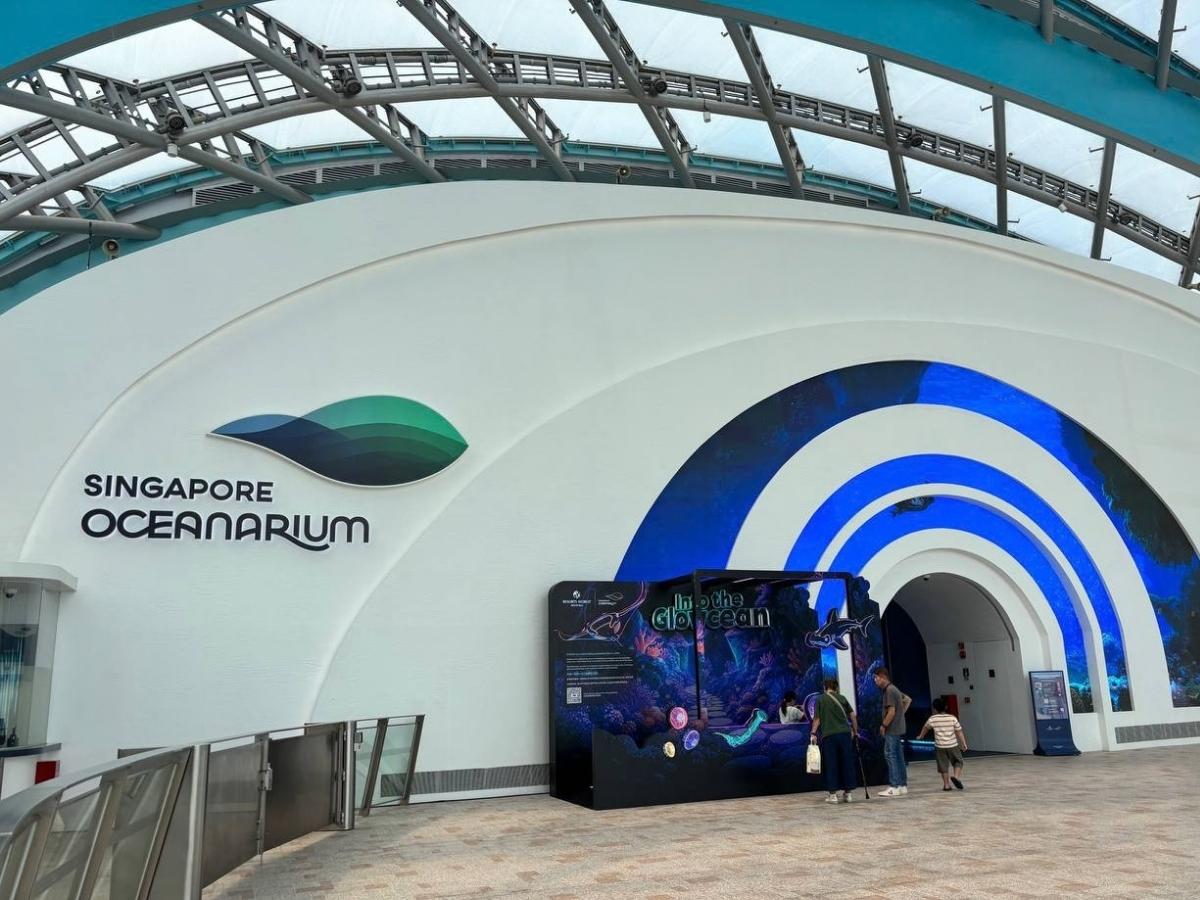
To help you not drown in the vast underwater world that it is, I’ve put together a practical guide covering everything from ticket prices to exhibits you should prioritise and more.
How to get tickets to Singapore Oceanarium
Of course, before heading to the Oceanarium, you’ll have to secure your tickets first. The tickets are available on the Singapore Oceanarium website. One-Day tickets cost S$55 for adults, while tickets for seniors aged 60 and above cost S$43. Tickets for children aged 4 to 12 cost S$43.
If you’re busy and can only make it from 4pm onwards, fear not — there is an Evening Entry ticket. It even comes with a S$5 retail voucher and a S$5 meal voucher. Evening Entry Tickets are S$55 each. Do note that this ticket is only available on selected days, so double-check on their website if it’s available for the day you wish to visit. For those who love a good deal, there are also exclusive limited-time promotions available. To enhance your visit, you may also opt for optional add-ons and immersive programmes.
Tickets and details are available on the Singapore Oceanarium website HERE
How to get to Singapore Oceanarium
Singapore Oceanarium is located at Resorts World Sentosa. The nearest MRT station to Resorts World Sentosa is Harbourfront (NE1/CC29). Head to Level 3, Lobby L of VivoCity and board the Sentosa Express for S$4. Alight at the Resorts World Station to reach Singapore Oceanarium.
If you want to travel by bus, take bus RWS8 from HarbourFront MRT Exit C. The inbound fare for RWS8 is S$1. Bus 123 also goes directly to Resorts World Sentosa. For both buses, alight at the Resorts World Sentosa B1 Transport Hub bus stop.
If you’re feeling athletic, you can also reach Resorts World Sentosa on foot. Simply alight at HarbourFront (NE1/CC29) MRT station, walk through VivoCity Lobby F on Level 1, and cross the 670-metre Sentosa Boardwalk.
What to do at the Singapore Oceanarium
With 22 zones in 6 different areas, I’ll highlight 10 zones I think you should prioritise during your visit. The highlighted exhibits are a must-visit because they offer unique experiences and a chance to view the marine life up close in interesting habitats.
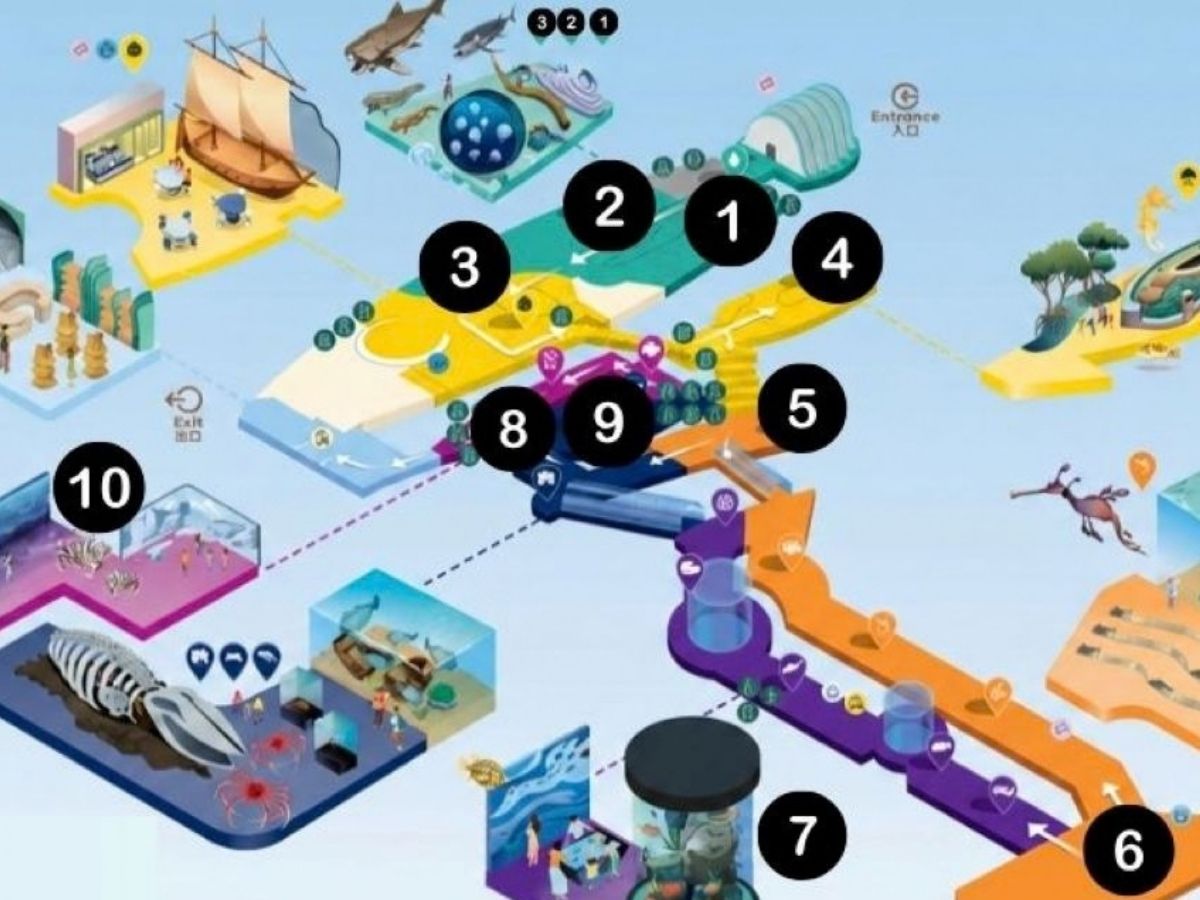
- Ocean Wonders
- Ancient Waters
- Conquering Land
- Singapore’s Coast
- Shark Seas
- Open Ocean
- Benthos
- Life in the Deep
- Whale Fall and Seamount
- A New Horizon
| Exhibit / Experience | Animal | Key highlight |
|---|---|---|
| Ocean Wonders | Moon jellies, Atlantic sea nettles, fried egg sea jellies | One of the world’s largest Kreisel habitats; 360-degree cylindrical habitats |
| Ancient Waters | Dunkleosteus, Australian lungfish, arapaima, horseshoe crab, epaulette shark | Fossil displays, interactive discovery points and immersive digital experiences |
| Conquering Land | Axolotls, poison dart frogs, Eryops, Dipocaulus | Pepper’s Ghost digital displays exploring the transition from water to land |
| Singapore’s Coast | Archerfish, barred mudskipper, cleaner shrimp, knobbly sea star, spotted seahorse | Discovery pool, projection mapping and hands-on cleaner shrimp experience |
| Shark Seas | Sand tiger shark, scalloped hammerhead, sandbar shark | Shark Tunnel and Dive Feeding Session on Tue and Thu at 2.30pm |
| Open Ocean | Manta rays, spotted eagle rays, zebra sharks | 36m-wide viewing panel, Dive Feeding Sessions and Open Ocean Discovery Presentation |
| Benthos | Green morays, Tasmanian giant crabs, Banggai cardinalfish, yellow tang | Art-quarium interactive touch table for creating digital fish |
| Life in the Deep | Deep-sea creatures | Preserved specimens, bioluminescent projections and VR experience |
| Whale Fall and Seamount | Japanese isopod, deep-sea akaza prawn, Australian ghostshark | Life-sized whale skeleton, immersive projection show and hydrothermal vents |
| A New Horizon | Digital marine animals | Ocean’s Future climate visuals and Hallway of Hope interactive experience |
1. Start at Ocean Wonders
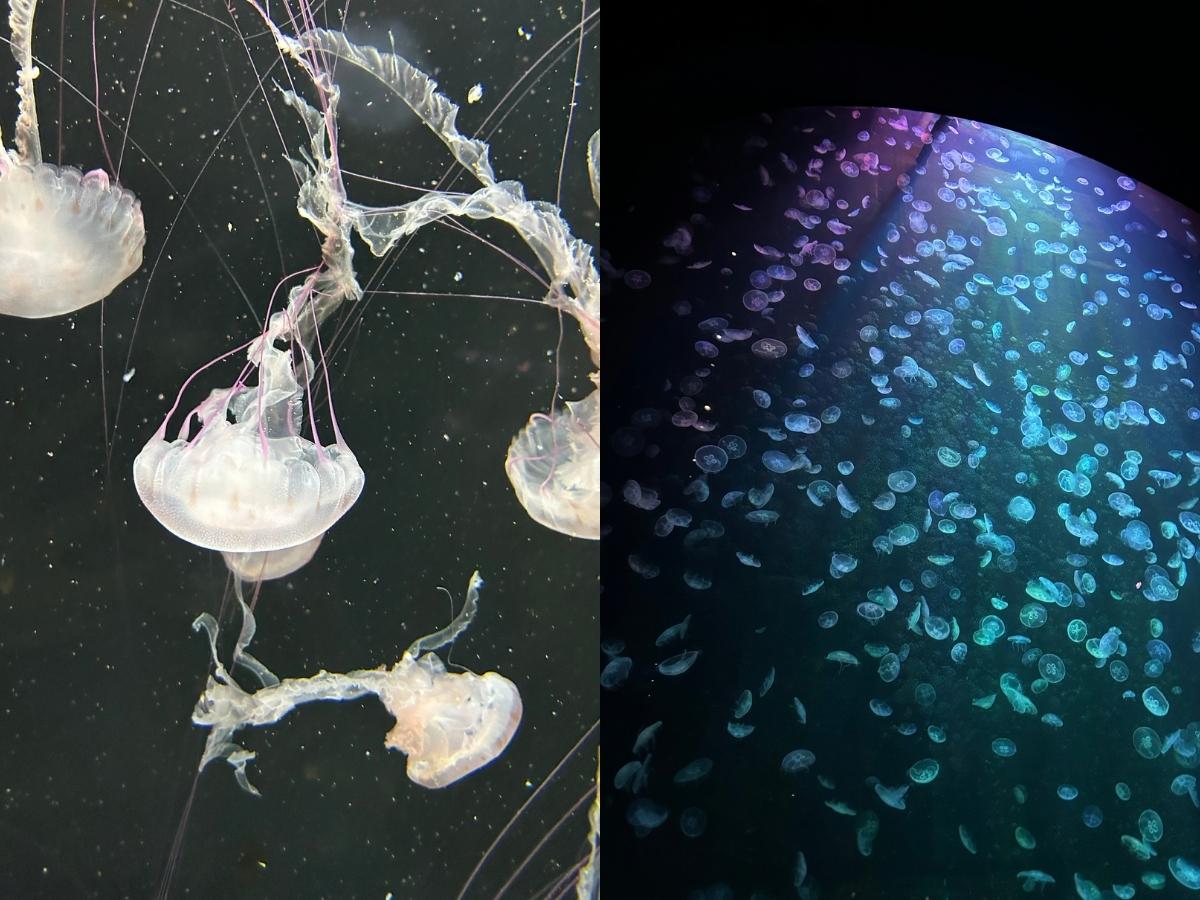
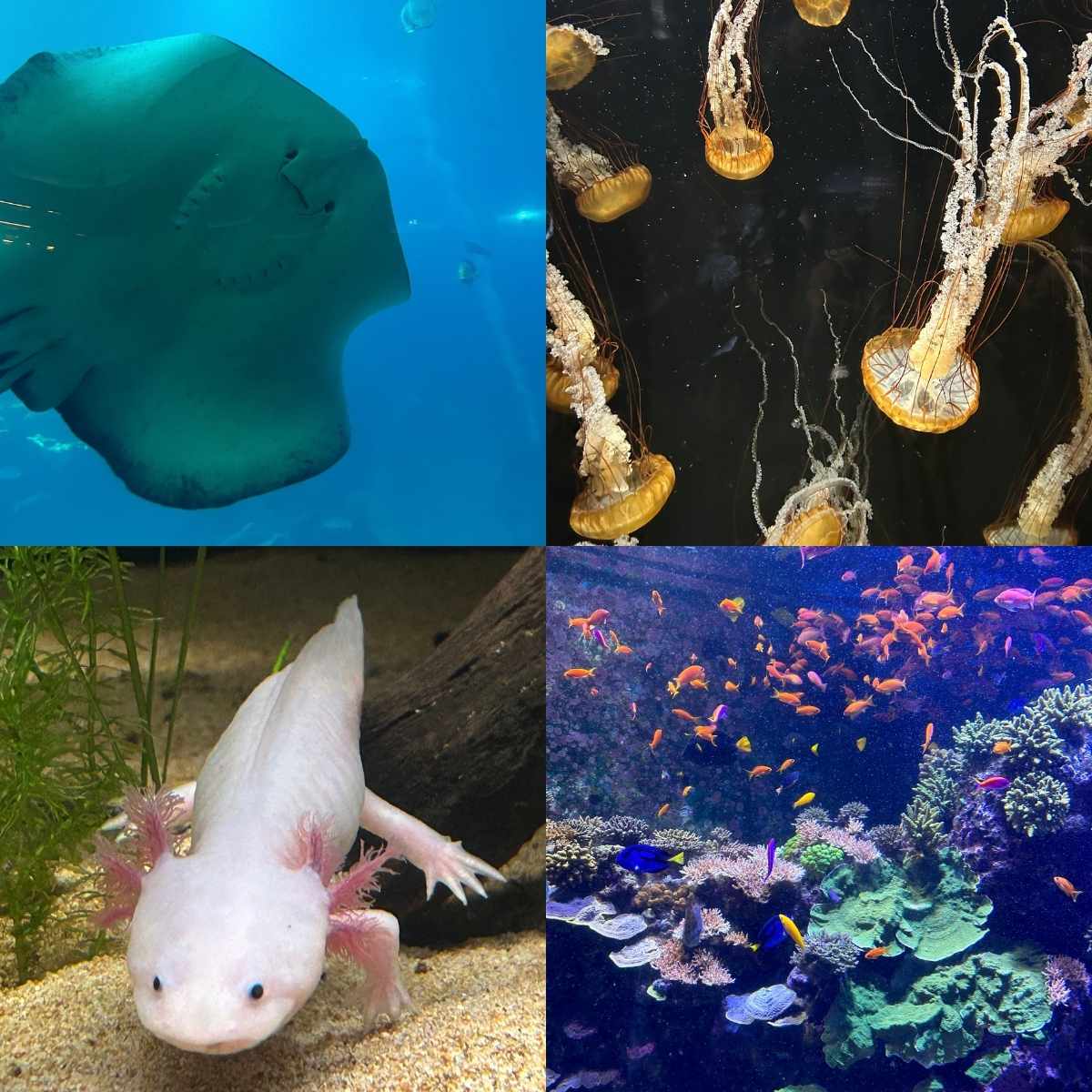
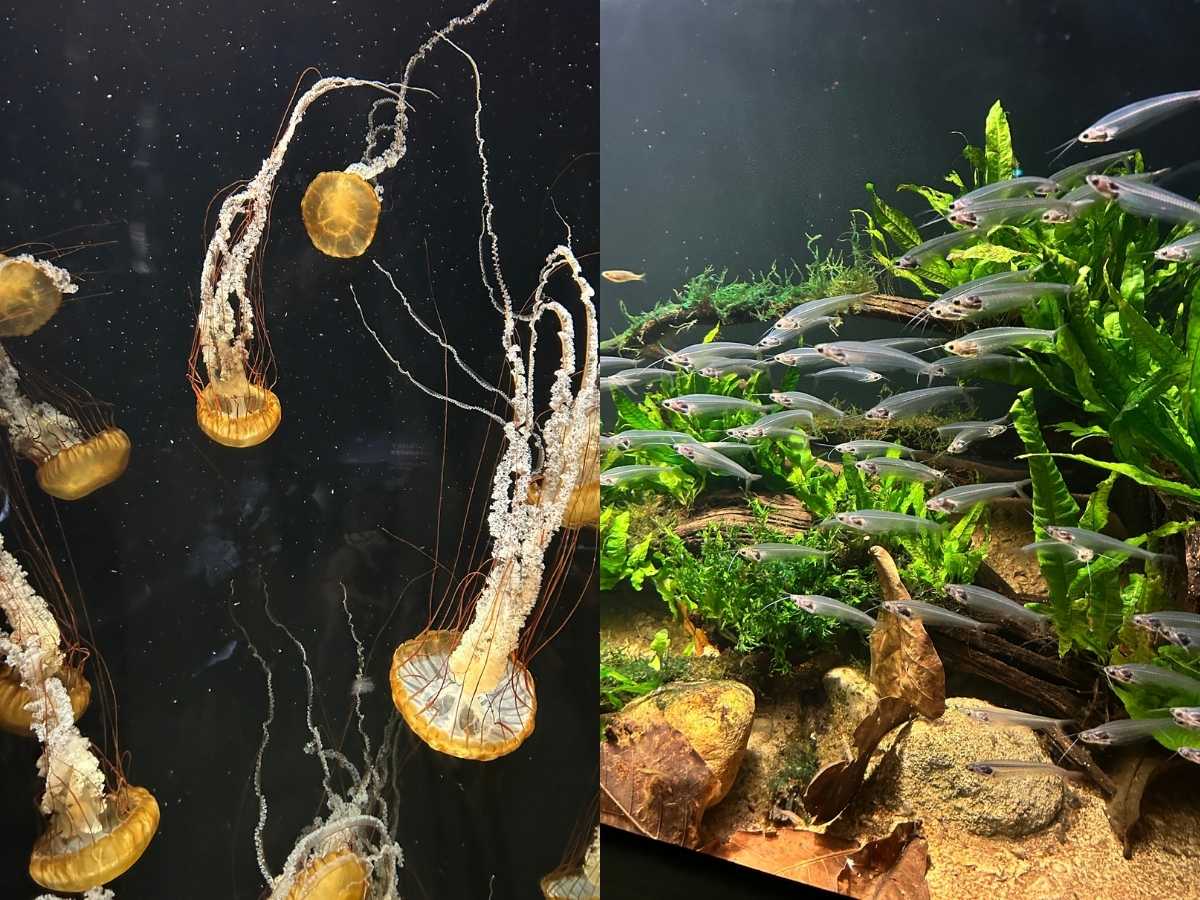
Ocean Wonders is located a stone’s throw away from the entrance to Singapore Oceanarium. Here, you’ll be able to look at one of the ocean’s most ancient beings — sea jellies. Located here is also one of the world’s largest Kreisel habitats. Now, you may be wondering what that is: it’s basically a specialised, circular aquarium designed specially for housing delicate marine life. With this Kreisel habitat, you’ll also be able to watch thousands of moon jellies free-float within the massive tank, drifting along in a mesmerising, circular motion. I found myself standing there for a good 5 minutes, captivated by the sea jellies; there’s something truly whimsical and otherworldly about them.
Other species you can expect to see are Atlantic sea nettles and fried egg sea jellies. They’ll be in cylindrical habitats that offer you a captivating 360-degree view of how they gently drift and pulse through the water. With rotating live displays, your visit is sure to be one of a kind.
2. Explore the Ancient Waters
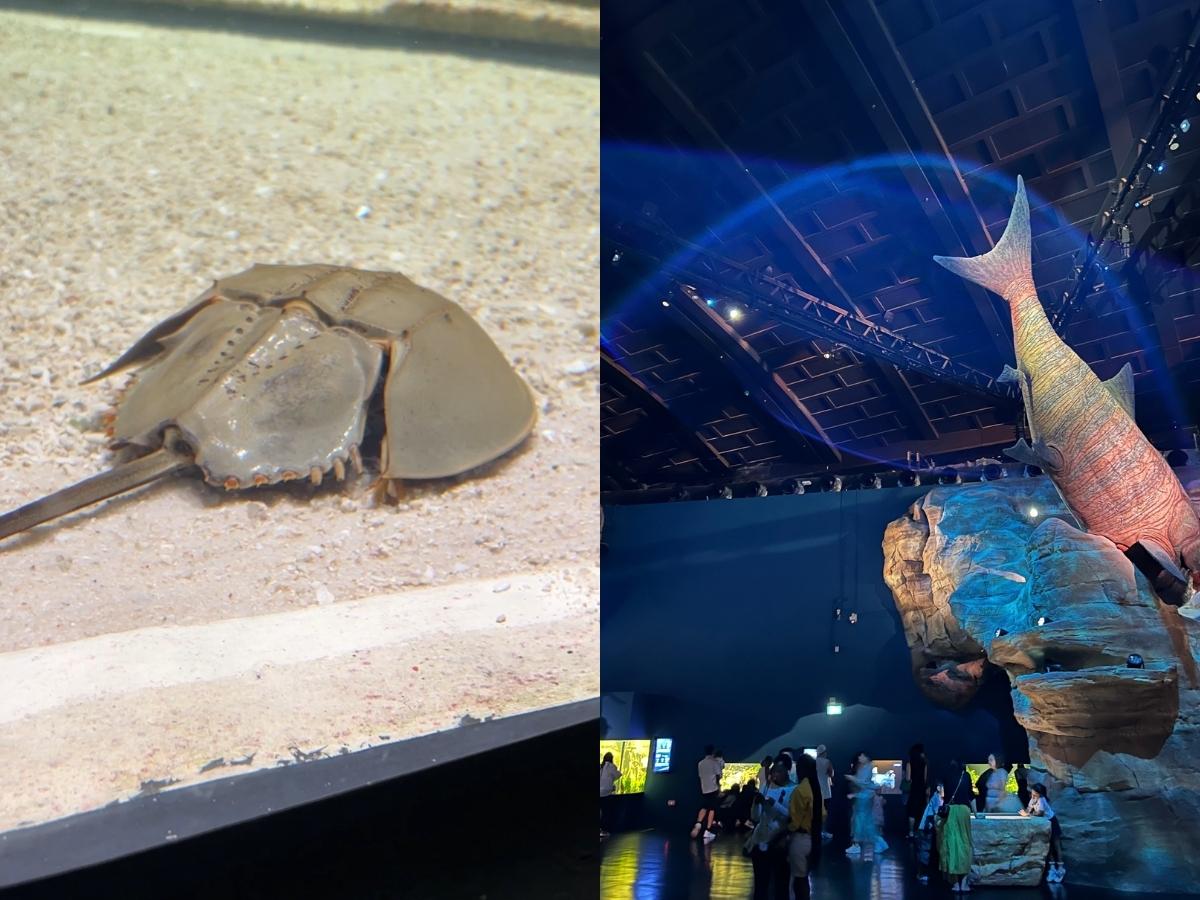
Revisit the past with Ancient Waters, where you’ll travel millions of years into the past to rediscover the creatures that once inhabited our oceans. This exhibit showcases prehistoric marine life with larger-than-life animatronics and replicas, bringing these extinct giants back to life. One of the more eye-catching replicas is the Dunkleosteus, an armoured prehistoric fish with a powerful jaw that snaps shut with a crushing force. Besides admiring the creatures that ruled the ocean, you’ll also be able to touch history itself.
What I like most are the fossil displays, interactive discovery points and immersive digital experiences. These will allow you to explore even more of the past in tangible ways, finding even more intricate details of our ancient marine organisms. Although the habitat is named Ancient Waters, there are live habitats as well. You can look forward to viewing living species that have retained characteristics from their ancient ancestors and act as modern-day remnants of the prehistoric world. These species include the Australian lungfish, arapaima, horseshoe crab, and epaulette shark.
3. See how life on land came about with Conquering Land
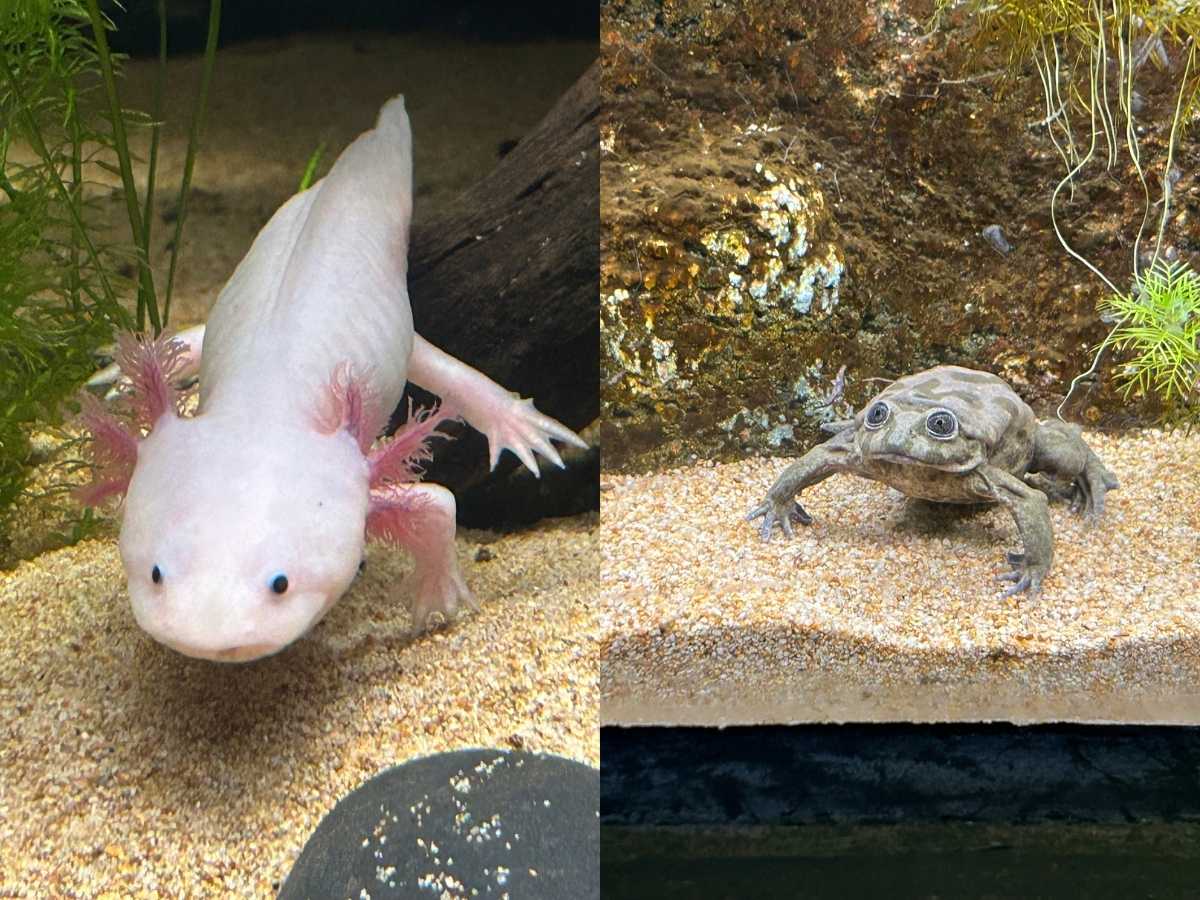
Ever wondered how we evolved? You’ll get your answer at Conquering Land, which focuses on one of the biggest turning points in the history of life: the transition from water to land. You’ve probably heard about our close evolutionary relationship with primates. But did you know that humans are also part of a much older clade called Sarcopterygii? Its common name, “lobe-finned fish”, refers to a group that includes bony fish and all 4-legged land animals, including humans.
This exhibit blends the past with the present, showing how early creatures gradually adapted to survive outside of the ocean, paving the way for life on land. If you love magical illusions as I do, you’re sure to be mesmerised by the display of extinct species such as the Eryops and Dipocaulus. These magnificent creatures are revived through digital representations using the Pepper’s Ghost effect. Live animals you can look forward to are the very adorable axolotls and poison dart frogs.
4. Stroll at Singapore’s Coast
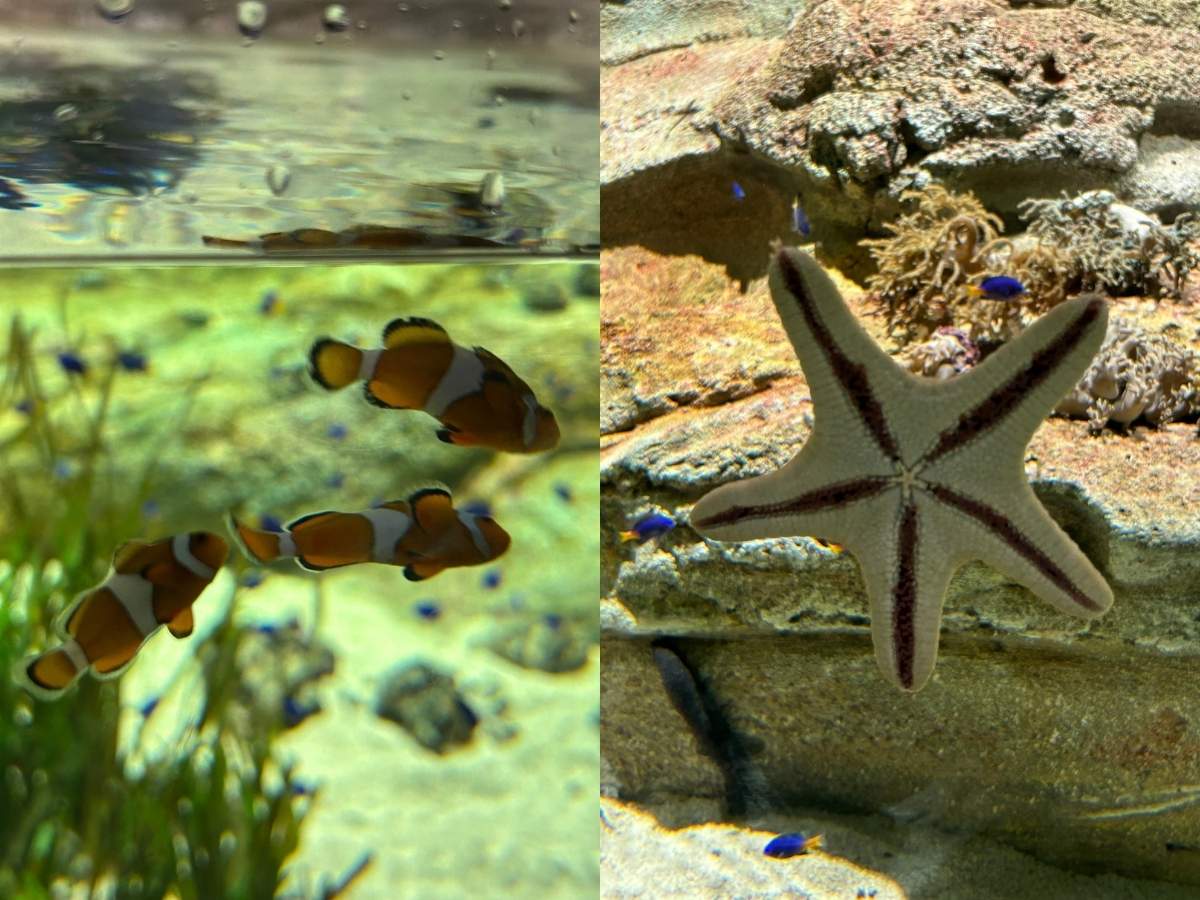
After being surrounded by prehistoric environments, make your way to Singapore’s Coast to discover marine ecosystems found much closer to home. The exhibit showcases the delicate relationship between our land and seas, featuring mangrove habitats found along Singapore’s shores. You’ll discover how resilient marine life has adapted to ever-changing waters and plays a vital role in maintaining the wider mangrove environment. As you stroll along the live habitats, you’ll be able to take a closer look at local species such as the archerfish and barred mudskipper.
For a more hands-on experience (literally), head to the discovery pool where you’ll be able to interact with marine life. Simply dip your fingers in and let the cleaner shrimp gently nibble away at the dead skin on your fingers. You get a 2-in-1 experience here: an up-close way to learn about marine grooming along with a mini hand spa — what a steal. Other animals you can expect to see are the knobbly sea star and spotted seahorse. Besides live habitats, other coastal creatures will be brought to life with projection mapping, where you can watch them in an exhilarating display.
5. Watch the Shark Seas
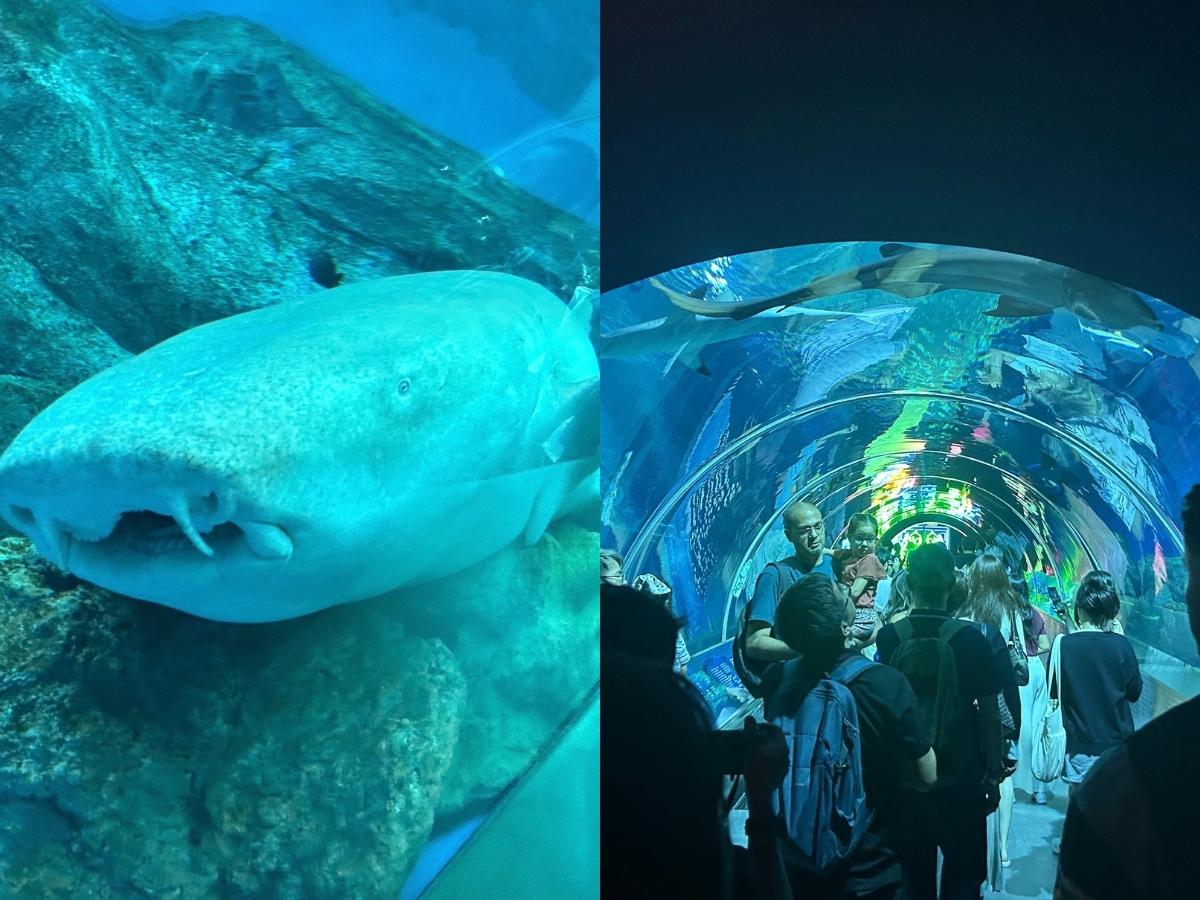
Shark Seas uses immersive lighting effects, creating the dynamic, sunlit zone of the ocean. Here, you’ll have a dreamy out-of-body experience, feeling as though you’ve been transported beneath the ocean’s surface. Be sure to keep an eye out for the sand tiger shark, scalloped hammerhead and sandbar shark when you’re standing before the massive viewing panel. Sharks are often labelled as ruthless killing animals, but I believe they are largely misunderstood, and hopefully you’ll agree with me after experiencing the Shark Tunnel. Here, you’ll be able to observe their natural behaviour and movements. It’s enchanting watching the sharks glide overhead and around you.
If you want to observe the animals during their feeding time, Shark Seas has a scheduled Dive Feeding Session every Tue and Thu at 2.30pm. A diver will descend into the habitat, feeding an array of animals such as moray eels, rays, sharks and more. Do note that the schedule is subject to change without prior notice from Singapore Oceanarium. Beyond observing these majestic animals, you can learn more about how they sustain their population through the Augmented Reality (AR) feature on the Singapore Oceanarium app.
6. Have a great wave of fun at Open Ocean
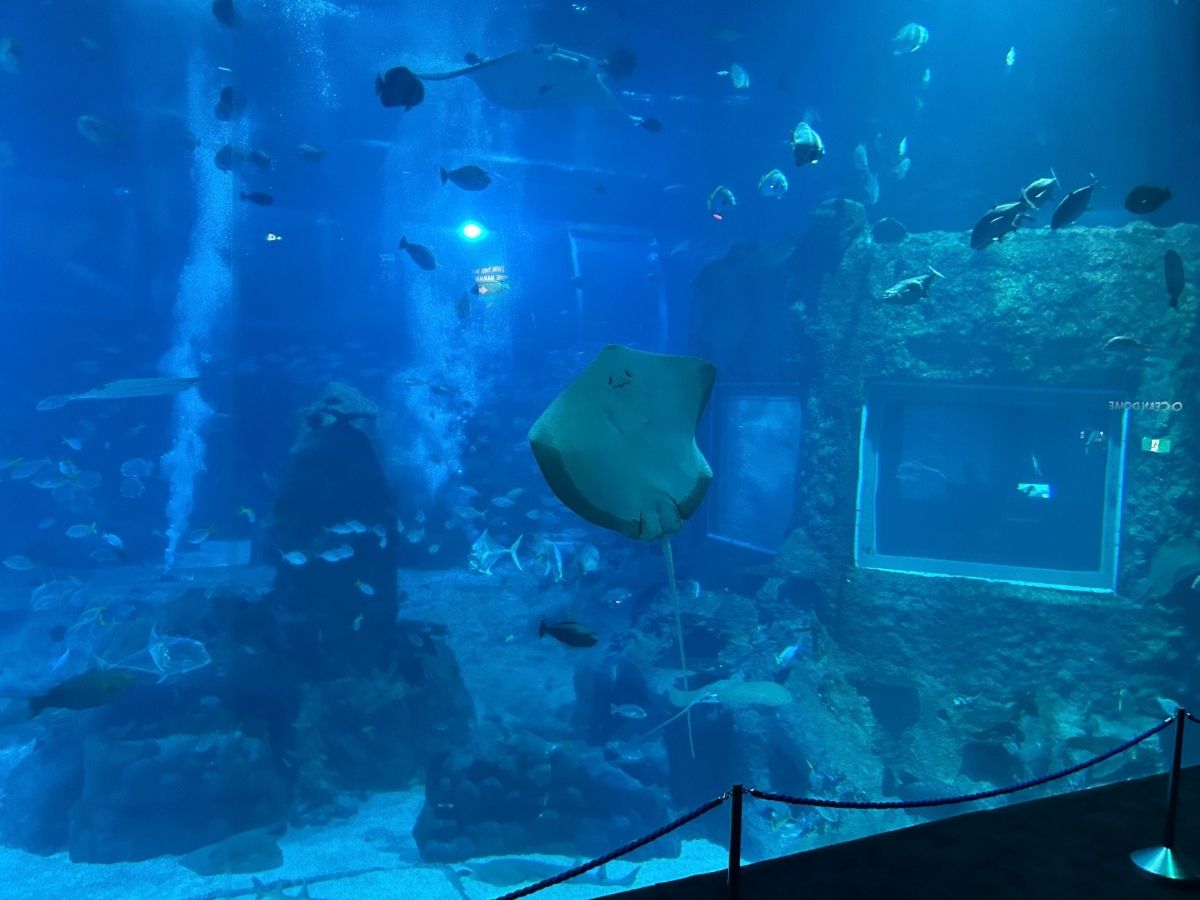
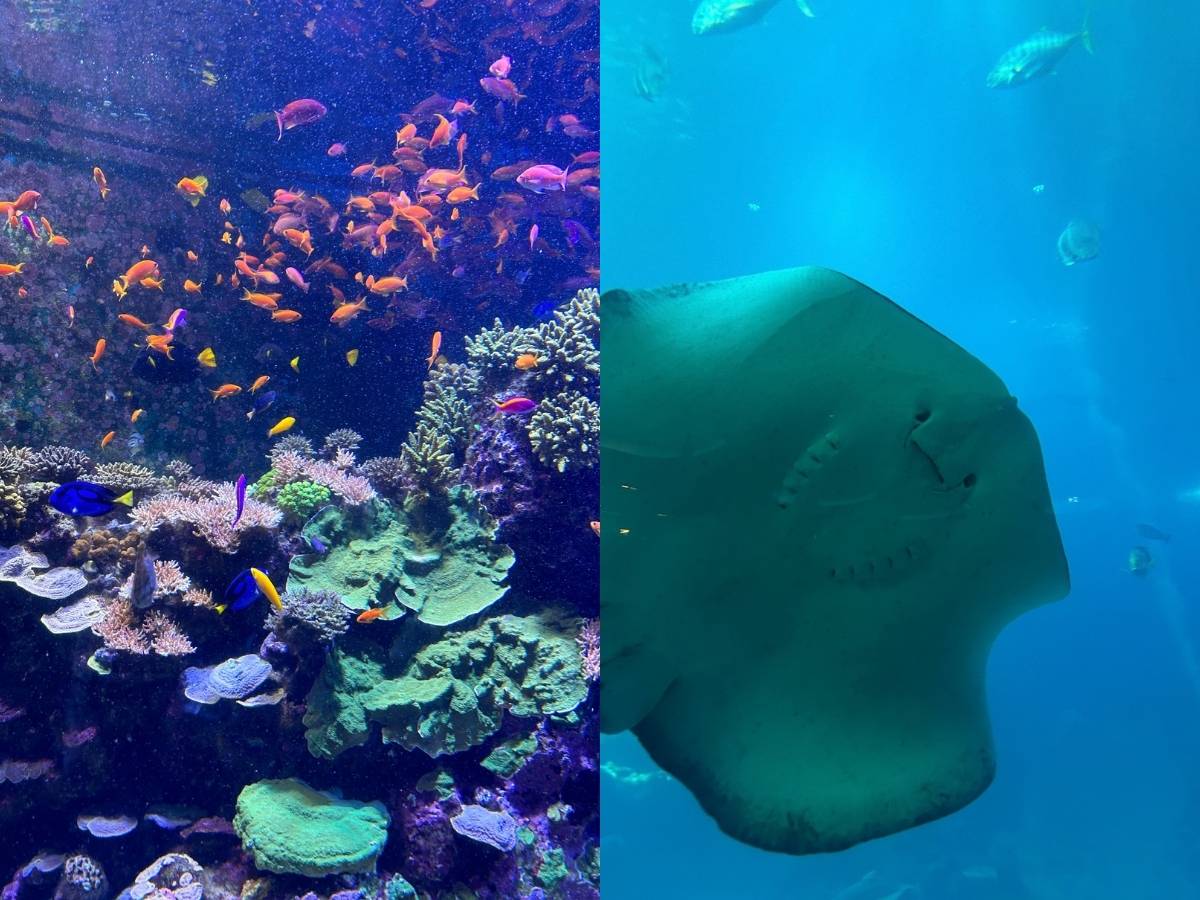
Open Ocean is undoubtedly my favourite exhibit in the Singapore Oceanarium. We all know the ocean is extremely vast and deep; here, you’ll be able to see a smidge of that with the expansive 36m-wide and 8.3m-tall viewing panel. I guess this is the unofficial chilling spot, as I saw many, many people resting and getting comfortable here — simply watching the exhibit. There are marine animals such as manta rays, spotted eagle rays and zebra sharks who call this 18-million-litre habitat their home.
I found myself in awe every time a marine creature glided through the water; it looked as though they were flying in it. Watching the animals swim in the humongous habitat was really therapeutic and calming, so I definitely recommend not rushing through this exhibit. Similarly to Shark Seas, there will be Dive Feeding Sessions on Sun, Tue to Thu and Fri at 4pm. Plus, there will be an Open Ocean Discovery Presentation where you can learn more about marine life and diving hand signs. This will take place at 1.15pm on Mon to Sat and 1.15pm and 4pm on Sun and public holidays.
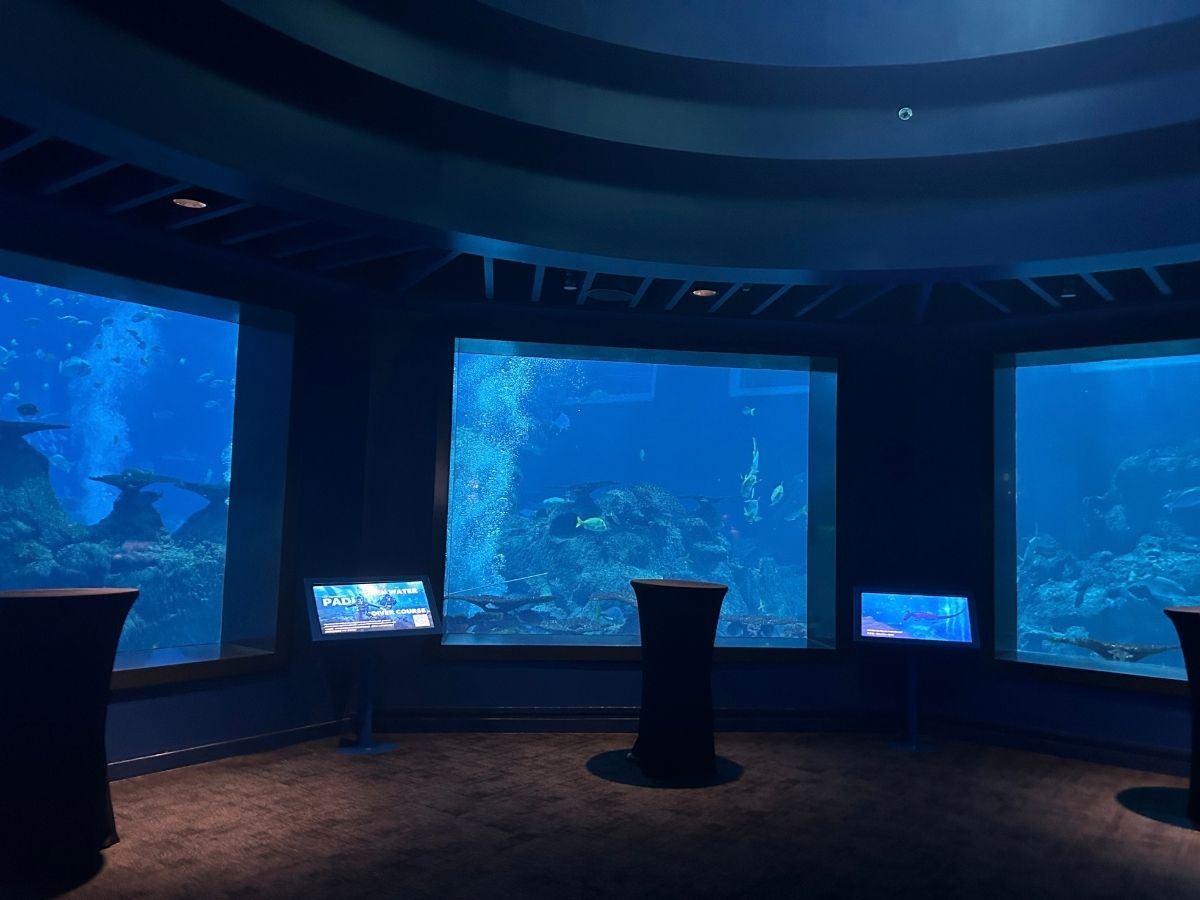
Don’t miss out on visiting the Ocean Dome too; this is also where you can take a break from all the walking, as there are benches to sit on.
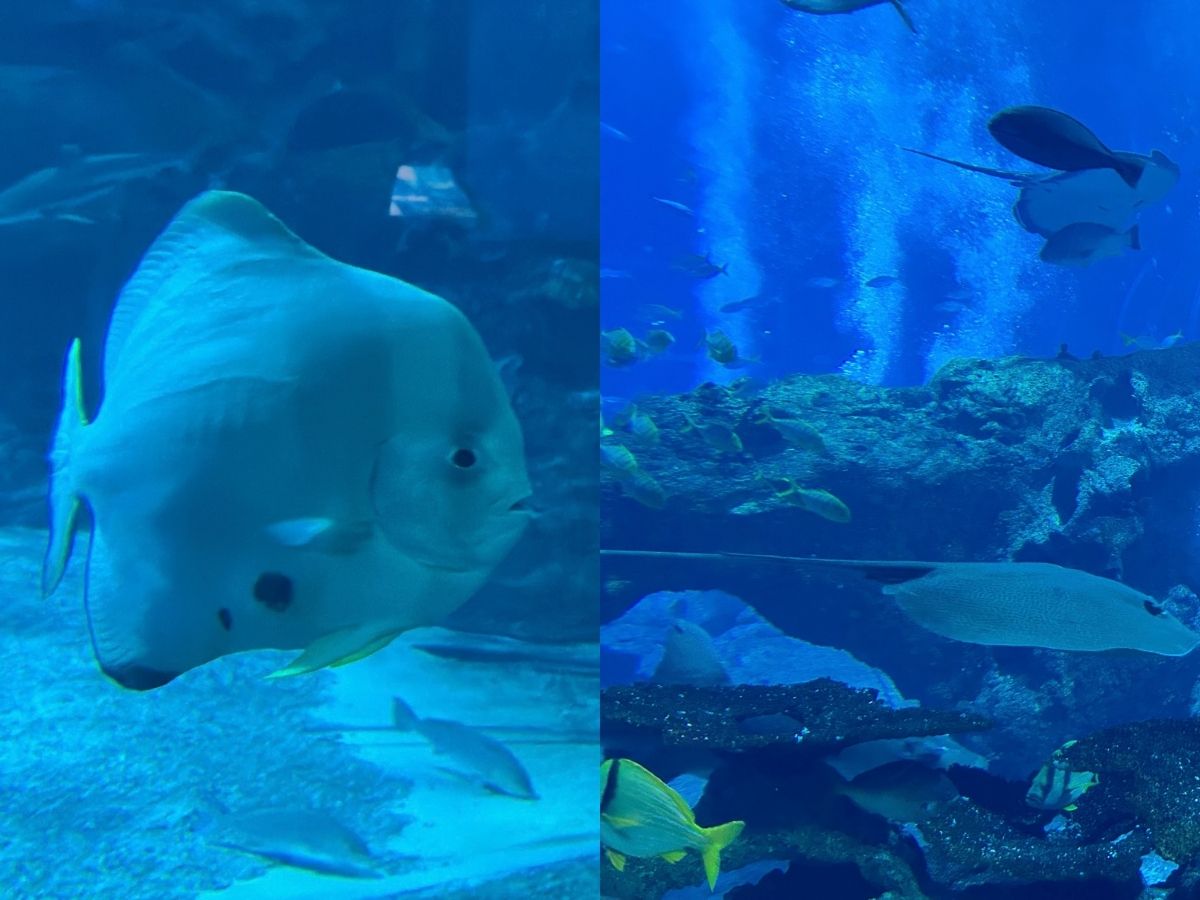
While resting, I realised that many of the fish will swim quite close to the panels in the Ocean Dome, so it’s also your chance to snap that perfect picture. Look at how adorable the fish are!
7. Meet diverse marine life at Benthos
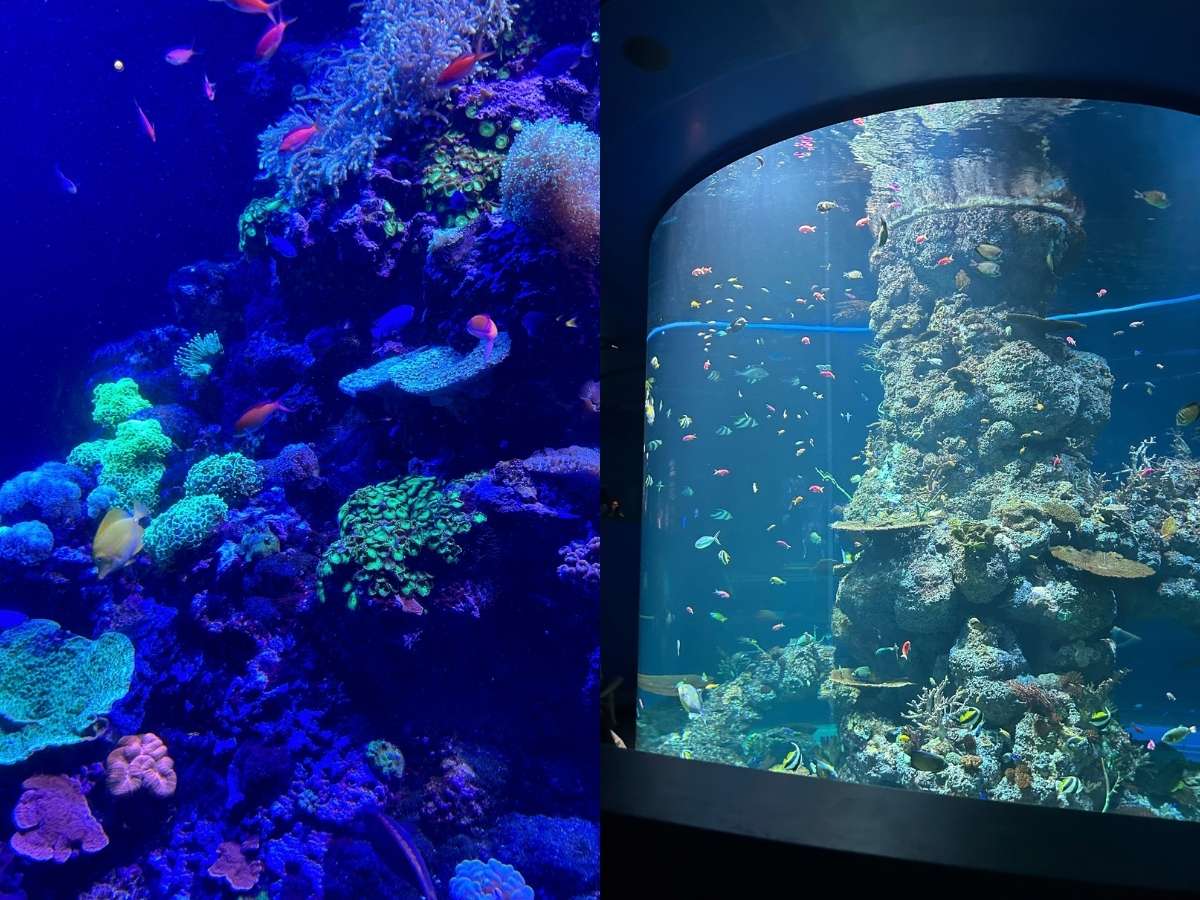
Benthos showcases the diverse marine life that thrives in the darker waters of the seas. With its bright aquatic colours, glossy underwater environments and plethora of marine animals, it was reminiscent of the Frutiger Aqua aesthetic for me. Through a series of live habitats, you’ll get a closer look at the creatures that are often hidden from view. I had a fun time watching the elusive green morays, sliding their way through rocky crevices and the Tasmanian giant crabs making their way across the terrain; it felt like a one-sided hide-and-seek game.
Another cylindrical habitat offers a glimpse of more animals; you can expect to see fish such as the Banggai cardinalfish and yellow tang here. If you’ve watched Finding Nemo, the yellow tang might be familiar to you. That’s because Bubbles, the cheerful fish obsessed with… bubbles… is a yellow tang! For something more hands-on, head to the Art-quarium, an interactive touch table where you can mix and match different traits to create your very own digital fish. As you experiment with the various features, you’ll also learn how those very adaptations help marine species to survive in their environments.
8. Discover unique creatures at Life in the Deep
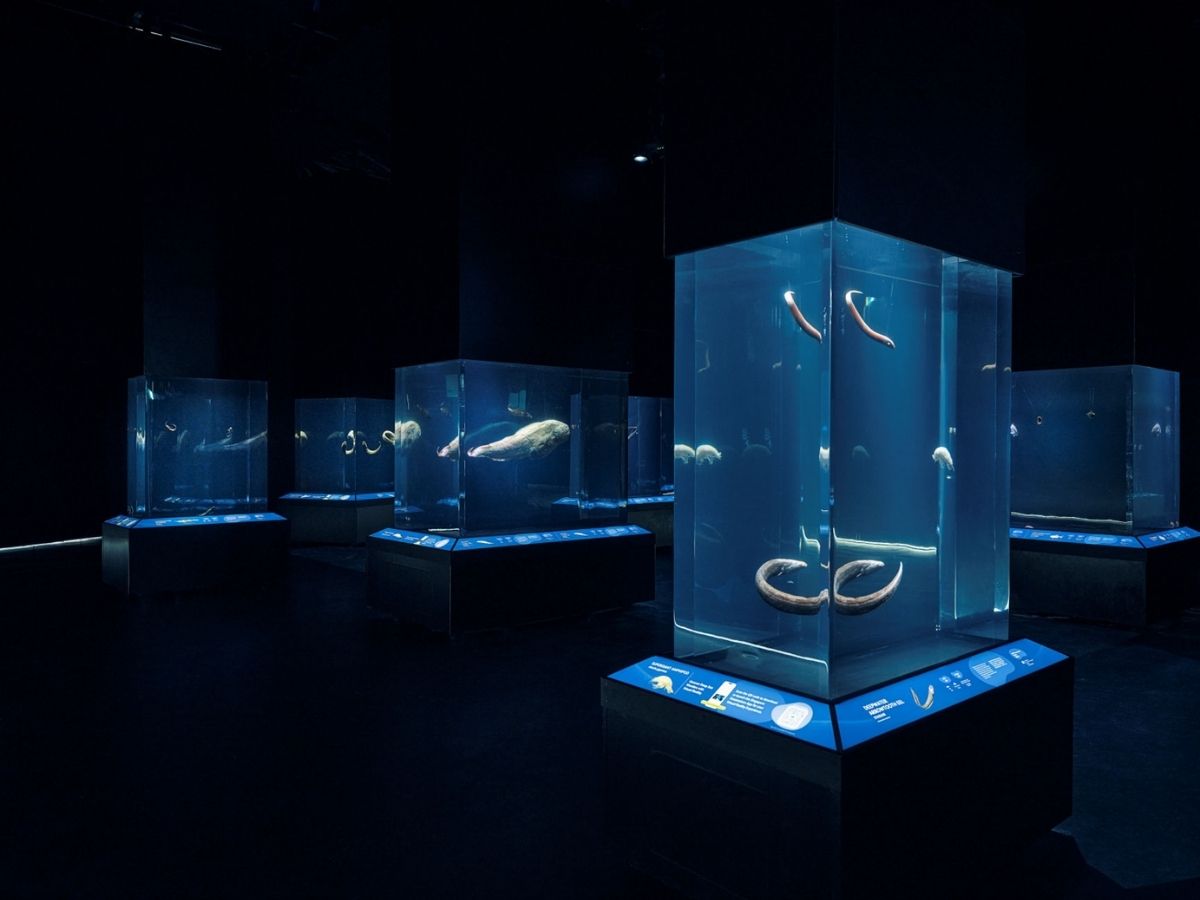
Things take a darker turn at Life in the Deep, with preserved specimens of deep-sea creatures. The deeper you venture into the ocean, the more extreme the conditions become. With little to no sunlight and extreme pressure, these creatures have developed remarkable ways to survive. Such adaptations include bioluminescence, unique body structures and surprising survival strategies. This area of Singapore Oceanarium highlights the unseen world of the deep ocean, so you can expect unique-looking creatures here.
The exhibit is dim, while lighting effects in this exhibition recreate the atmosphere of the deep sea, with projections of bioluminescent plankton shimmering on the floor. Watching them flicker like tiny underwater stars was truly mesmerising, but the preserved specimens were the star of this exhibit for me. If you want to learn even more in-depth about the fascinating adaptations, the Singapore Oceanarium application features a VR experience that brings the specimens to life.
9. Observe the Whale Fall and Seamount
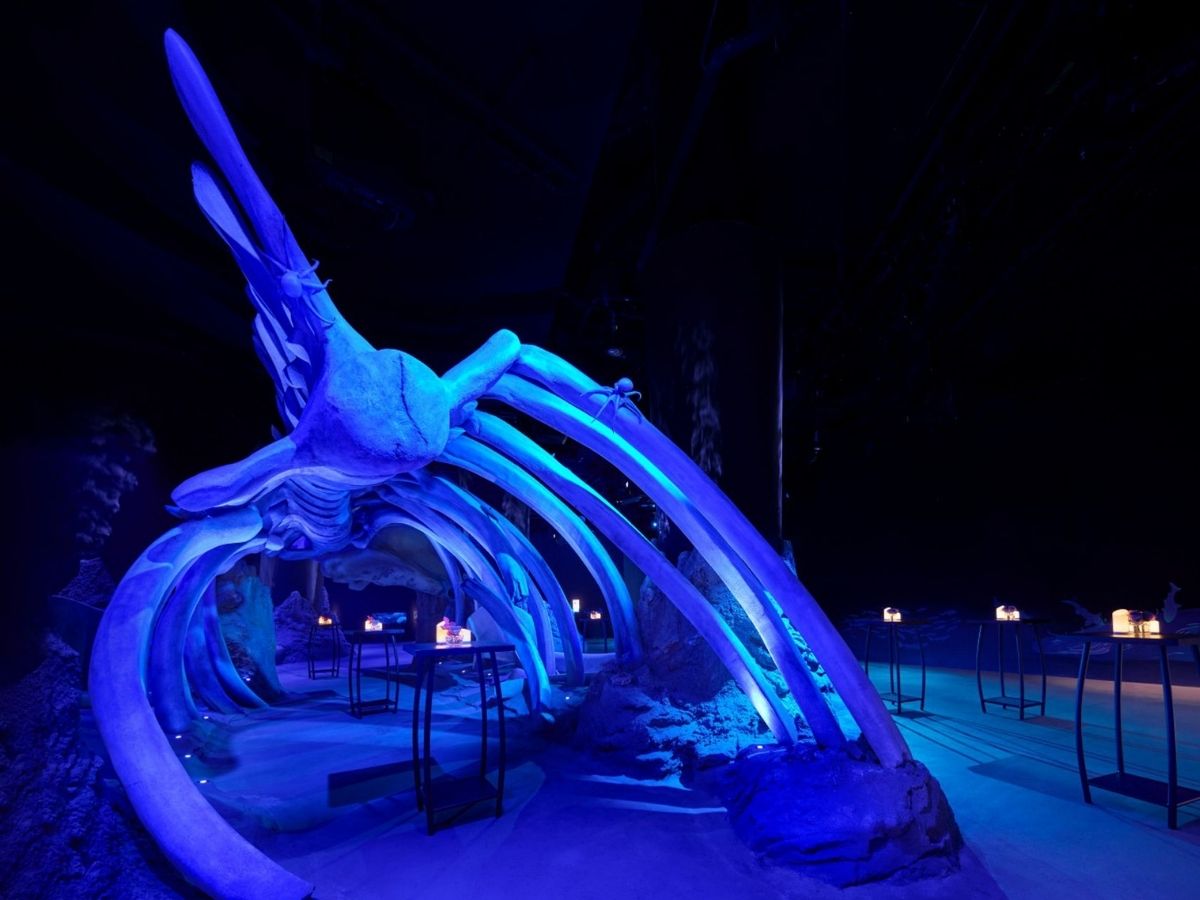
At Whale Fall and Seamount, I was fully immersed in the bittersweet circle of life. A whale fall is the final resting place of a whale, and with their remains, it can become the foundation of an entire deep-sea ecosystem. Food is already scarce at the top of the ocean, much less at the very depths of it. Luckily, a whale fall is a natural phenomenon which provides a valuable source of food for deep-sea creatures and can help to support marine life for years to come.
The exhibit recreates this process with a whale skeleton and an immersive projection show that follows the various stages of decomposition while highlighting the species that depend on the whale carcass. Plus, hydrothermal vents rise like towering seamounts in the surroundings, offering a glimpse into the geological features that shape deep-sea life.
Apart from exploring the wondrous life-sized whale skeleton, you can look forward to live habitats featuring unusual creatures. Some species here include the Japanese isopod, deep-sea akaza prawn and Australian ghostshark.
10. End with A New Horizon
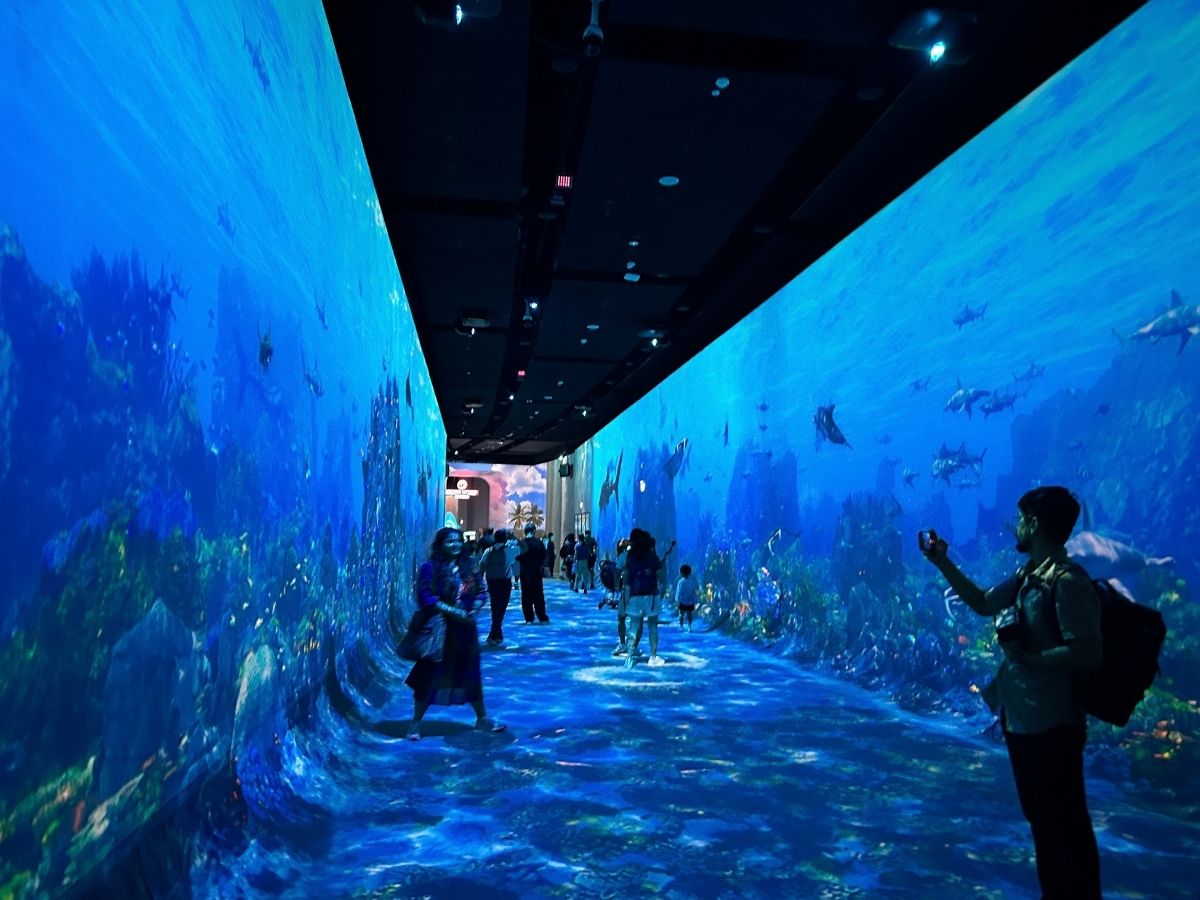
End off your visit with A New Horizon, comprising 2 experiences: Ocean’s Future and Hallway of Hope. At Ocean’s Future, immersive 360-degree visuals depict the effects of a changing climate on the ocean. From melting ice and rising sea levels to warming waters and the spread of invasive species, it was a stark reminder of climate change’s impact. It also offers a sobering look at how these changes disrupt marine ecosystems and our marine life.
Thankfully, not all hope is lost; at the Hallway of Hope, projections transport you from the deep, dark oceans towards brighter, shallower waters, symbolising a brighter future for our oceans. The atmosphere feels noticeably more uplifting, so you won’t end your visit on a sad note. I also created my own digital marine animal and watched it come alive within the underwater environment. I like that it’s a playful way to end the visit while incorporating the idea that protecting our environment is a shared responsibility and we all have a stake in it.
How to choose what to bring to Singapore Oceanarium
A full day at Singapore Oceanarium means plenty of walking, so wear comfortable shoes and bring a water bottle to stay hydrated between exhibits. Luckily, Singapore Oceanarium is air-conditioned, so you won’t have to endure the sweltering heat. Instead, do remember to bring along a jacket if needed. For paid programmes, remember to book in advance to secure your slot.
People also read:
I’m a tourist in Singapore; what are the best tours I can take?