 Malaysia
 Singapore
 Thailand

We have all heard that breakfast is the most important meal of the day, but most of us ignore that and eat whatever is most convenient in the morning. For many Singaporeans, that becomes a sugary cereal, fried pick-me-up from the interchange stall, or a hawker meal that seems healthy but isn’t quite so. We asked nutritionists in Singapore for their best breakfast recommendations and here is what we discovered.
Firstly, if the thought of saving money was holding you back from eating healthy, you’re in luck — the best breakfast meals don’t have to be more expensive. The alternatives on our list cost roughly the same or less than their unhealthy counterparts.
Secondly, preparation (or waiting) time — whether you have breakfast at home or buy it on the way to school or work — is about the same; you don’t have to wake up earlier to eat healthier. These alternatives fit right into your set routine.
Lastly, and perhaps most importantly, these nutritionists suggested breakfast options that are just as tasty as the ones you are used to. Hey, you might even end up preferring them to what you currently eat.
Best breakfast alternatives
While the nutritionists we spoke to offered 1-to-1 alternatives to common less-healthy breakfast meals, these are general guidelines. The nutritional information here is based on standardised information; the way the dish is prepared in your own kitchen or at the hawker centre, proportion and quality of ingredients, and your own health and lifestyle will vary. We recommend that you speak with your doctor and/or a dietitian to choose the best alternatives for you.
Here is a quick rundown of what nutritionists tell us are the most common breakfast meals in Singapore, and how they compare to their healthier alternatives.
Breakfast when eating at home
| Common Home Breakfast | Healthier Alternative | |
| Meal | Flavoured Instant Oatmeal (1 packet) | Rolled Oats (40g) + Low-Fat Milk |
| Calories | ~160 kcal | ~200 kcal |
| Protein | 4g | 10g |
| Fat | 2g | 4g |
| Carbs | 32g | 30g |
| Key Note | Contains ~12g added sugar; heavily processed | Difference: +6g protein, -7g added sugar, lower GI |
| Meal | Sugary Cereal (1 cup) + Full Cream Milk | Bran/Wholegrain Cereal + Low-Fat Yoghurt |
| Calories | ~250 kcal | ~210 kcal |
| Protein | 6g | 12g |
| Fat | 6g | 3g |
| Carbs | 45g | 40g |
| Key Note | Fast-digesting refined carbs; ~15g sugar | Difference: +6g protein, -3g fat, +5g fiber |
| Meal | Instant Noodles (Soup) | Brown Rice Porridge + Lean Chicken |
| Calories | ~380 kcal | ~280 kcal |
| Protein | 8g | 18g |
| Fat | 15g | 5g |
| Carbs | 55g | 40g |
| Key Note | ~1500mg sodium; flash-fried noodles | Difference: -10g fat, +10g protein, -1100mg sodium |
| Meal | White Bread (2 slices) + Butter & Jam | Wholemeal Bread (2 slices) + Canned Tuna |
| Calories | ~250 kcal | ~230 kcal |
| Protein | 5g | 18g |
| Fat | 10g | 4g |
| Carbs | 40g | 28g |
| Key Note | Low protein; ~15g sugar from jam | Difference: +13g protein, -6g fat, +4g fiber |
Breakfast when eating out
| Common Purchased Breakfast | Healthier Alternative | |
| Meal | Kaya Toast Set + Kopi | 2 Soft-Boiled Eggs + Wholemeal Toast + Kopi-O Kosong |
| Calories | ~450 kcal | ~250 kcal |
| Protein | 6g | 16g |
| Fat | 18g | 11g |
| Carbs | 60g | 25g |
| Key Note | Contains ~30g of refined sugar | Difference: -200 kcal, +10g protein, -28g sugar |
| Meal | Economic Fried Bee Hoon (Plain) | Fishball Noodle Soup (Clear) |
| Calories | ~420 kcal | ~330 kcal |
| Protein | 8g | 15g |
| Fat | 18g | 6g |
| Carbs | 55g | 50g |
| Key Note | High in saturated fats from wok oil | Difference: -12g fat, +7g protein |
| Meal | Roti Prata (2 plain) + Meat Curry | Plain Thosai + Dhal |
| Calories | ~550 kcal | ~220 kcal |
| Protein | 12g | 8g |
| Fat | 28g | 4g |
| Carbs | 55g | 38g |
| Key Note | High trans/saturated fat from margarine/ghee | Difference: -330 kcal, -24g fat, higher dietary fiber |
| Meal | Pork Porridge + You Tiao (1 piece) | Sliced Fish Porridge (No You Tiao) |
| Calories | ~450 kcal | ~250 kcal |
| Protein | 12g | 18g |
| Fat | 20g | 4g |
| Carbs | 65g | 40g |
| Key Note | You Tiao adds ~200 empty calories & 15g fat | Difference: -200 kcal, -16g fat, +6g protein |
Breakfast when eating at home
1. Flavoured instant oatmeal vs. Rolled oats with low-fat milk
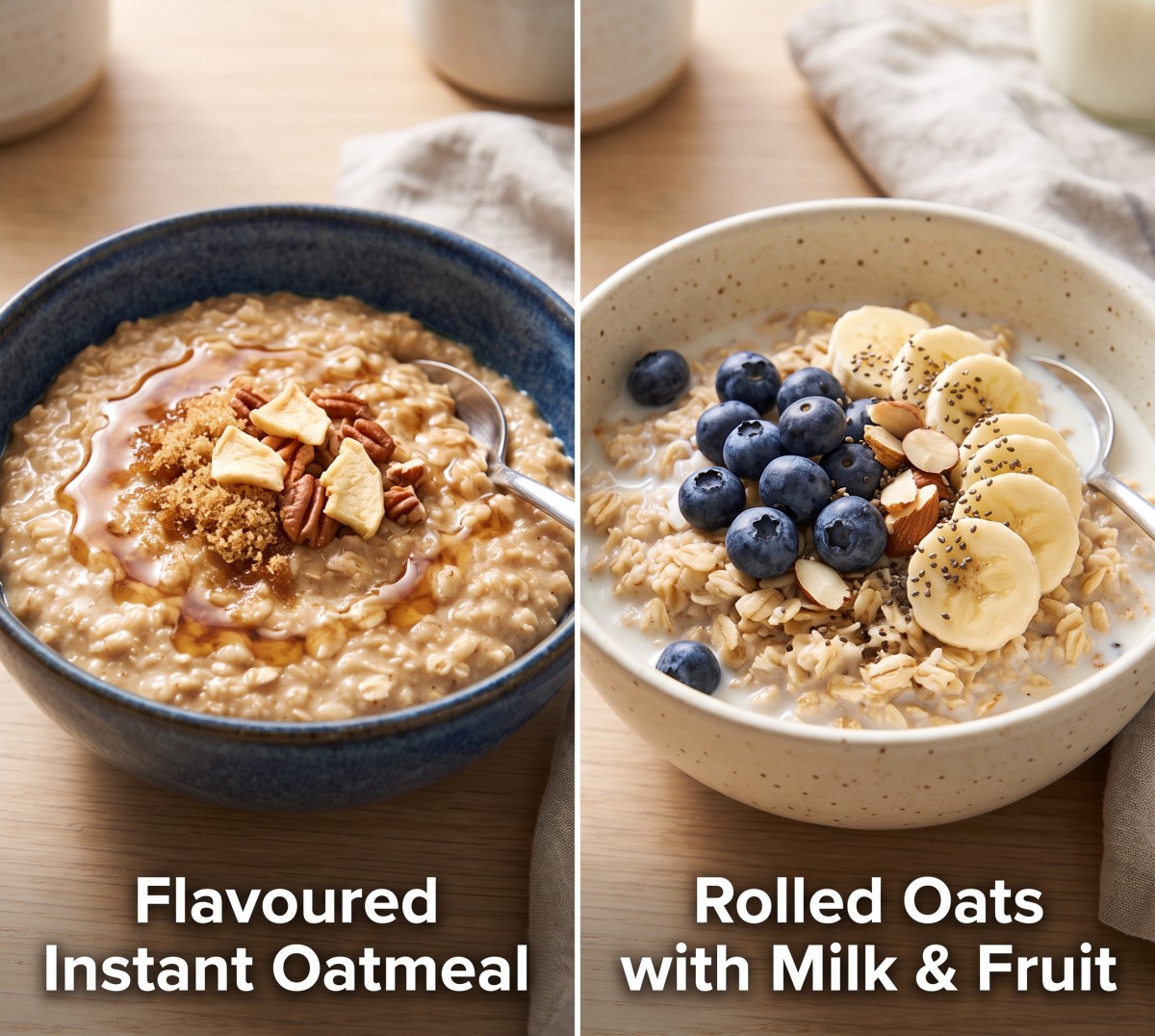
If you have the time for a leisurely breakfast, plain rolled oats with low-fat milk are a markedly healthier morning meal than relying on packets of flavoured instant oatmeal.
Nutritionists say that many of us tend to assume oatmeal is inherently healthy. However, flavoured instant oatmeal often contains excessive refined sugar, artificial flavourings and unnecessary sodium.
Meanwhile, whole rolled oats retain their natural bran and germ, coupled with complex carbohydrates and soluble fibre. Skimmed milk adds quality protein to your day without the fat.
Nutritional comparison:
- Flavoured instant oatmeal: ~180 kcal, 4g protein, 3g fat, 34g carbs (~12g sugar)
- Rolled oats with low-fat milk: ~240 kcal, 11g protein, 5g fat, 36g carbs (~6g natural sugar)
Selecting rolled oats with milk nearly triples your protein intake while halving overall sugar content. It ensures steady digestion throughout your busy morning.
2. Sugary cereal with full cream milk vs. Bran cereal and low-fat yoghurt
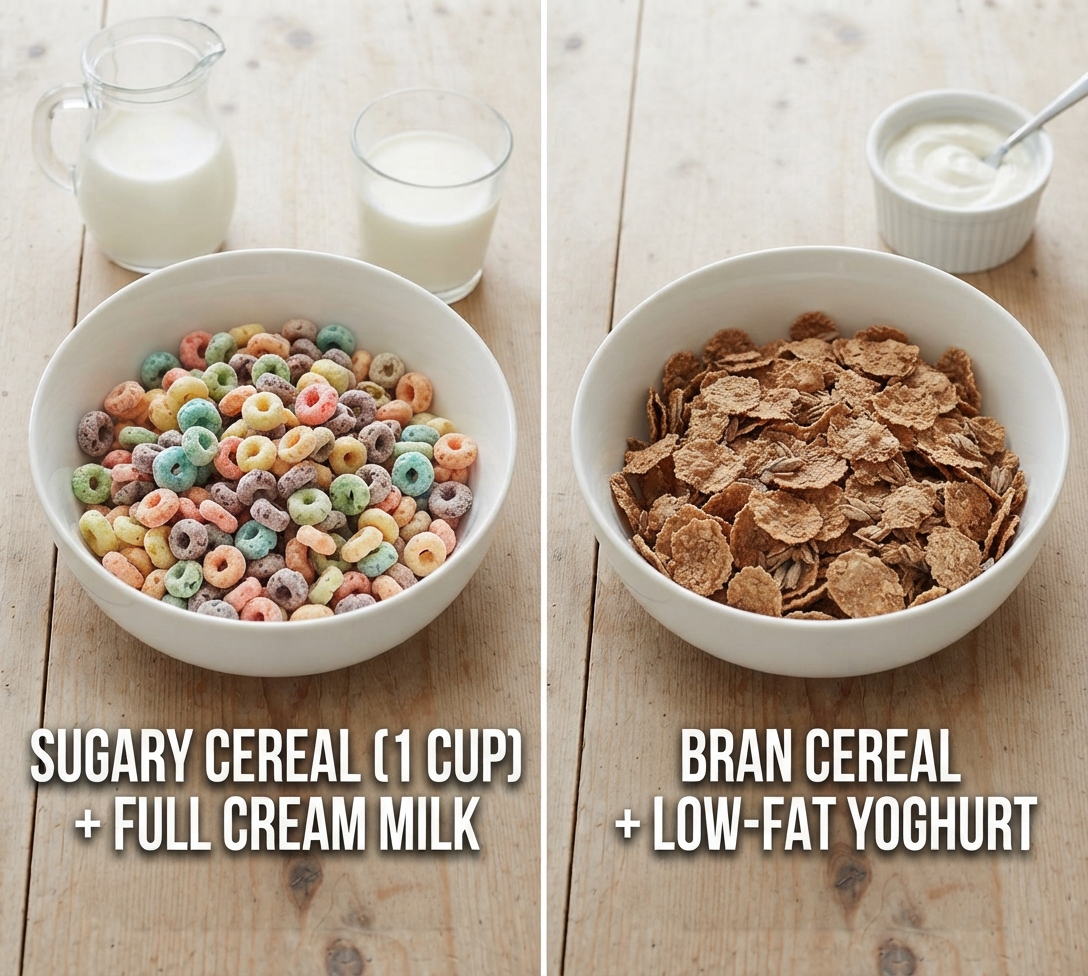
Probably the most popular breakfast for younger Singaporeans, sugary cereals may claim nutritional benefits on their packaging but are easily less healthy than bran cereal with low-fat yoghurt.
Sugary cereals are rapidly digested, causing sharp blood sugar spikes and mid-morning hunger. Full cream milk also adds unnecessary saturated fat.
Nutritionists suggest that you fill your own and your kids’ cereal bowls with bran cereal instead. It provides essential dietary fibre that aids digestion and keeps you feeling full longer. Delicious low-fat yoghurt supplies a rich dose of protein and gut-friendly probiotics without excessive fat.
Nutritional comparison:
- Sugary Cereal + Full Cream Milk: ~250 kcal, 6g protein, 6g fat, 45g carbs (~15g sugar).
- Bran Cereal + Low-Fat Yoghurt: ~210 kcal, 12g protein, 3g fat, 40g carbs (+5g fibre).
This simple switch doubles your protein intake, reduces fat intake by half, and cuts out added sugars. It is an ideal, heart-healthy start to your day.
3. Instant noodles (soup) vs. Brown rice porridge with chicken breast
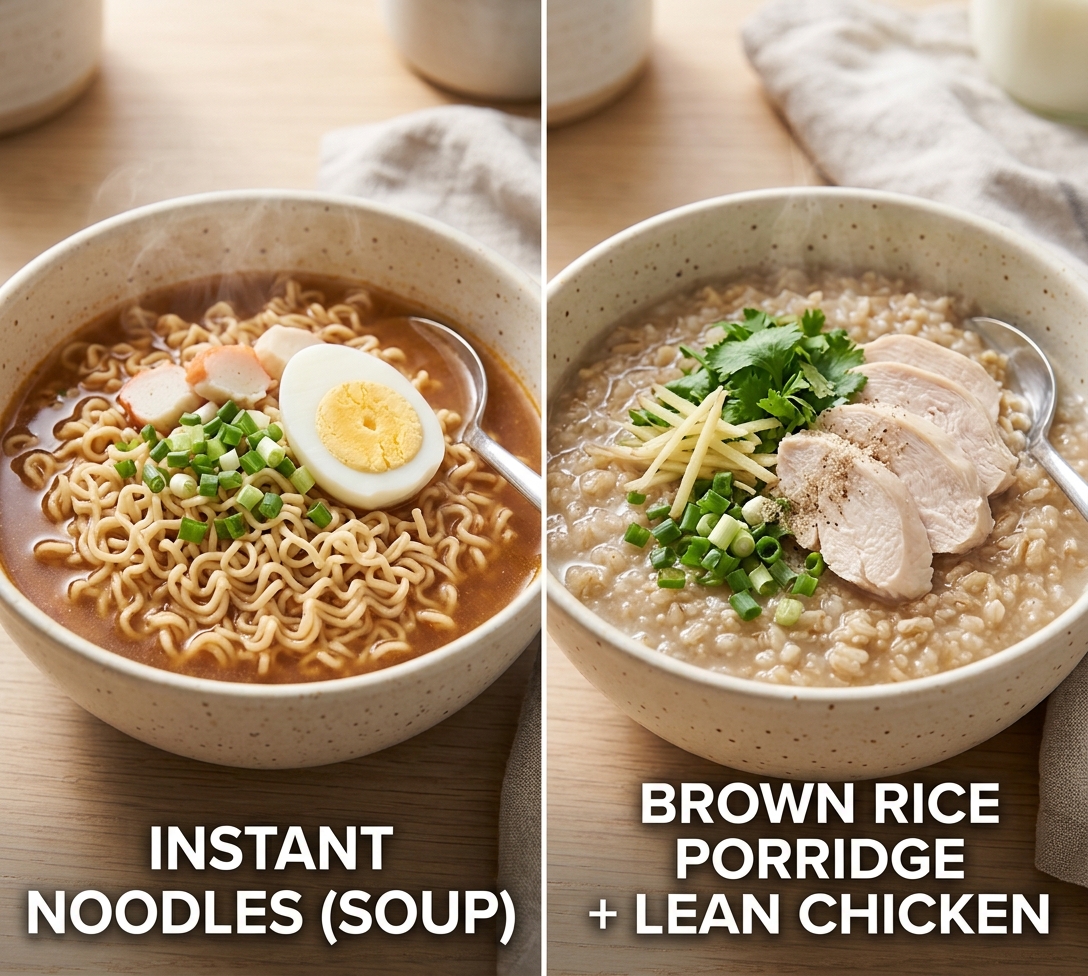
Brown rice porridge with lean chicken is a much better breakfast choice than the too-convenient bowl of instant noodles.
Instant noodles are deep-fried, which makes them chock-full of unhealthy fats. Their seasonings also contain excessive sodium, which can cause bloating.
Nutritionists suggest you have brown rice porridge for breakfast instead. Its slow-release complex carbohydrates and high dietary fibre content are great, and adding lean chicken breast gives you a protein boost to support muscle building and repair.
Nutritional comparison:
- Instant noodles (soup): ~380 kcal, 8g protein, 15g fat, 55g carbs, ~1500mg sodium
- Brown rice porridge with chicken breast: ~280 kcal, 18g protein, 5g fat, 40g carbs, ~1100mg sodium
This wholesome swap eliminates 10g of fat and cuts sodium significantly. It more than doubles your protein for the perfect start to your day.
4. White bread with butter & jam vs. Wholemeal bread with canned tuna
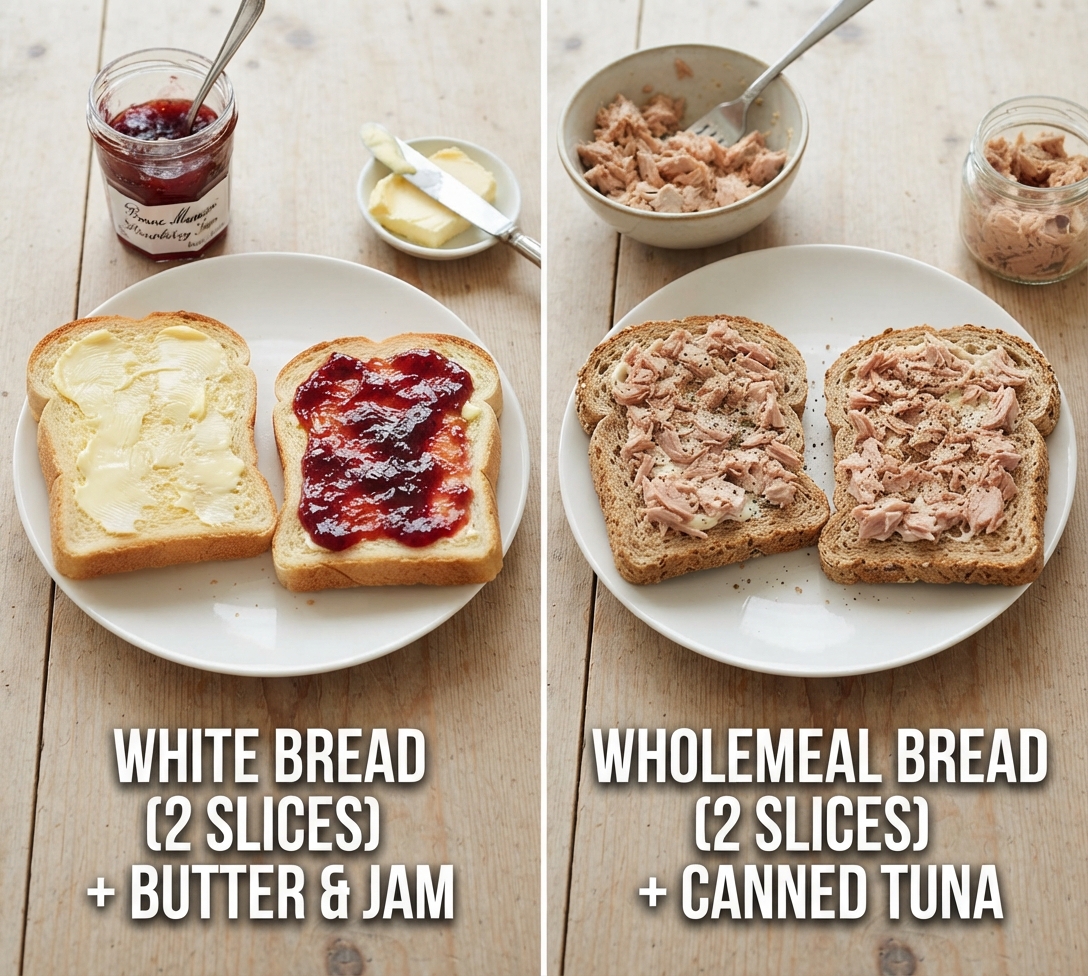
White bread with butter and/or jam is probably one of the most popular quick home breakfasts in Singapore. It’s easily beaten by wholemeal bread with tuna.
White bread and sweet jam both consist of fast-digesting refined carbs, while butter adds saturated fat. This makes for a high-sugar meal that triggers early hunger.
On the other hand, wholemeal slices deliver complex carbohydrates alongside essential dietary fibre. Canned tuna (especially the most basic flavours, such as tuna in brine) provides a lean source of quality protein to maintain fullness.
Nutritional comparison:
- White bread with butter & jam: ~250 kcal, 5g protein, 10g fat, 40g carbs (~15g sugar)
- Wholemeal bread with canned tuna: ~230 kcal, 18g protein, 4g fat, 28g carbs (+4g fibre)
Swapping jam for tuna more than triples your protein intake. It cuts fat and still keeps you energised until lunch.
Breakfast when eating out
5. Kaya toast set & kopi vs. 2 Soft-boiled eggs on wholemeal toast & kopi-o kosong
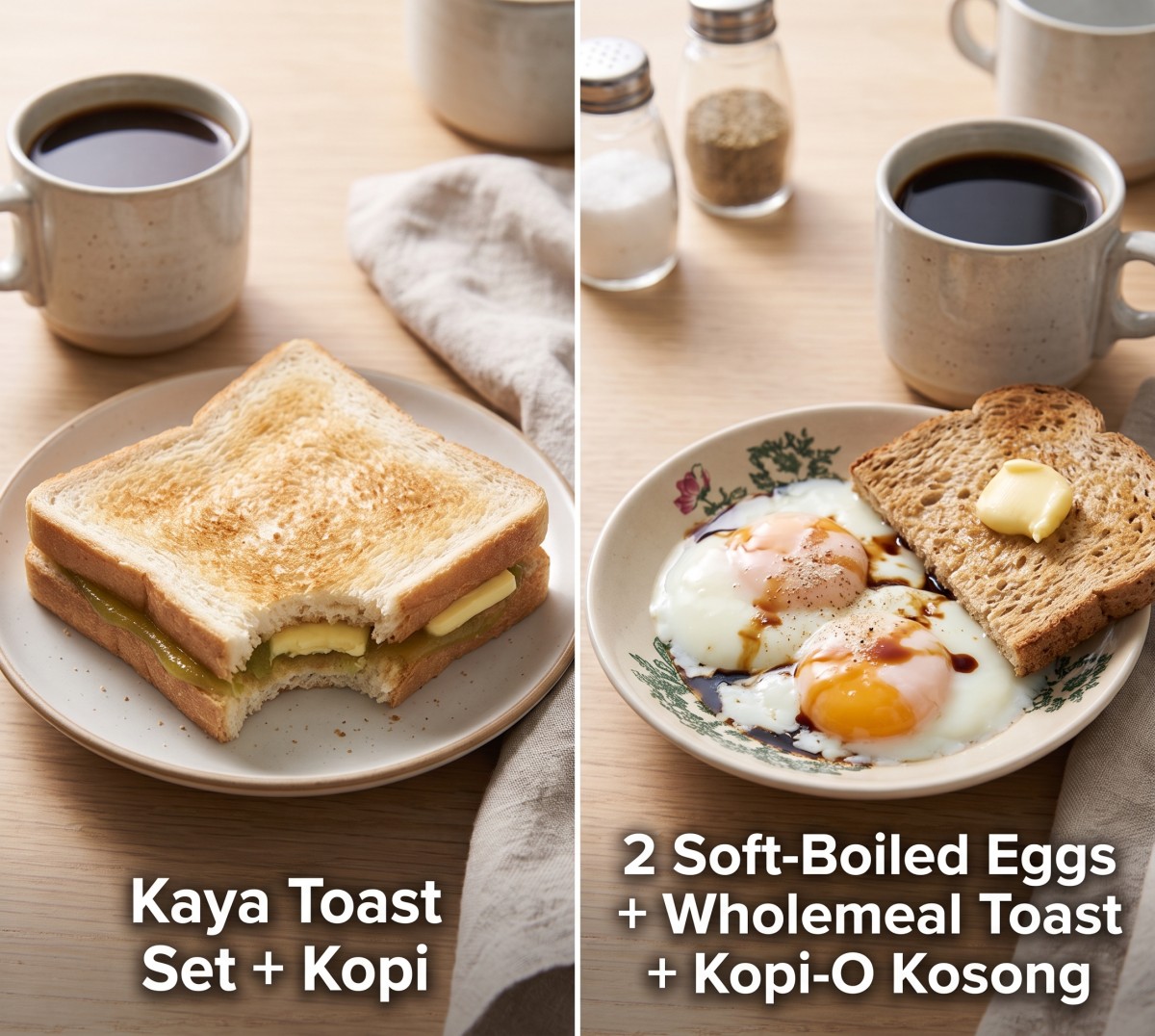
If you have breakfast at a kopitiam, you’ll see the standard kaya toast set on many a table. Go for the equally delicious soft-boiled eggs with wholemeal toast and Kopi-O Kosong for a better start to your day.
Traditional kaya toast features white bread, thick slabs of butter and sweet kaya. Pair that with condensed milk coffee and you’re just asking for a blood sugar spike.
In comparison, wholemeal toast provides complex carbohydrates and dietary fibre. Soft-boiled eggs supply essential protein, while black sugar-free coffee eliminates refined sugars.
Nutritional comparison:
- Kaya toast set & kopi: ~450 kcal, 6g protein, 18g fat, 60g carbs
- 2 Soft-boiled eggs + wholemeal toast + Kopi-O kosong: ~250 kcal, 16g protein, 11g fat, 25g carbs
Nutritionists tell us that this simple menu adjustment saves 200 calories and cuts nearly 30 grams of sugar. It more than doubles your breakfast protein, too.
6. Economic fried bee hoon (plain) vs. Fishball noodle soup (clear)
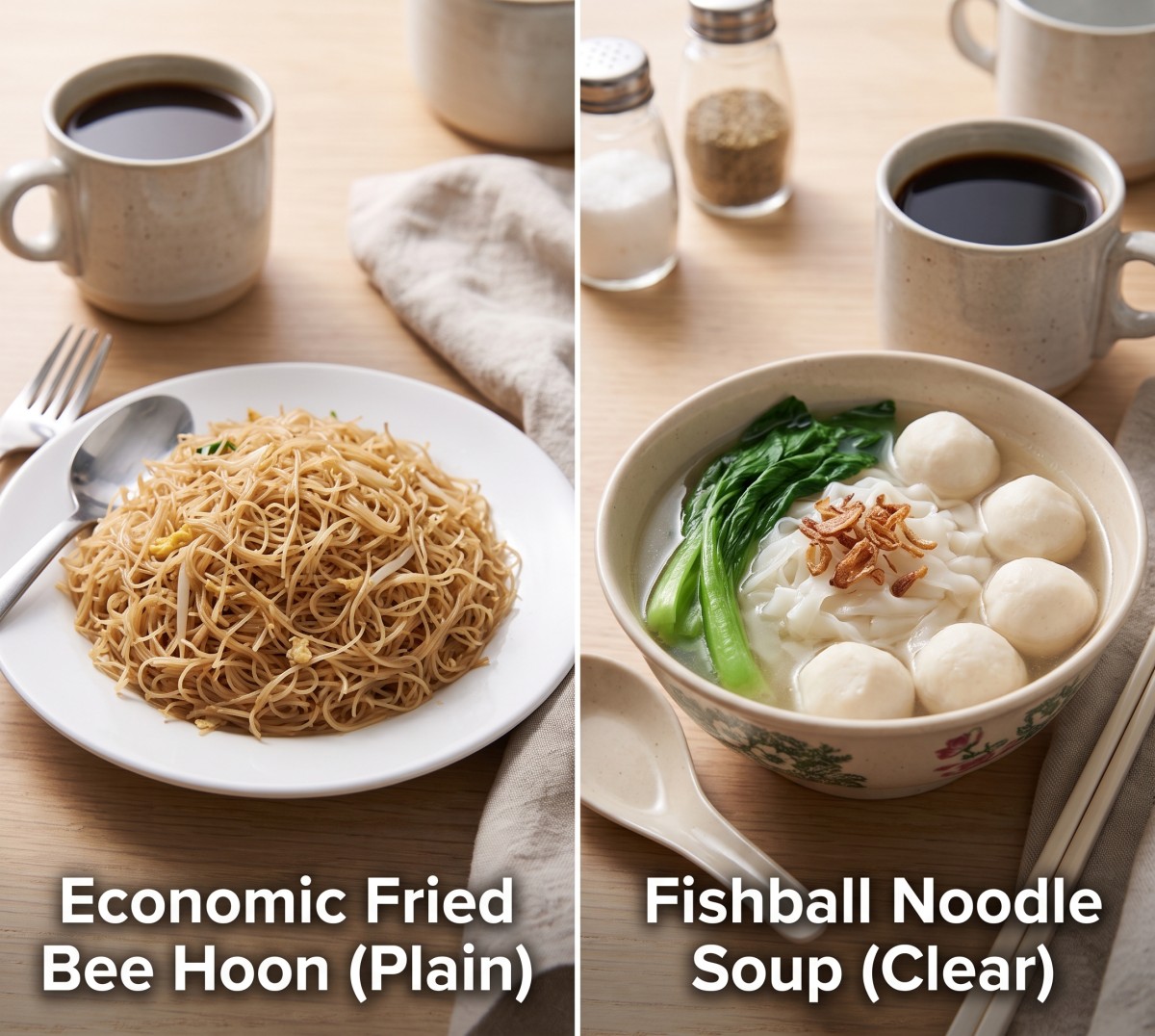
Another very popular Singapore hawker centre breakfast favourite is plain economic fried bee hoon. Nutritionists recommend you opt for the clear fishball noodle soup instead.
Fried bee hoon is stir-fried in substantial amounts of vegetable oil and dark soy sauce. This process makes it calorie-rich, as well as high in saturated fat and sodium.
Meanwhile, fishball noodle soup uses blanched noodles served in a light, water-based broth. Fishballs offer lean protein, making this meal gentle on your stomach.
Nutritional comparison:
- Economic fried bee hoon (plain): ~420 kcal, 8g protein, 18g fat, 55g carbs
- Fishball noodle soup (clear): ~330 kcal, 15g protein, 6g fat, 50g carbs
Ordering fishball noodle soup cuts your fat intake by 12 grams while nearly doubling the amount of protein.
7. Roti prata with meat curry vs. Plain thosai & dhal
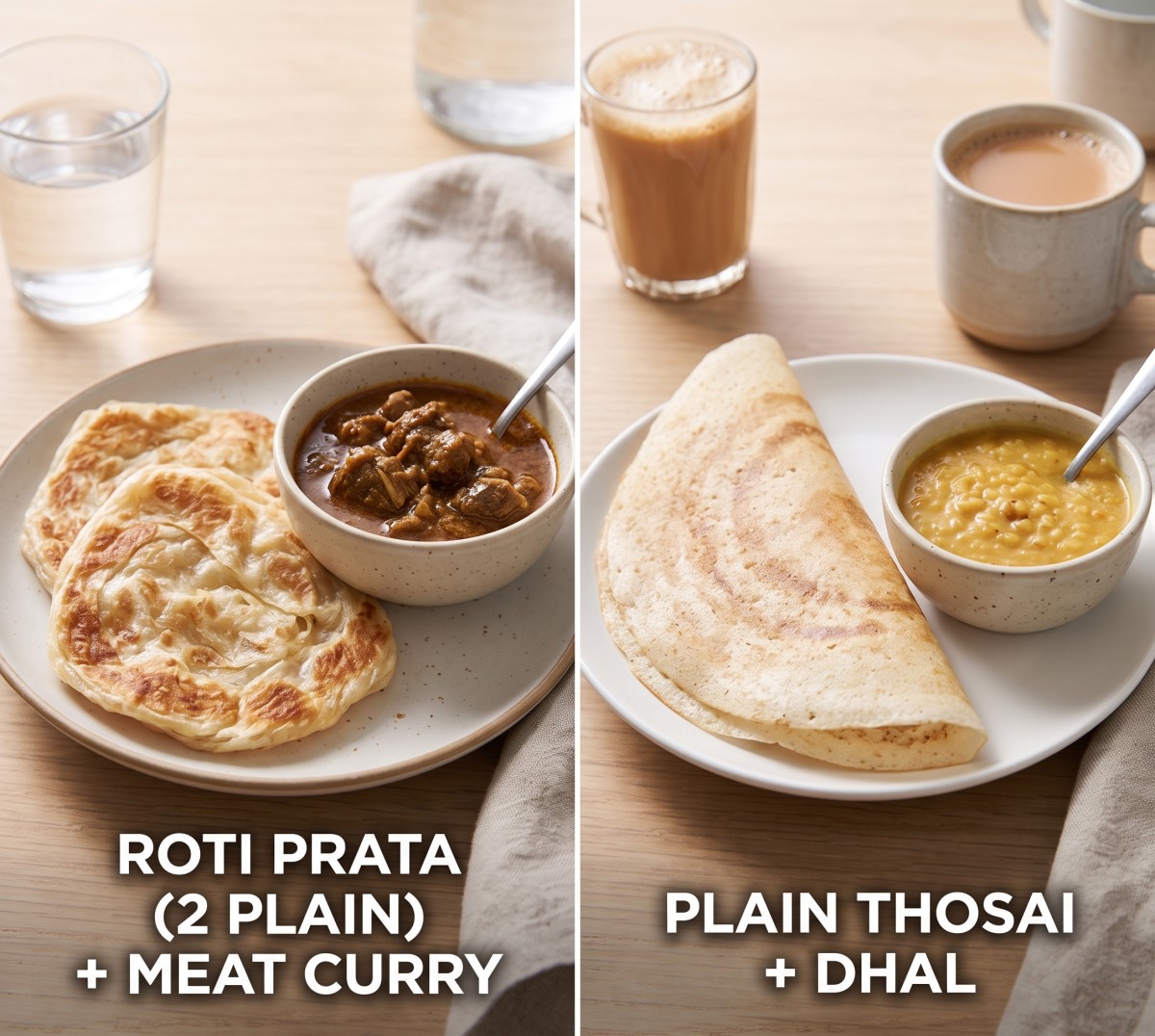
If you’re in the mood for Indian food, plain thosai with dhal is a far superior breakfast to roti prata with a meat curry.
Roti prata is made from refined flour and cooked using generous amounts of ghee or margarine. The meat curry also adds significant saturated fats — you’ll notice that the meat itself tends to be much more fatty than other meat dishes.
On the other hand, thosai is crafted from a fermented batter of lentils and rice. Dhal is rich in plant-based protein while its dietary fibre aids digestion.
Nutritional comparison:
- Roti Prata (2 plain) with meat curry: ~550 kcal, 12g protein, 28g fat, 55g carbs
- Plain thosai and dhal: ~220 kcal, 8g protein, 4g fat, 38g carbs
Swapping prata for thosai cuts over 300 calories and dramatically reduces fat by 24 grams. Nutritionists recommend thosai because while it’s so much healthier, it’s still so delicious!
8. Pork porridge with you tiao vs. Sliced fish porridge
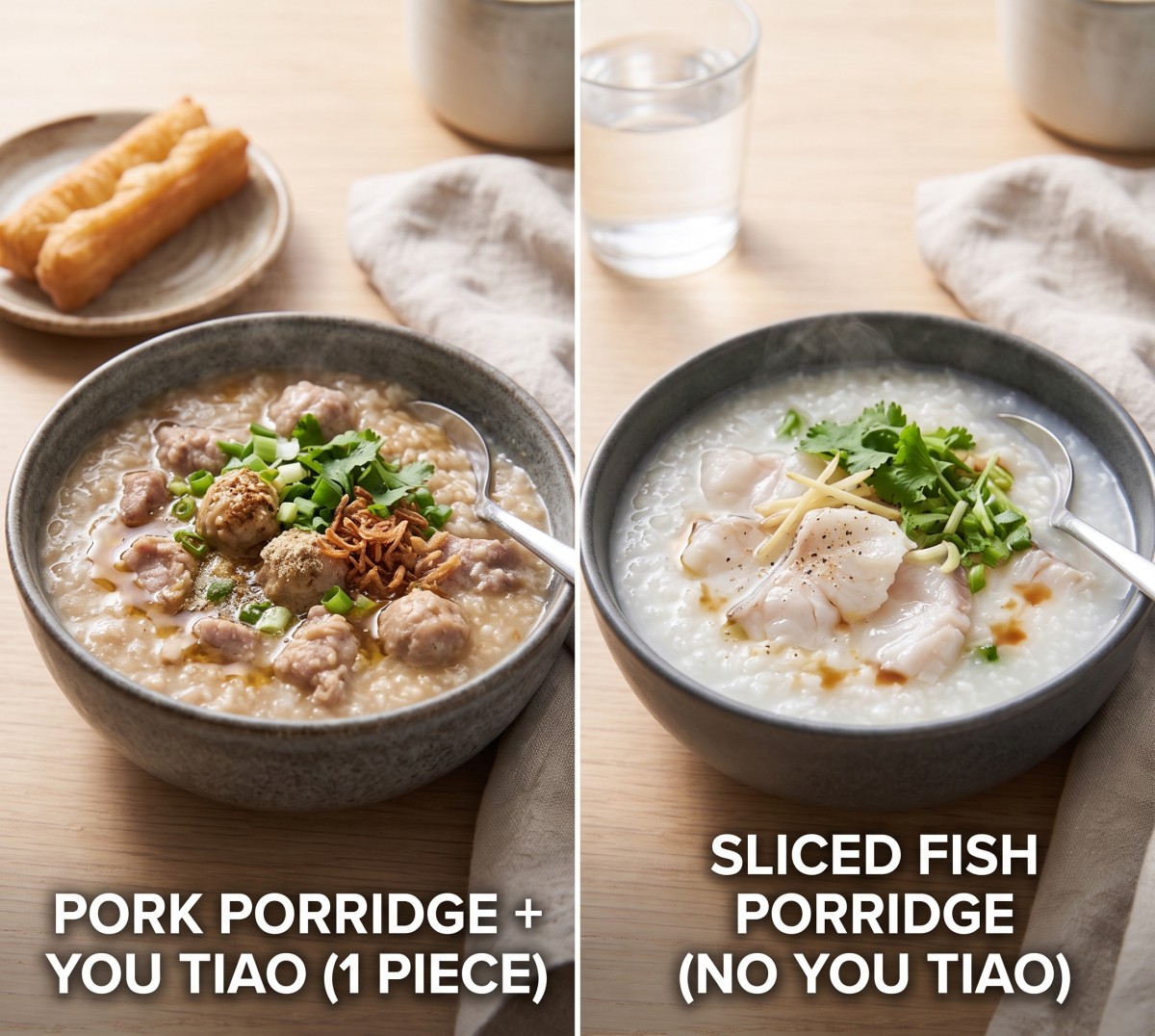
The aroma of classic pork porridge at the hawker centre in the morning is tempting, especially paired with the sight of golden-brown you tiao. I find sliced fish porridge without you tiao just as delicious, and it’s a much healthier morning meal, too.
Deep-fried dough fritters are just empty calories with lots of trans fats. Pork porridge also contains more saturated fat than fish does.
By contrast, fresh sliced fish delivers lean protein and heart-healthy omega-3 fatty acids. Skipping the you tiao keeps your breakfast light and easily digestible.
Nutritional comparison:
- Pork porridge with you tiao: ~450 kcal, 12g protein, 20g fat, 65g carbs
- Sliced fish porridge (no you tiao): ~250 kcal, 18g protein, 4g fat, 40g carbs
Choosing sliced fish porridge cuts 200 calories and reduces fat by 1g. Nutritionists also love it for the 150% increase in protein content.
How to choose a healthier breakfast in Singapore
Where you eat — home or outside — makes the biggest difference.
For a quick home meal, wholemeal bread with canned tuna offers more protein than white bread with butter and jam, while bran cereal with low-fat yoghurt suits those who prefer a bowl of cereal. If you have more time, rolled oats with low-fat milk or brown rice porridge with chicken provide more substantial options.
When eating out, opt for soft-boiled eggs with wholemeal toast and Kopi-O kosong at a kopitiam, fishball noodle soup for a lighter hawker meal, plain thosai with dhal for Indian fare, or sliced fish porridge without you tiao when you want something gentler. The most suitable choice depends on your routine, appetite and nutritional priorities.
People also read: