 Malaysia
 Singapore
 Thailand

Following a rise in “Tidak Lulus” (Not Approved) statuses among STR applicants who frequently commute to Singapore, many Malaysians are asking the same question: if you cross the Causeway often for work or personal reasons, are you automatically ineligible for STR 2026?
The short answer is not exactly — but there are conditions that matter.
What is STR 2026?
Before getting into the commuting issue, here’s a quick refresher on what Sumbangan Tunai Rahmah (STR) actually is.
Formerly known as Bantuan Keluarga Malaysia, STR is a cash assistance programme aimed at easing cost-of-living pressures for Malaysians in the B40 and M40 groups, as well as senior citizens and eligible singles. The 2026 edition continues this support with phased payments throughout the year.
For STR 2026, eligibility generally covers Malaysian citizens with a household income of RM5,000 or below, senior citizens without a spouse, and singles aged 21 to 59 (or from 19 years old for OKU).
Who needs to apply or update their application?
- Apply if you’ve never applied before or have no STR 2025 record.
- Update if your details haven’t been updated in three years or if your personal information has changed.
- No action needed if there are no changes, or if you’re a senior citizen or a resident of rural Sabah or Sarawak.
How to apply for STR 2026?
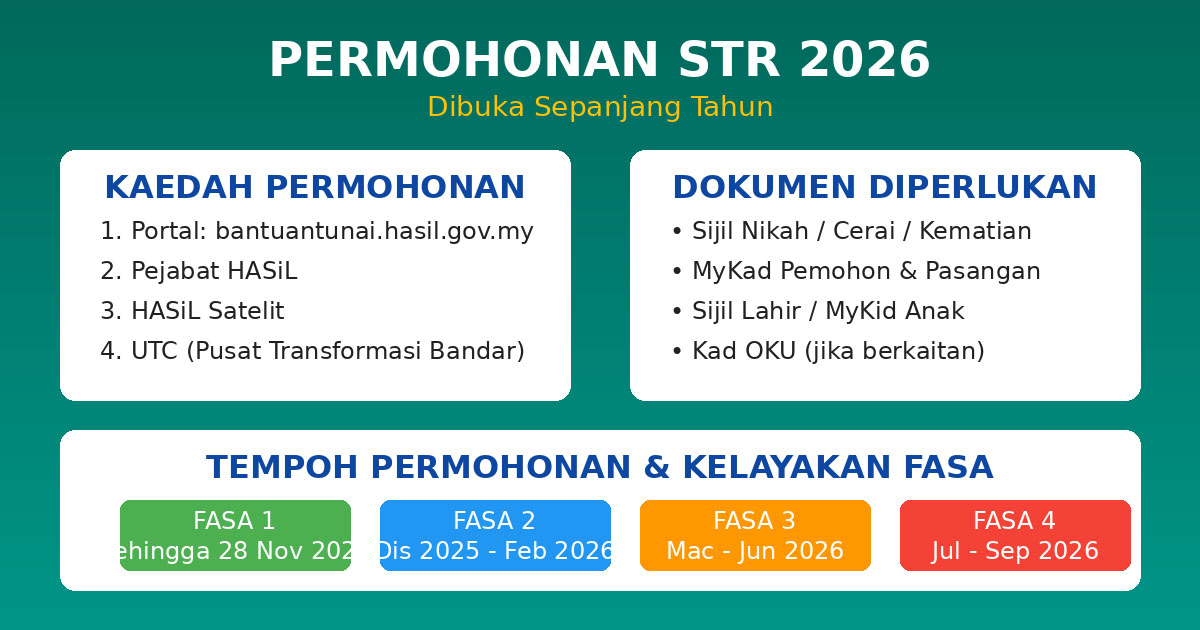
- Online Application (Recommended) via bantuantunai.hasil.gov.my
- Manual Application (Paper Form) which can be retrieved from the official STR portal and mailed to HASiL offices, HASiL satellite offices, or UTC centres
How many recipient categories are there?
1) Households
- Malaysian citizens residing in Malaysia
- Gross monthly household income of RM5,000 and below
- Married couples, or single parents, widows or widowers with children
2) Elderly Without a Spouse
- Malaysian citizens residing in Malaysia
- Aged 60 and above
- Gross monthly income of RM5,000 and below
- Single, widowed or widowers without children
3) Singles
- Malaysian citizens residing in Malaysia
- Aged 21 to 59 (or 19 and above for OKU)
- Not a full-time IPTA or IPTS student
- Gross monthly income of RM2,500 and below
When should I apply? When can I receive the aid?
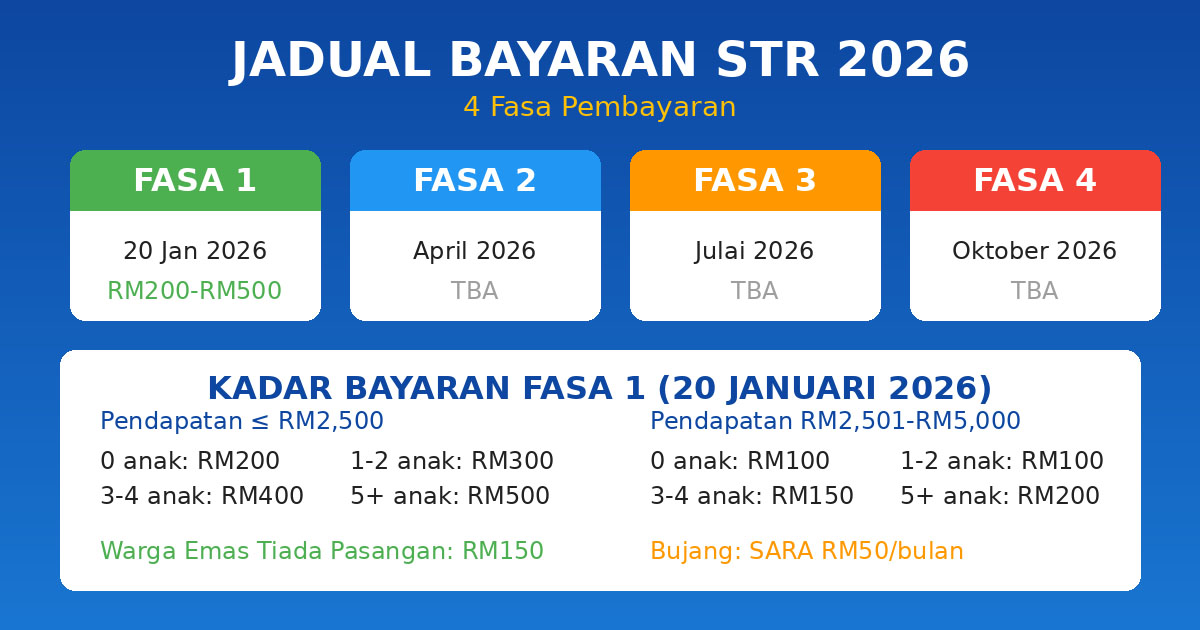
Applications are open throughout the year, with payments made in phases.
- Applications submitted by 28 November 2025
Phase 1 payment on 20 January 2026 - Applications from December 2025 to 13 February 2026
Phase 2 payment in April 2026 - Applications from 16 February to 30 June 2026
Phase 3 payment in July 2026 - Applications from July to September 2026
Phase 4 payment in October 2026
How much can I generally get for STR 2026?
Payment amounts vary based on income level and number of children:
- Households with no children: RM500 to RM1,000 per year
- Households with 1 to 5 children: RM750 to RM2,500 per year
- Elderly without a spouse: RM600 per year
- Singles: RM600 per year (RM50 per month)
Eligibility Criteria & the Singapore Commuting Issue
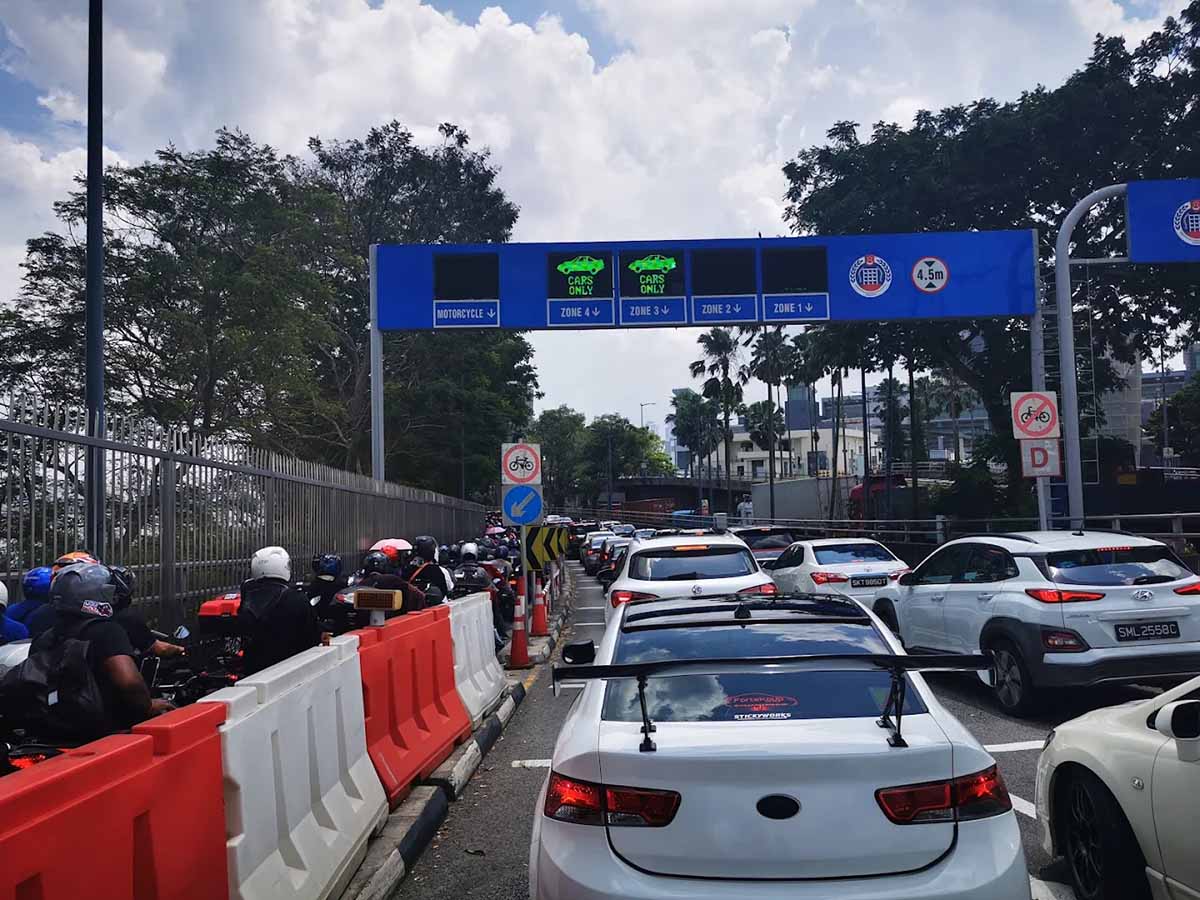
In addition to the recipient category requirements, one key condition applies across the board: applicants must be Malaysian citizens residing in Malaysia.
This is where frequent travel to Singapore becomes a potential issue.
According to a Facebook post by Liew Chin Tong dated 25 Jan, cases involving Malaysians who frequently enter Singapore are not considered “rejected”, but instead marked as “Tidak Lulus” Not Approved under Reason Code 31.
This code applies when the applicant or their spouse is deemed to be residing, working, or studying overseas.
Under LHDN’s current approach, Malaysians who enter Singapore 8 times or more per month may be interpreted as working abroad, based on the assumption of weekly or near-daily commuting.
To distinguish between temporary travel and overseas employment, the following benchmarks are used:
- 1 to 7 trips per month are generally considered reasonable and temporary, such as for medical treatment, emergencies, short-term assignments, or family matters
- 8 trips or more per month are viewed as a significant period spent outside the country
That said, the government has stated that it remains open to appeals. There are legitimate cases where Malaysians need to cross the border frequently while still being employed locally, such as logistics drivers working for Malaysian companies.
For those affected by this policy, appeals for STR 2026 are open throughout the year, and applicants are encouraged to submit supporting documents where relevant.
TLDR for Malaysians Who Commute to Singapore
Frequent trips to Singapore don’t automatically disqualify you from STR 2026, but crossing the border 8 times or more per month may cause your application to be marked “Tidak Lulus” (Not Approved). If you still live and work in Malaysia, you can submit an appeal, which is open throughout 2026.
JB to KL ETS – Was paying RM163 for the train’s business class worth it?