 Malaysia
 Singapore
 Thailand

Whether you’ve just collected the keys to your BTO or you’re looking to upgrade your HDB kitchen, a good water dispenser is likely at the top of your wishlist. Given the Singaporean heat and our love for tea and coffee, an instant hot and cold water dispenser definitely earns its place on your kitchen countertop or office kitchen.
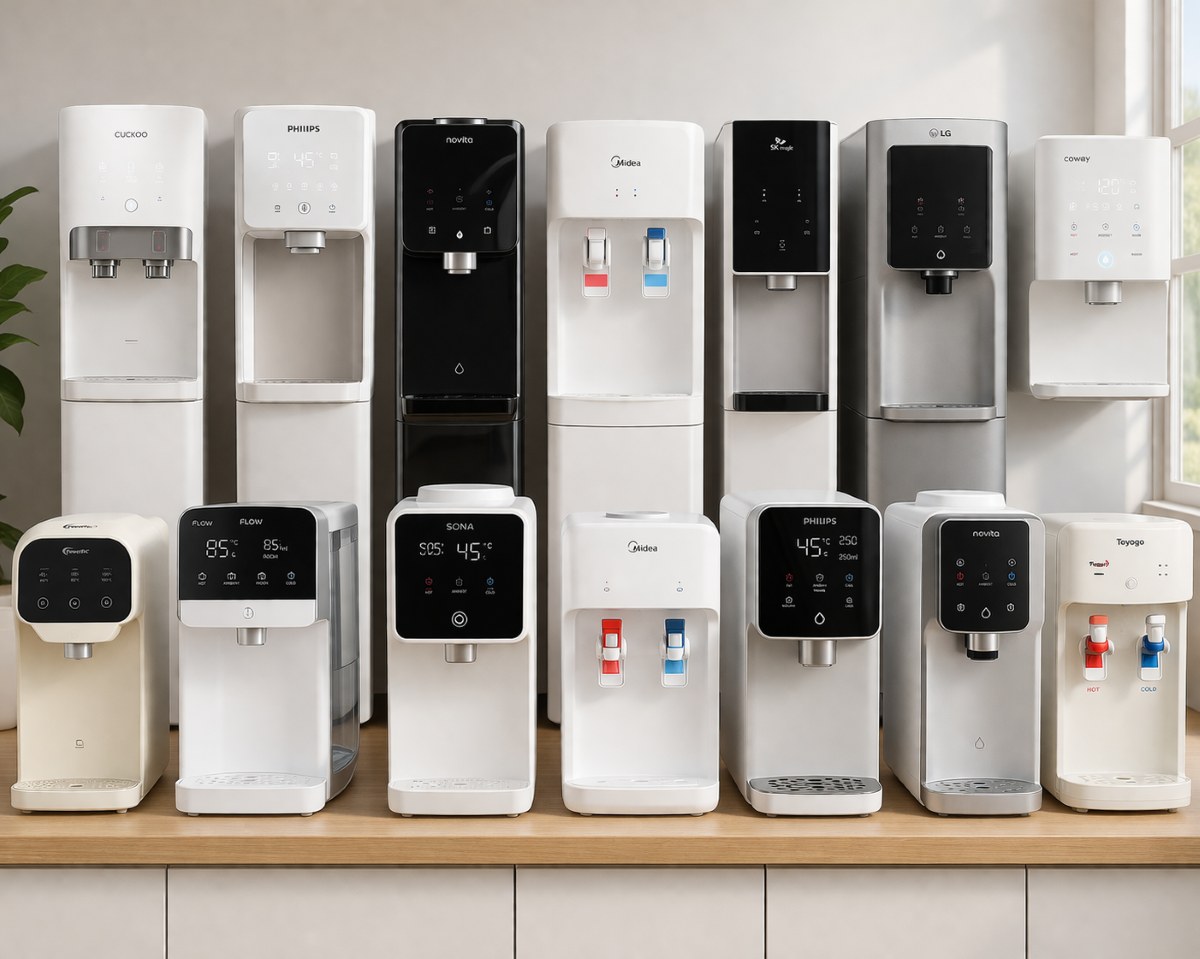
It’s a crowded market, though, which sometimes makes it easy to get swayed by sleek marketing that shouts about ’99 filtration stages’ or ‘mineral’ filters accompanied by a smiling celebrity. Don’t fall for it.
Here is our practical 3-step guide to choosing a water dispenser that suits your kitchen, family size and lifestyle. Use it to choose the best water dispenser at a price that is right for your home.
The right water dispenser matters (more than you think)
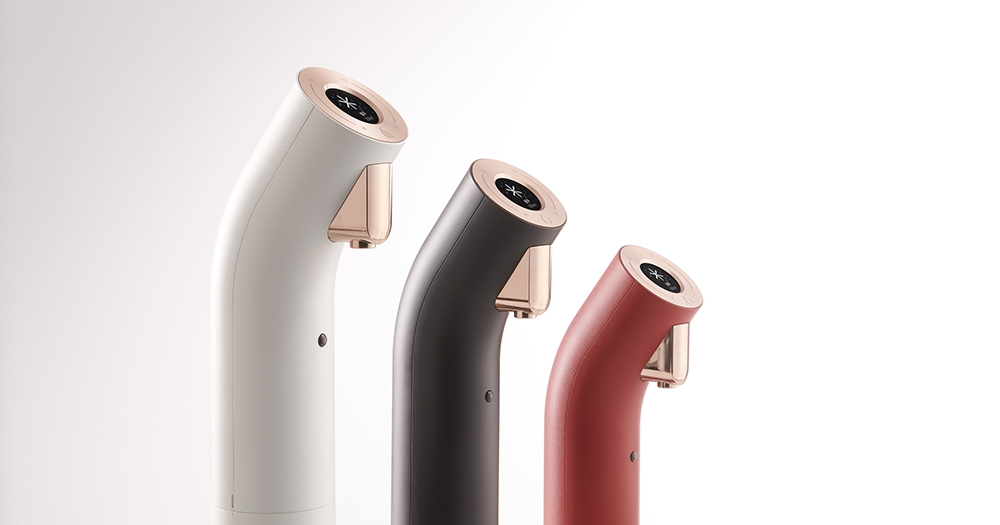
While “instant hot and cold water” is the headline, a good water dispenser comes with benefits that go far beyond just a quick cup of coffee:
-
Space-Saving: Most modern dispensers are ultra-slim, replacing your bulky kettle, thermal pot and water pitchers in one go
-
Hygiene & Safety: Tankless models ensure you aren’t drinking water that’s been sitting in a plastic or metal tank for days
-
Energy Efficiency: Instant heating tech means you only pay for the water you heat, rather than keeping a whole pot at a boil 24/7
-
Healthier Habits: When cold, filtered water is available at the touch of a button, you’ll find it much easier to hit your daily hydration goal
Together, this means clean, untainted water, smaller electricity bills and perhaps even younger-looking skin.
5 things to know before buying a water dispenser
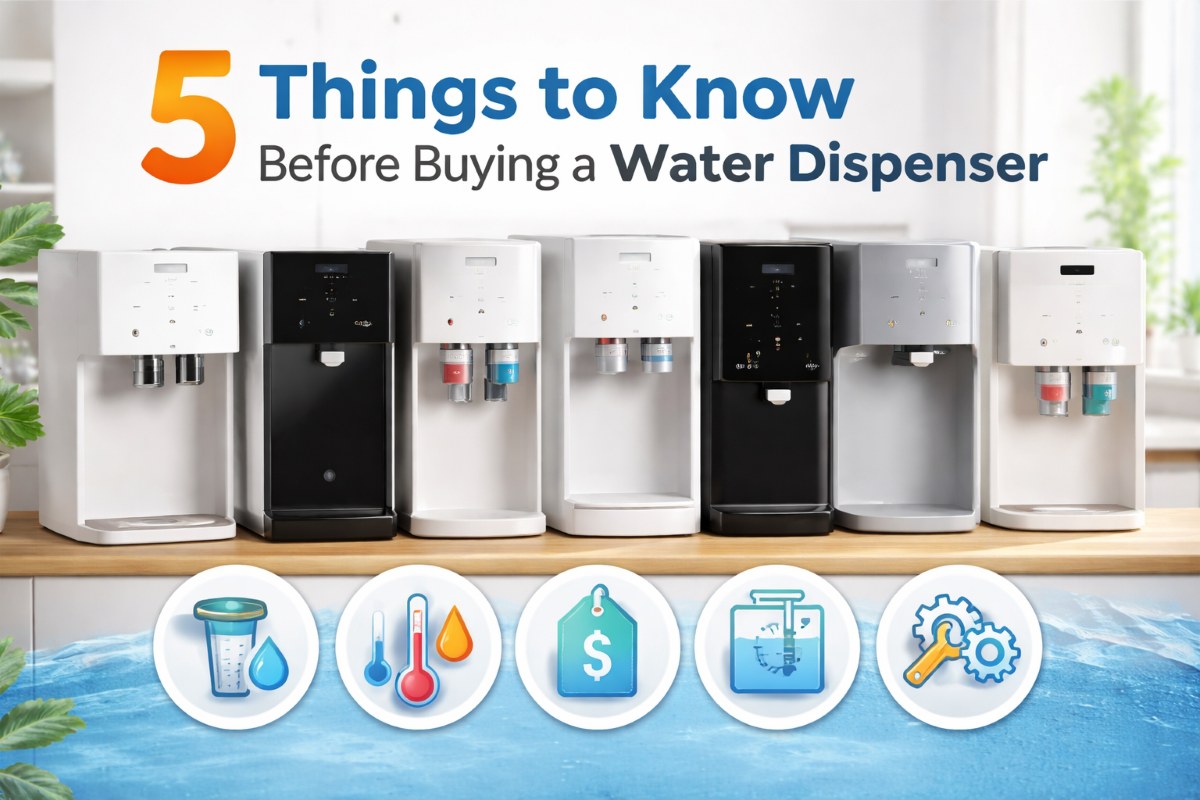
Here are 5 factors that will narrow down your choices for the best water dispenser for your home or office.
1. Tank vs. Tankless
Tank-based models store water in an internal reservoir, which can take up space and lead to stagnant watery67 concerns. Tankless models heat and cool water instantly as it flows, making them more hygienic and significantly slimmer.
2. Not all filters are the same
In Singapore, Ultrafiltration (UF) is usually sufficient to remove bacteria while keeping minerals. However, if you live in an older estate with ageing pipes, you might want to look into Nanofiltration or Alkaline options for better taste and peace of mind.
3. To boil or not to boil
Many dispensers produce hot water but some only reach 85°C. If you’re a tea or coffee aficionado and need a proper 100°C for your kopi, ensure the model you choose has that ability.
4. Maintenance costs add up
Don’t just look at the purchase price. Some brands offer a cheap machine but charge S$300+ a year for filter replacements. Try to calculate at least the 3-year total cost of ownership before committing.
5. Installation requirements
Many dispensers require direct piping to your water source, which usually involves drilling a small hole in your countertop. If you’re a renter or prefer not to drill, look for manual-fill (plug-and-play) models instead.
10 best water purifiers in Singapore: A buying guide to cleaner water
3 simple steps to choosing the right water dispenser in Singapore
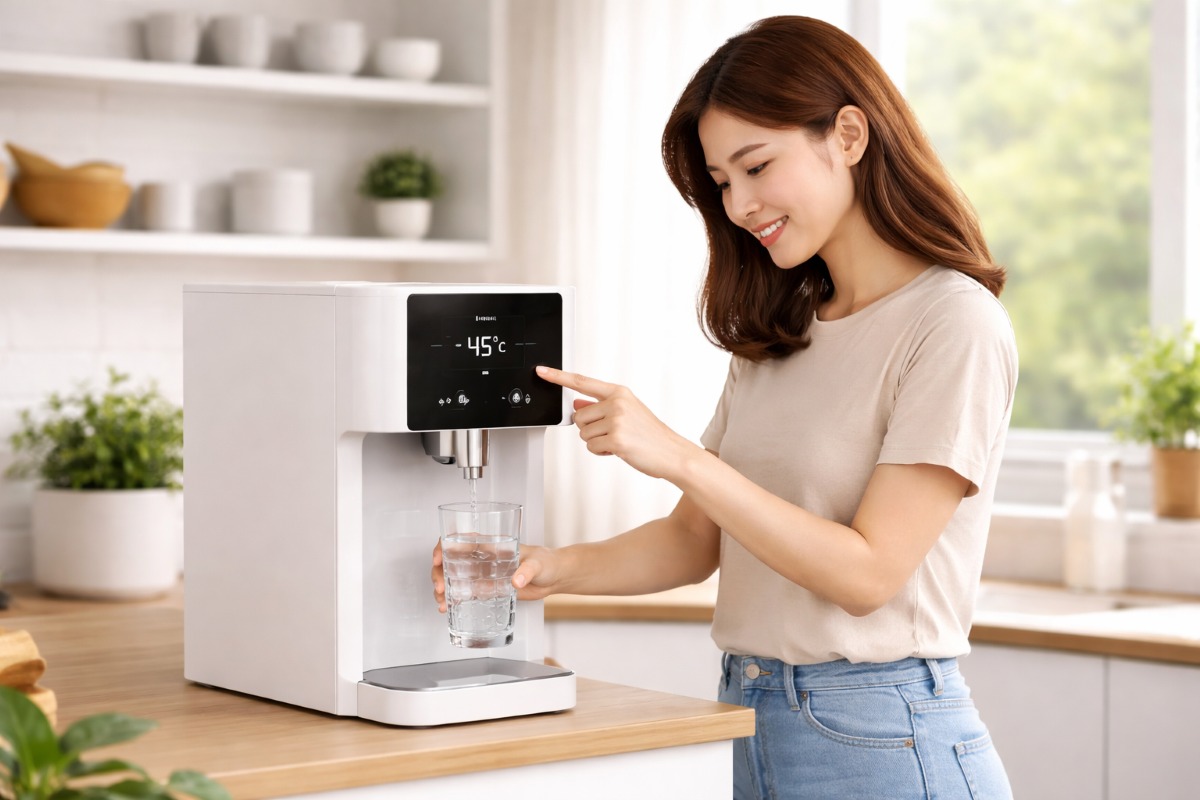
Step 1: Pick the right design for your lifestyle
Water dispensers have evolved from the bulky office coolers of the past. Today, they are designed to be sleek, modern appliances that fit seamlessly into the modern home.
| Dispenser Type | Key Advantage | Best For |
| Tankless slim | Smallest footprint; high hygiene | BTO owners with limited counter space |
| Manual fill | No piping or drilling required | Renters or homes away from a water point |
| Under-sink | Hidden away; only a tap is visible | Minimalists who want a clutter-free kitchen |
Step 2: Match functionality to your routine
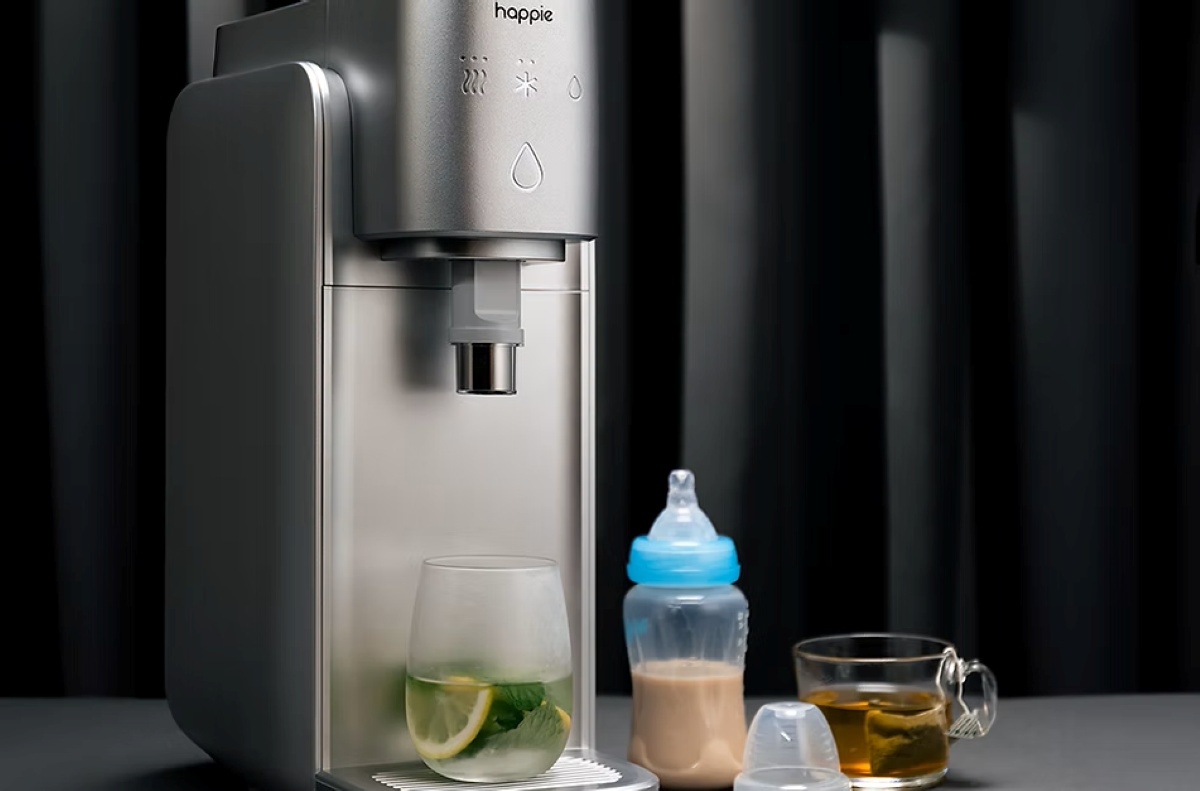
Think about what you actually drink daily. If you have a baby, a model with a 45°C milk powder setting is one of the most convenient settings to have. Gym rats may want a model with 6°C cold water for their protein shakes.
Step 3: Singapore-specific considerations
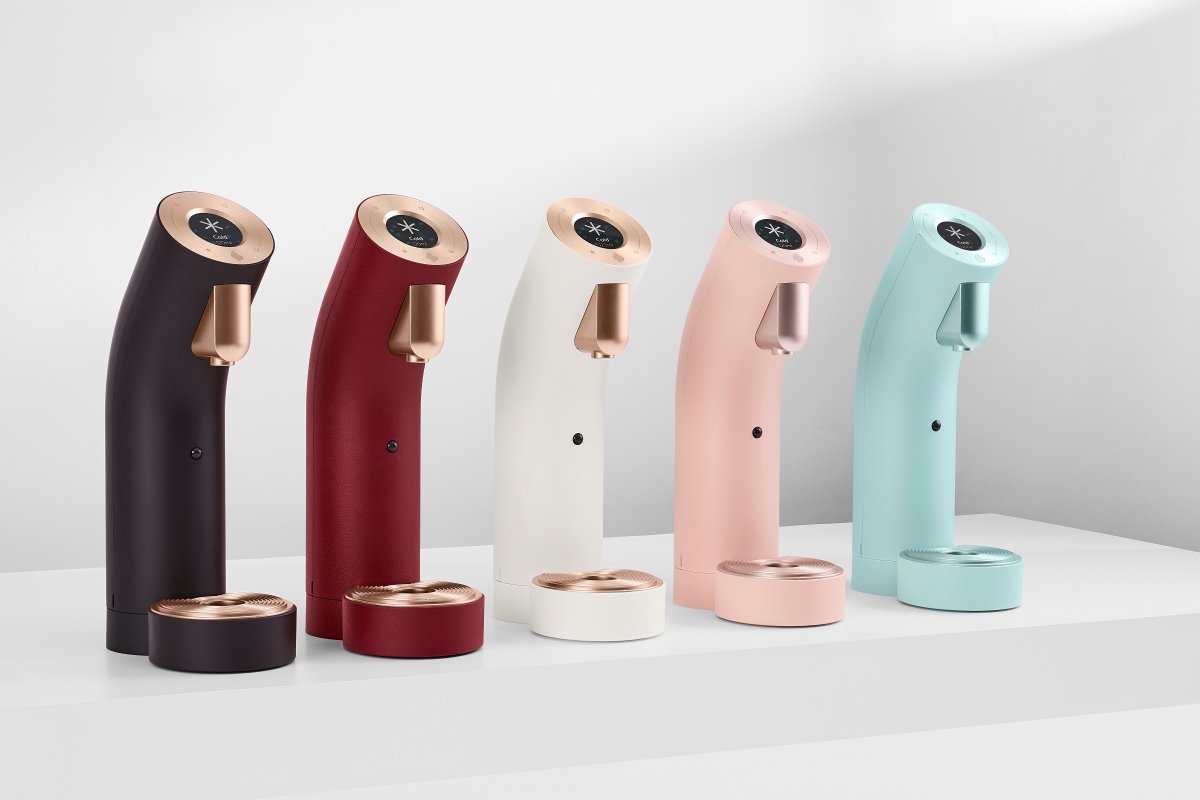
-
UV-C Sterilisation: Our humid climate is a playground for bacteria. Look for a model with a UV-C LED at the nozzle that automatically sterilises the outlet every few hours.
-
Power Load: Instant heating draws high wattage (up to 2500W). Ensure your kitchen power point can handle the load, especially if you’re running it alongside an air fryer or induction hob.
-
After-Sales Support: Stick to brands with a physical service centre in Singapore. If your dispenser leaks or stops heating, you don’t want to be waiting weeks for a “regional” technician.
Before you buy: Think maintenance
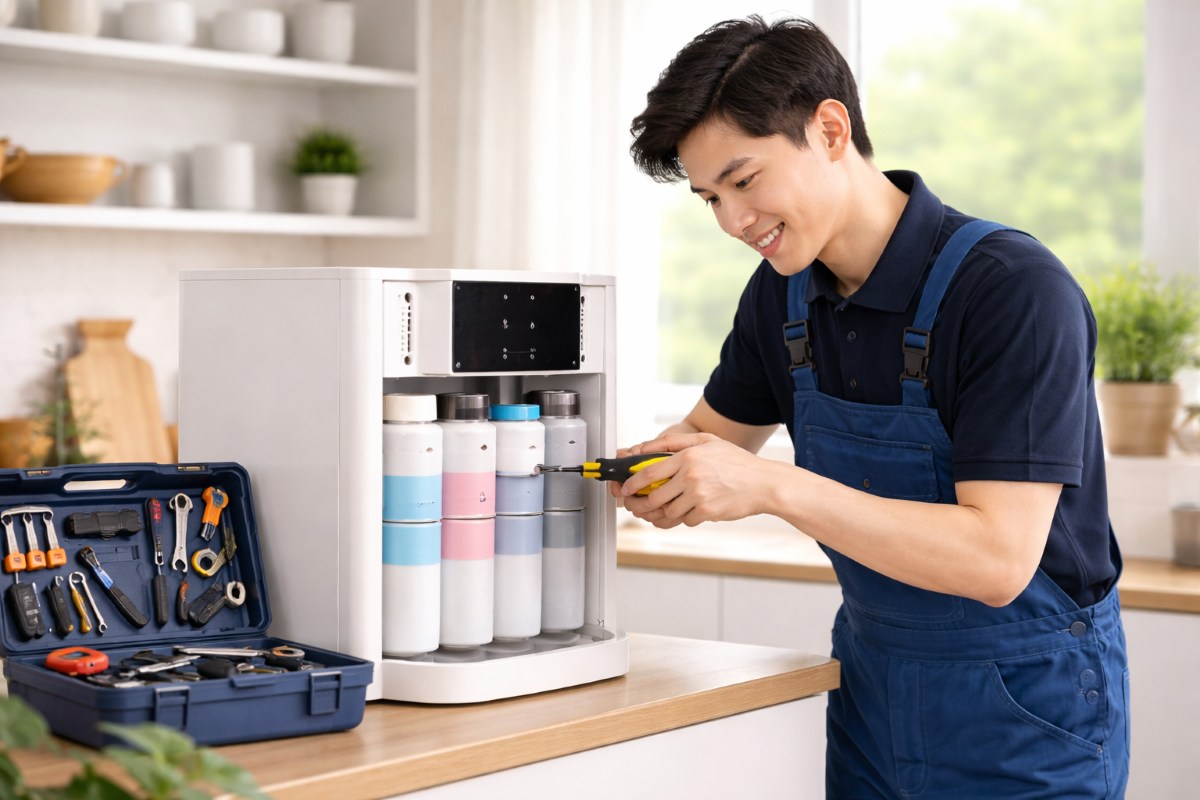
The biggest regret for dispenser owners isn’t the water quality—it’s the cleaning.
-
Self-cleaning: Premium models have internal pipe electrolysis or steam-cleaning features. This saves you from having to call a technician for a thorough servicing every year.
-
Filter change: Look for twist-and-pull filters that you can change yourself in 30 seconds. If a brand requires a technician just to swap a filter, you’re paying for unnecessary service fees.
-
Drip tray: Check if the drip tray is magnetic or easy to remove. It’s the part that gets the dirtiest from splashes!
How to choose a water dispenser for your home setup
Start by matching the dispenser type to your living situation. Tankless slim models suit BTO kitchens with limited counter space, while manual-fill units work better for renters or homes without direct water access. Under-sink systems fit those prioritising a clean, uncluttered look, provided installation is not an issue.
Then align features with daily habits and long-term costs. Households making tea or coffee regularly should ensure true 100°C output, while families with infants may need preset temperatures like 45°C. In Singapore, basic ultrafiltration is typically sufficient, but older estates may benefit from higher-grade filtration. Maintenance, power load and ease of cleaning often determine long-term satisfaction.
People also read: