 Malaysia
 Singapore
 Thailand

I owe wanton mee my sincerest apologies. It was my first love when it came to noodle dishes, but as I grew older, bak chor mee, ban mian, and other delights slowly stole my affection, leaving wanton mee to fade into the shadows. Thus, this seemed like the perfect opportunity to rekindle my relationship with this old flame of mine, as I swung by Dunman Food Centre to pit 2 wanton mee stalls against each other — Joo Chiat Ah Huat Wanton Noodle and Dunman Road Char Siew Wan Ton Mee.
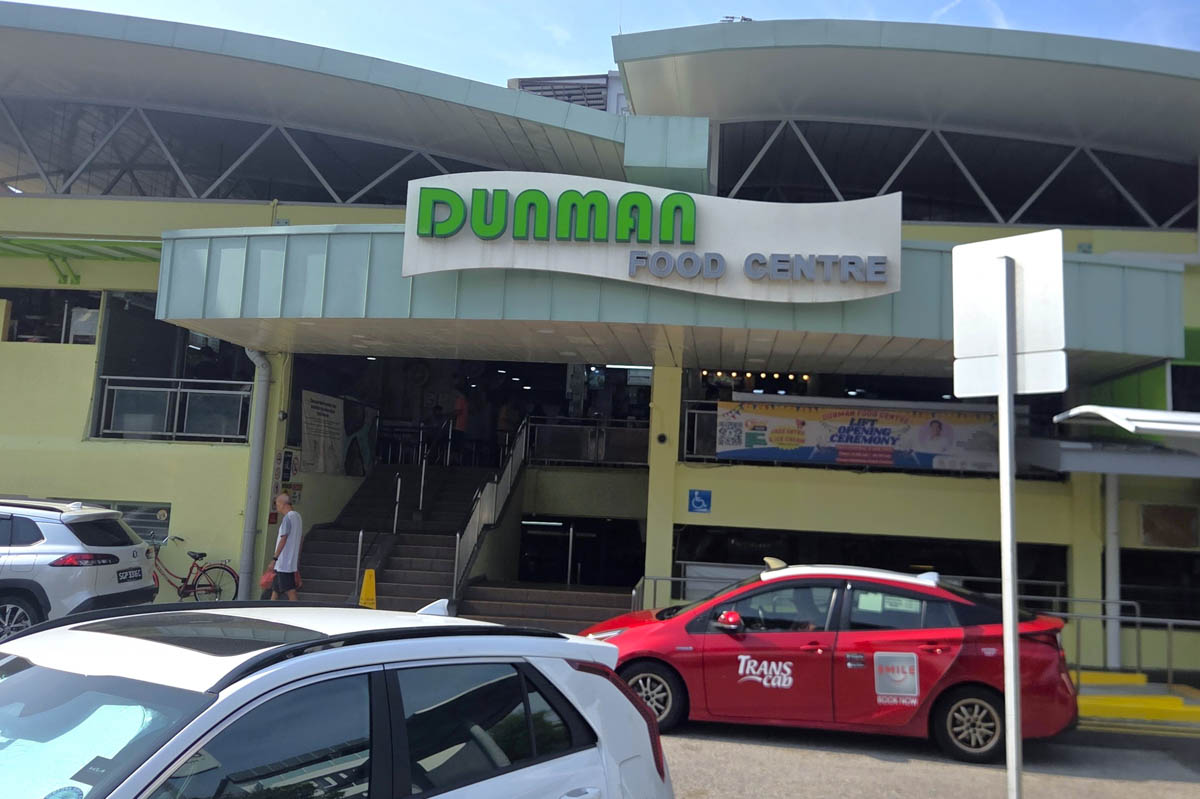
It was my first-ever trip to this 2-storey hawker centre and its layout reminded me of a mini Berseh Food Centre.
What is wanton mee?
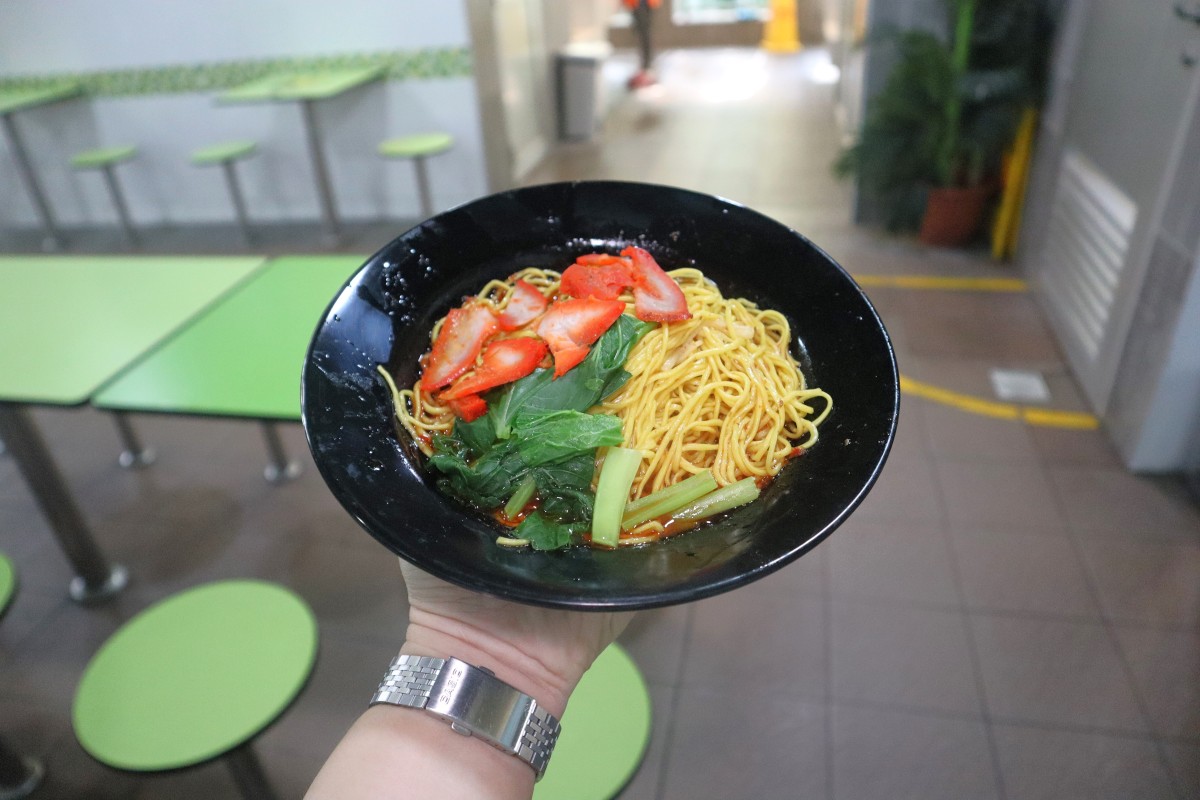
Wanton mee is a noodle dish with Cantonese roots. In Hong Kong, it’s usually served as a bowl of fresh egg noodles with shrimp dumplings in a clear broth. Over in Singapore and Malaysia, however, we’ve developed our own identity. A bowl of mee kia is either served dry, tossed with a mix of seasonings, or doused in hot broth, accompanied by slices of char siew, wanton, and leafy veggies.
What makes a good wanton mee?
A solid wanton mee should, first and foremost, have springy noodles that don’t clump together, tossed in a well-balanced mix of savoury, spicy and unctuous seasonings. Some prefer lean char siew while others prefer the fatty, charred version. Personally, I love both. The wantons should be plump with smooth skin, and have a good mix of meat and shrimp filling.
Why these contenders?
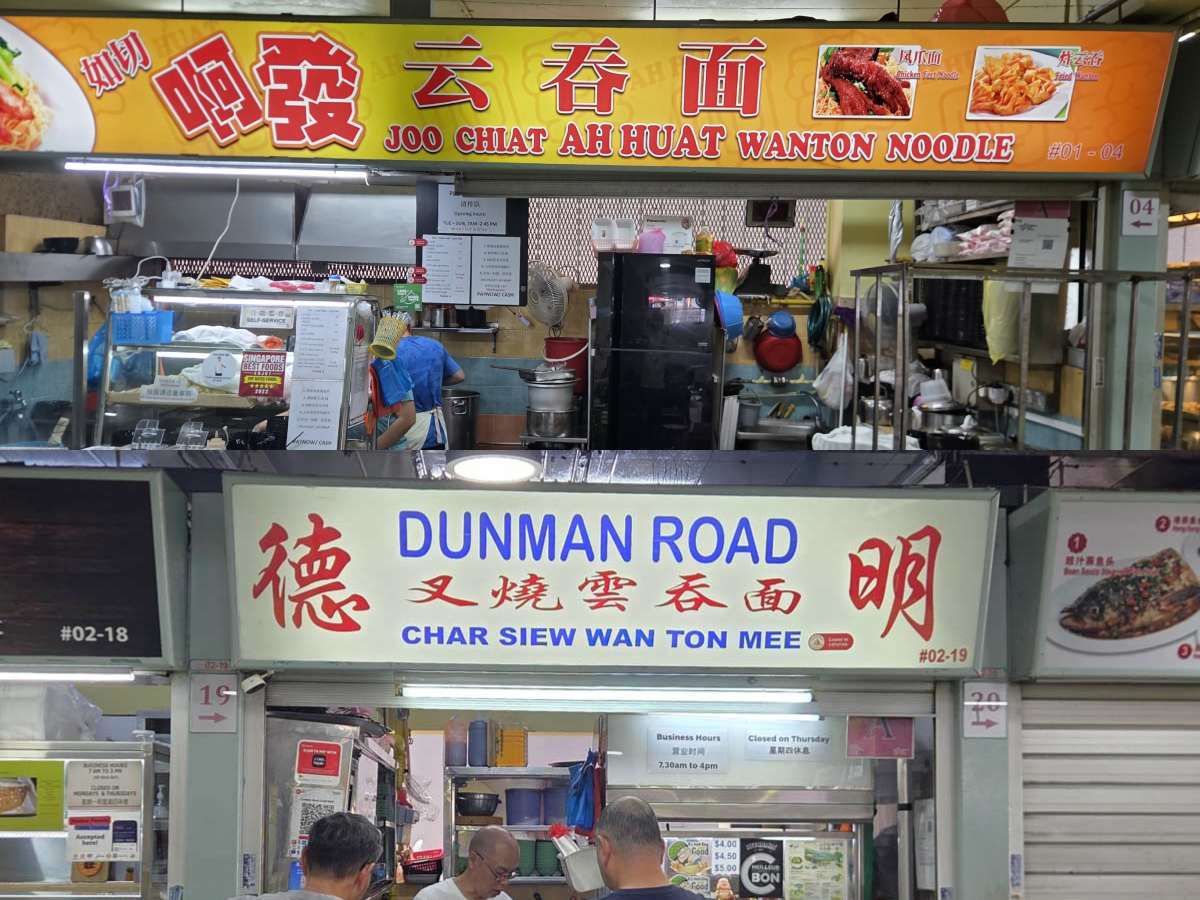
Aside from the fact that these 2 wanton mee stalls at Dunman Food Centre have their own fan base, I chose 13-year-old Joo Chiat Ah Huat Wanton Noodle because this stall was established by Ah Huat, who is the former chef associated with the legendary, now-defunct Ang Moh Noodle House.
On the other hand, Dunman Road Char Siew Wan Ton Mee has been around since 1975, and shares the same history as the popular Eng’s.
Joo Chiat Ah Huat Wanton Noodle
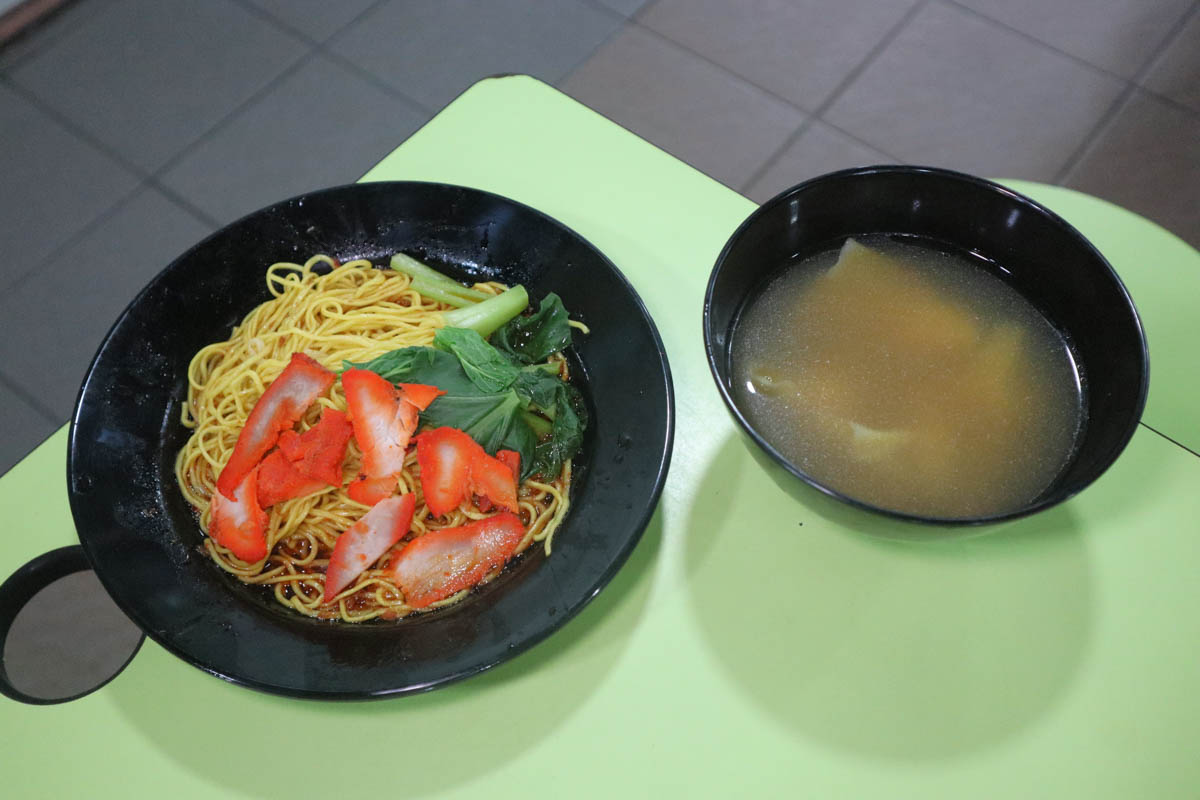
The menu here is straightforward with just Wanton Noodle (S$4) and Chicken Feet Noodle (S$4). For S$4, I must say that the portioning of the Wanton Noodle is generous. The mound of mee kia was topped with generic-looking char siew and cai xin, with a bowl of wanton soup on the side.
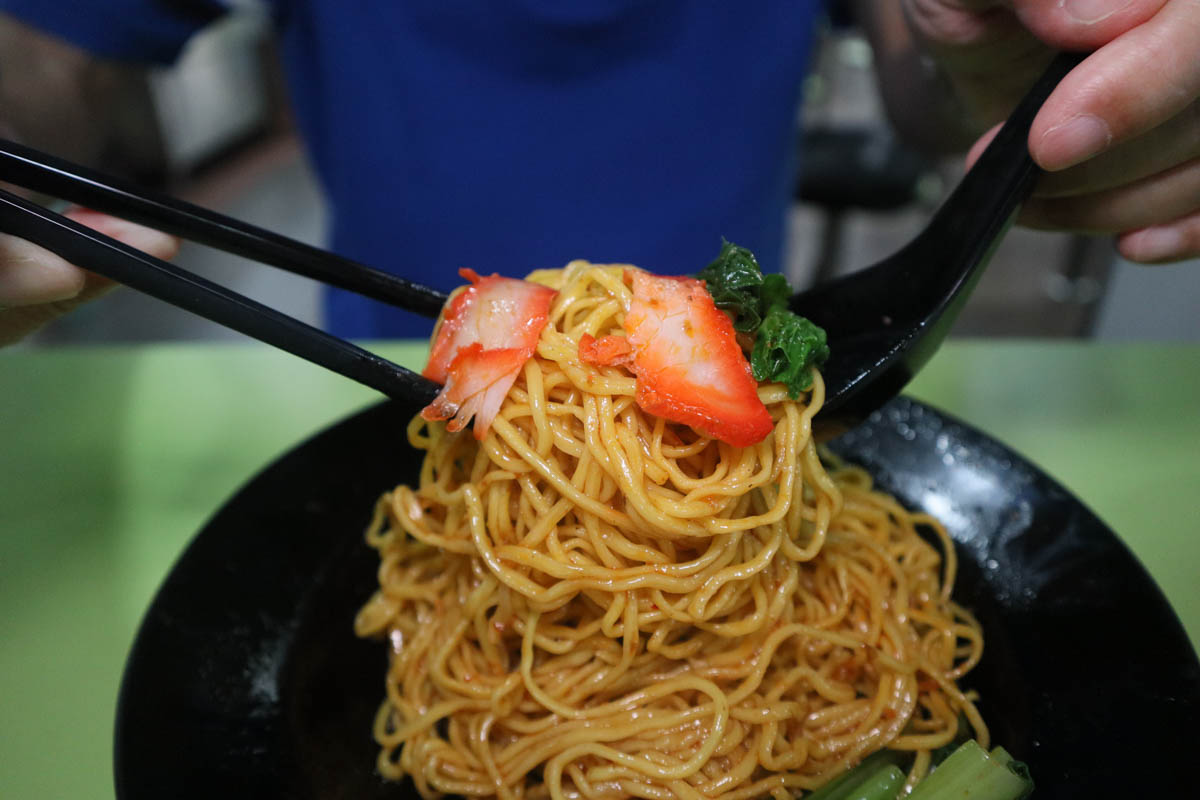
After a thorough toss, the yellow strands of noodles gained a light reddish-brown hue. They were springy and had a satisfying bite, but I wasn’t prepared for the chilli’s surprise attack. Though the colour was rather muted, the fiery spice tickled my throat and made me cough a little. This, my friends, is a formidable ninja — silent but deadly (in the best way).
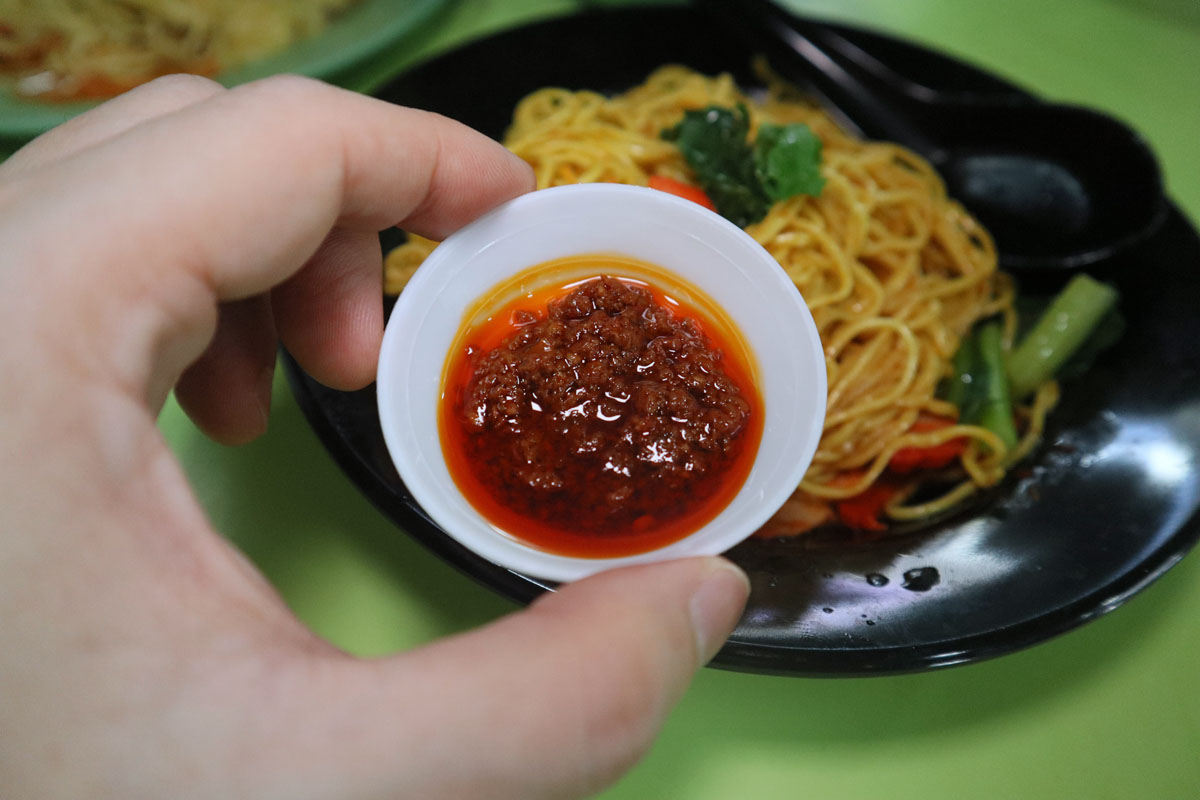
I also took an additional saucer of sambal to savour on its own. It actually reminded me of my favourite Bedok-chain chwee kueh chilli, which has a strong hint of dried shrimp.
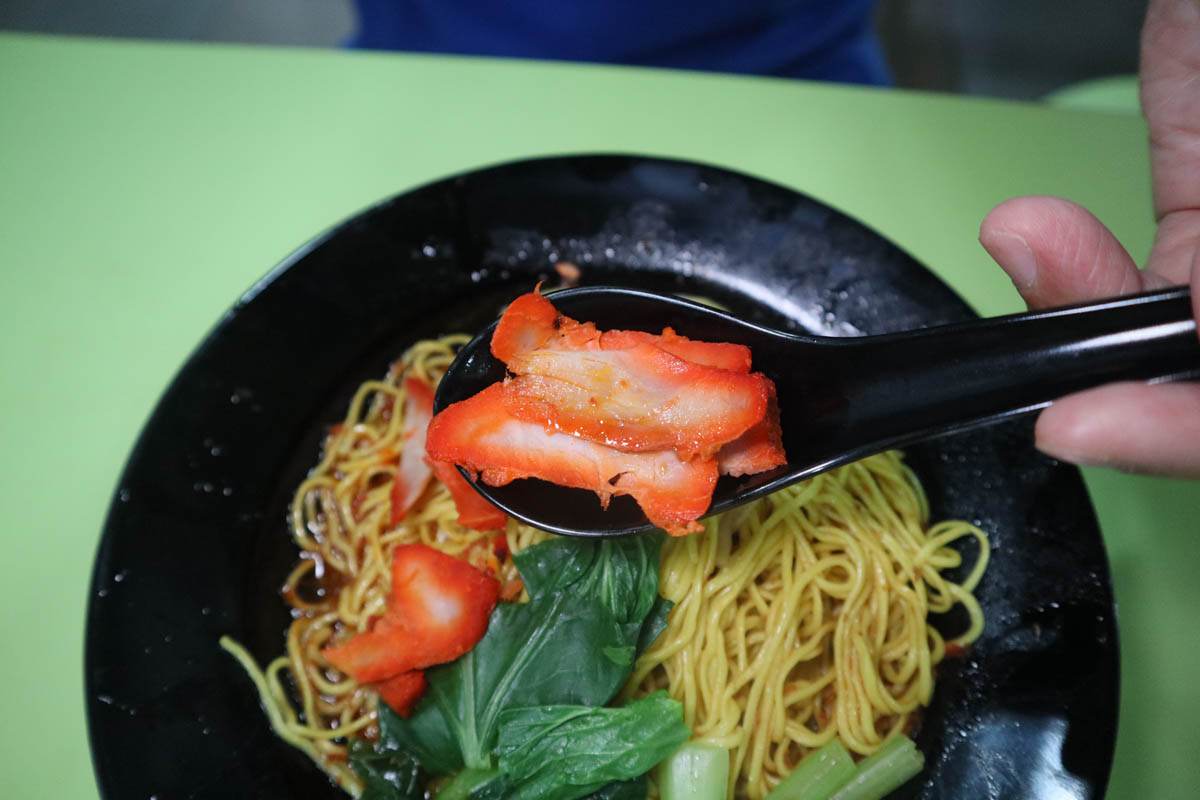
Earlier on, I said the char siew is generic-looking because it’s the lean, ‘cardboard’ kind. As drab as it looked, it was fairly decent in terms of taste and softness.
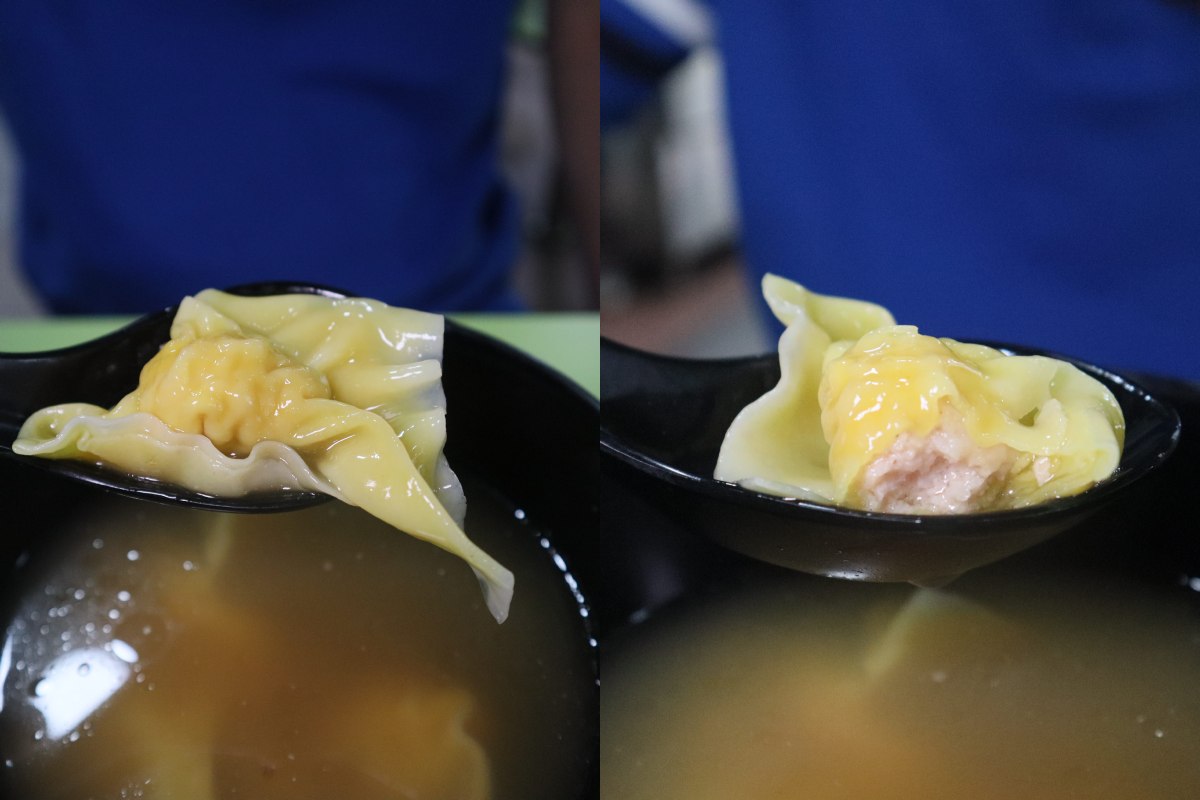
There were 4 wantons doused in the broth. The soup was light and had a faint hint of ikan bilis. The skin of the dumplings was smooth and slippery, while the meat filling was delicious, though I would’ve preferred it to be more generously filled.
Dunman Road Char Siew Wan Ton Mee
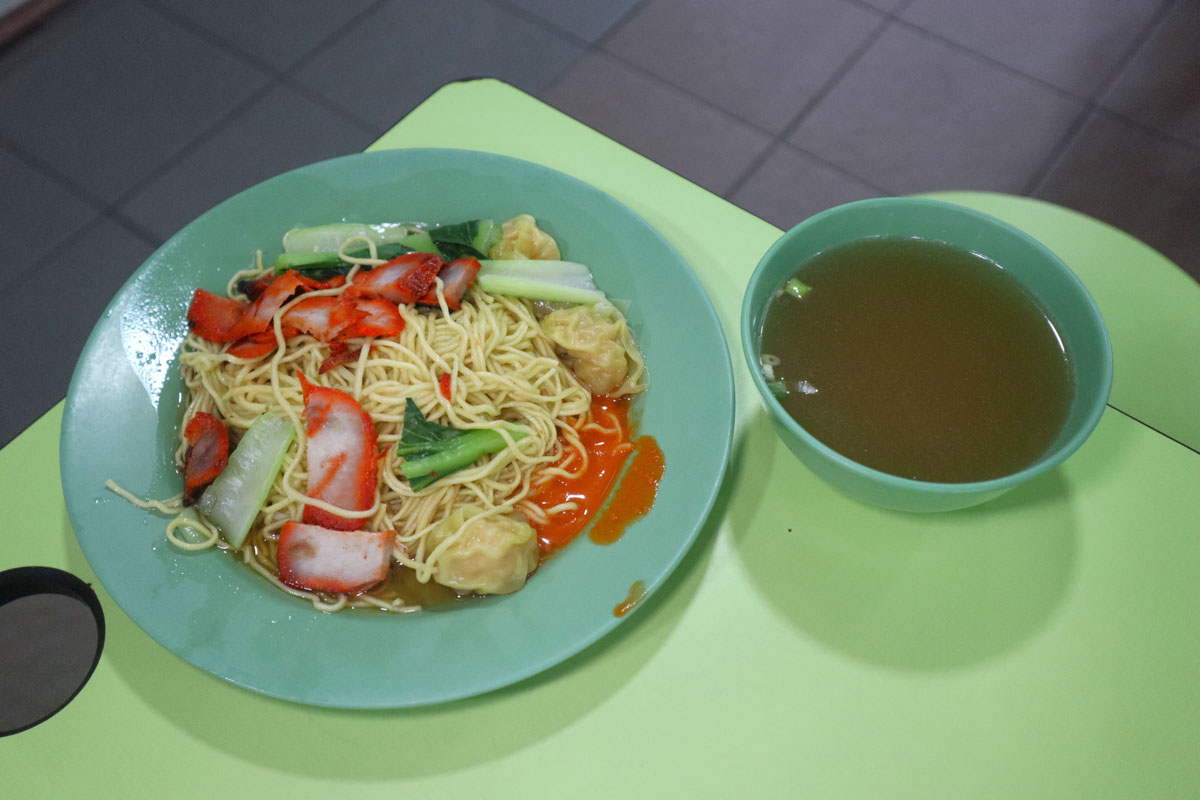
There are 3 wanton mee options available here — S$4, S$4.50, and S$5. We opted for the S$4 plate and I instantly saw several similarities with Eng’s — slightly thicker noodles, same style of chilli, and even the same colour of plate. Like Joo Chiat Ah Huat, the amount of noodles and ingredients served here was substantial. The wantons were placed together with the noodles instead of being doused in soup.
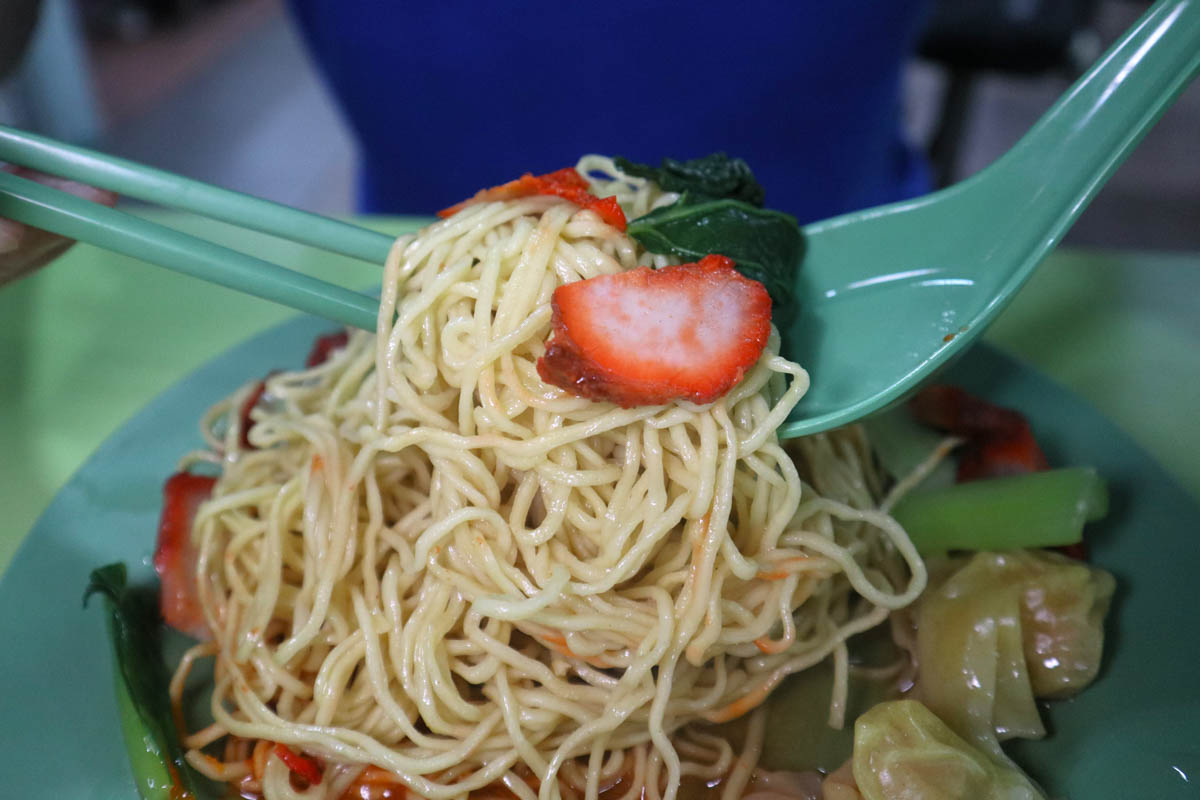
I tossed the noodles without the chilli first. I must say, despite their rather plain appearance, they actually packed a surprisingly robust flavour, with the rich aroma of pork lard coming through most prominently. Like the noodles from Joo Chiat Ah Huat, Dunman Road’s rendition was also firm and springy.
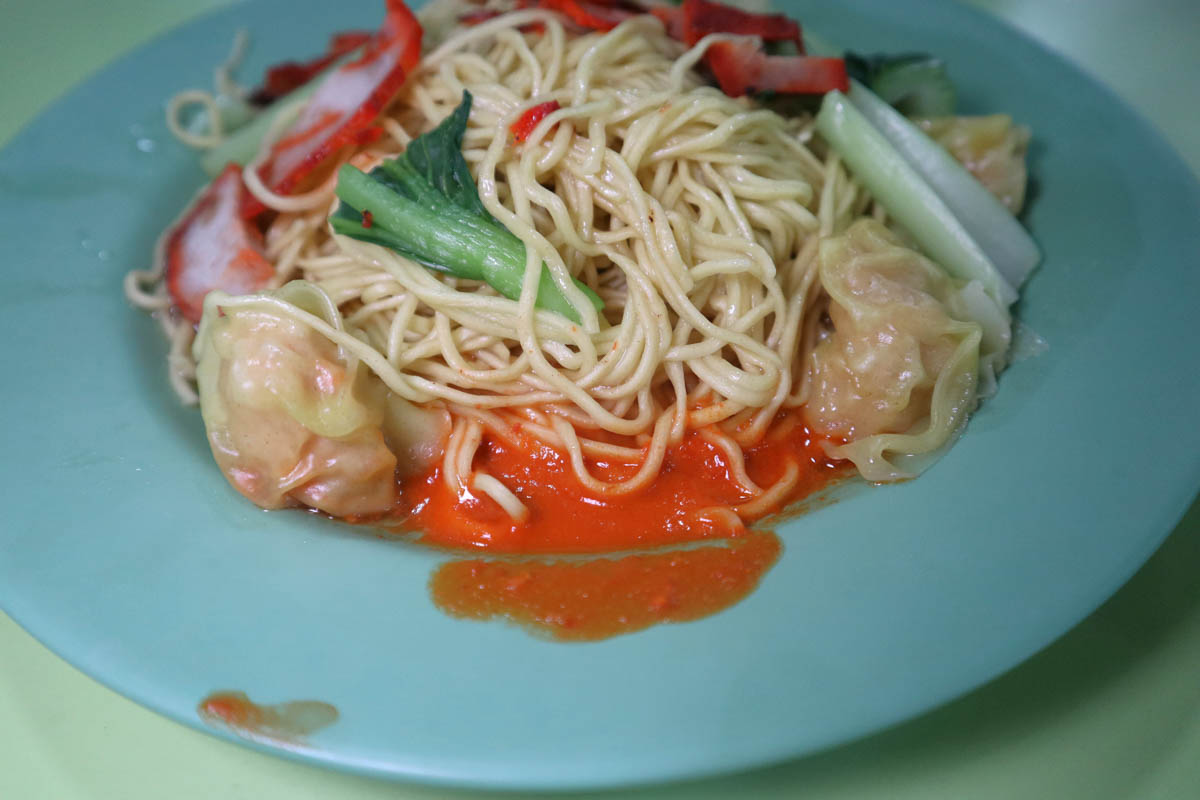
Though the chilli was substantially spicy, it was still milder than the one from Joo Chiat Ah Huat.
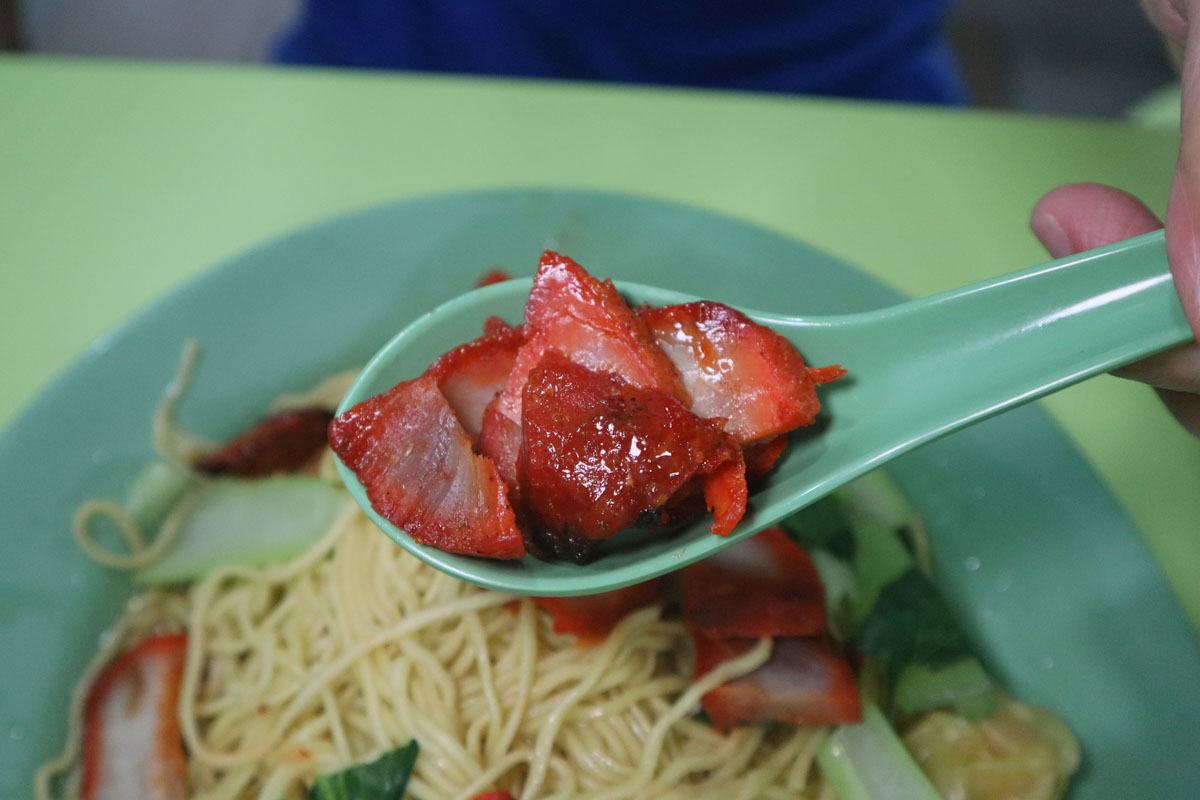
Next, I moved on to the char siew. Although it looked better than its competitor’s with some charred bits, its texture was, unfortunately, dry and a little tough.
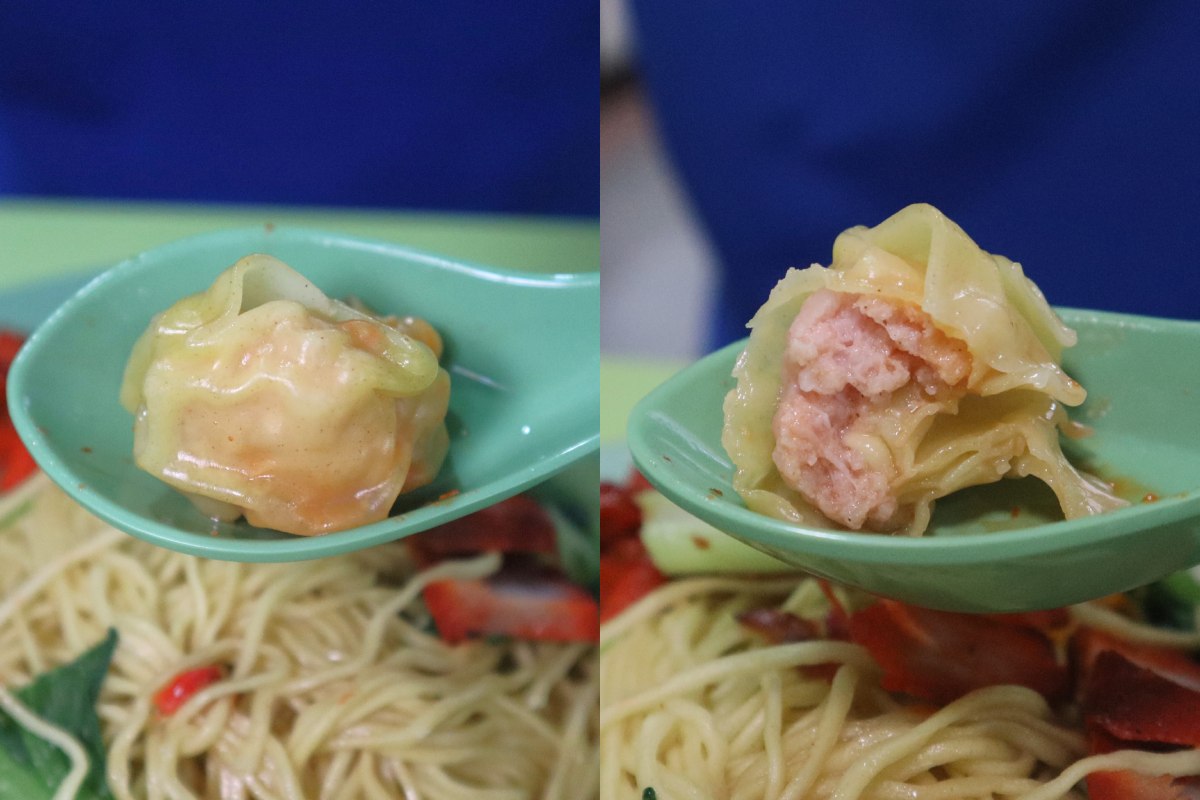
There were only 3 wantons served for the smallest portion, but the fillings were more generous. Taste-wise, it was rather satisfying but I felt that Joo Chiat Ah Huat’s version was slightly better.
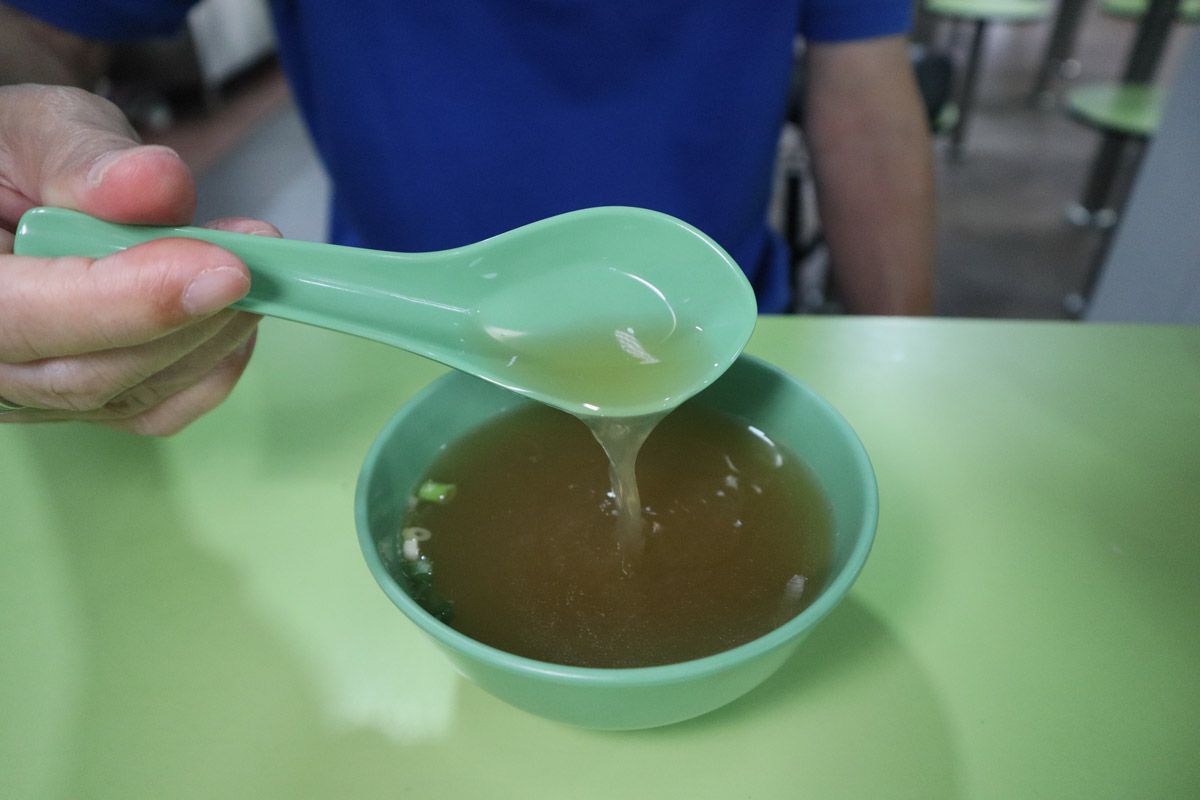
Now, as for the soup, I’m honestly at a loss for words. To me, it tasted like a savoury winter melon drink, which felt a little out of place with wanton mee. Even my dining partner had no idea what he was sipping on.
Verdict
| Stall | Price | Overview | Verdict |
|---|---|---|---|
| Joo Chiat Ah Huat Wanton Noodle | S$4 | Springy noodles with a satisfying bite, The chilli packs an unexpectedly fiery kick. Char siew looks drab but was decent. The wantons were plump and tasty while the soup has a robust ikan bilis flavour. | ✅ Best Overall |
| Dunman Road Char Siew Wan Ton Mee | S$4 | Noodles have perfect texture and despite its muted appearance, the sauce was flavourful, led by fragrant pork lard. Char siew looks appetising with charred edges but falls short in texture, while the wantons were filled more generously thought there were only 3. The soup has a rather unusual savoury winter melon-like taste. | 👍 Worth a Try |
After taking everything into consideration, we agree that Joo Chiat Ah Huat Wanton Noodle stole the show. While its chilli may be too fiery for some, it delivered a well-balanced plate of wanton mee with a nostalgic flavour that ultimately won us over.
Do you agree with our result? Do share in your comments and express your opinions if you’ve tried both wanton mee stalls at Dunman Food Centre.
People also read:
Which is Singapore’s best-rated wanton mee?
Do we have an interesting noodle spot in Singapore to recommend?