 Malaysia
 Singapore
 Thailand

In Chinese culture, food is far more than just sustenance during the Lunar New Year; it is a profound language of symbolism and hope. The centrepiece of the celebrations is the Reunion Dinner (Nian Ye Fan), where families gather from far and wide to share a meal that sets the tone for the coming year. Every dish served is meticulously chosen for its auspicious meaning, often relying on clever linguistic puns where the name of the food sounds like words for luck, wealth, longevity, or success. Eating these “lucky” foods is a ritual intended to invite positive energy and good fortune into the household for the months ahead.
Here are the must-eat auspicious foods and the blessings they represent:
| Name | Best for | Key highlight |
|---|---|---|
| Fish (鱼 – Yú) | Inviting prosperity and yearly surplus | Symbolises abundance; head and tail kept intact, leftovers represent surplus |
| Dumplings (饺子 – Jiǎozǐ) | Attracting wealth in the new year | Shaped like gold ingots; fillings and hidden coin carry prosperity meanings |
| Spring Rolls (春卷 – Chūnjuăn) | Welcoming financial prosperity | Golden, bar-shaped rolls eaten during Spring Festival |
| Glutinous Rice Cake (年糕 – Niángāo) | Wishing for career and academic growth | Name sounds like “higher year by year”; served sweet or savoury |
| Sweet Rice Balls (汤圆 – Tāngyuán) | Emphasising family reunion | Round shape represents unity; eaten throughout CNY period |
| Longevity Noodles (长寿面 – Chángshòu Miàn) | Wishing elders health and long life | Extra-long noodles eaten uncut in one continuous strand |
| Tangerines & Oranges (桔 & 橙 – Jú & Chéng) | Gifting for luck and success | Golden fruits symbolise wealth; stems and leaves preferred |
| Yusheng / Prosperity Toss (鱼生 – Yúshēng) | Celebrating abundance in Singapore and Malaysia | Raw fish salad tossed high with auspicious wishes (Lo Hei) |
| Roasted Crispy Pork Belly (烧肉 – Shāo Ròu) | Signalling vitality at Reunion Dinner | Red skin wards off evil; centrepiece symbol of strength and health |
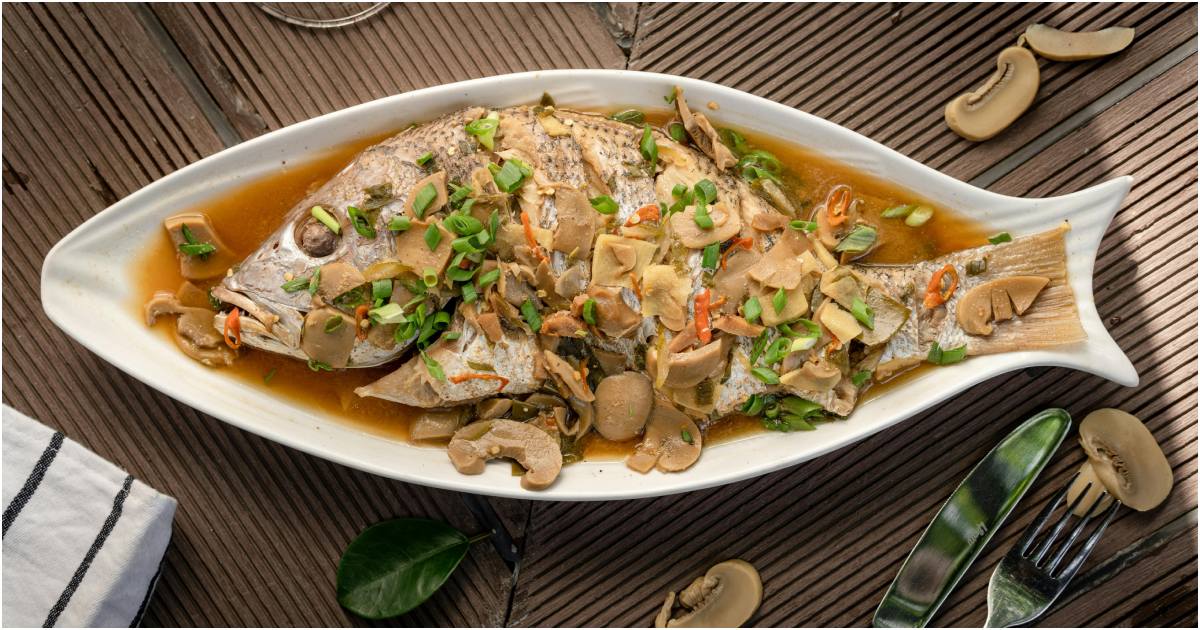
1. Fish (鱼 – Yú)
Symbolism: Prosperity & Abundance
The word for fish, yú, sounds like the word for “surplus” or “extra.” The traditional saying is “Nián nián yǒu yú”, which means “May you have a surplus every year.” Different types of fish have specific meanings: Crucian carp (jìyú) sounds like ‘good luck’ (jí), while Catfish (niányú) sounds like ‘year surplus.’
- Pro-Tip: It is common to leave some fish leftover at the end of the meal to symbolise that the surplus will carry over into the new year. It is also traditional to keep the head and tail intact to represent a good beginning and a good end to the year.
2. Dumplings (饺子 – Jiǎozǐ)
Symbolism: Wealth
Dumplings are shaped like ancient Chinese silver and gold ingots (yuánbǎo). Legend has it that the more dumplings you eat during the New Year celebrations, the more money you can make in the coming year. When wrapping them, ensure the pleats are full and the dumplings have “pregnant” bellies, as flat dumplings are said to symbolise poverty.
- Filling matters: Cabbage (báicài) and radish (lúobo) fillings are popular as they symbolise ‘hundred wealth’ and ‘good omens,’ respectively. It is also a tradition for some families to hide a clean coin inside one dumpling; the person who finds it is said to be the luckiest and wealthiest for the year.
3. Spring Rolls (春卷 – Chūnjuăn)
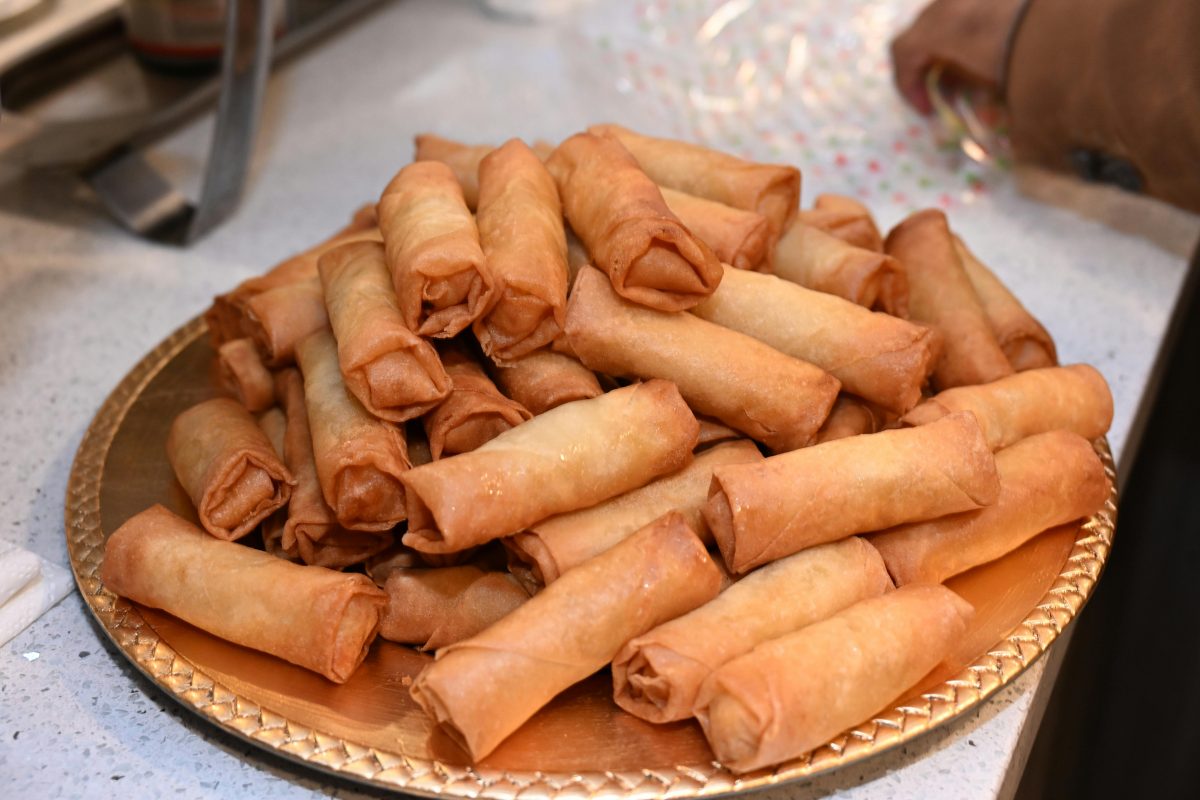
Symbolism: Wealth (Gold Bars)
Spring rolls get their name because they are typically eaten during the Spring Festival to welcome the arrival of spring — a tradition known as “biting the spring.” Their golden-yellow colour and cylindrical shape make them look like bars of gold, promising a year of financial prosperity.
- Preparation: They are usually filled with a mixture of shredded pork, cabbage, mushrooms, and carrots, then deep-fried until perfectly crisp. The crunch symbolises a fresh start and the breaking of old, stagnant energy.
4. Glutinous Rice Cake (年糕 – Niángāo)
Symbolism: Higher Success & Growth
The name niángāo sounds like “getting higher year by year” (nián nián gāo). This symbolises “height” in all aspects of life: higher grades for children, higher career positions for adults, and general personal growth.
- Variations: It can be prepared sweet (often steamed with red dates) or savory (stir-fried with meat and vegetables). Historically, it was also used as an offering to the Kitchen God to “stick his teeth together” so he couldn’t report any bad deeds to the heavens.
5. Sweet Rice Balls (汤圆 – Tāngyuán)
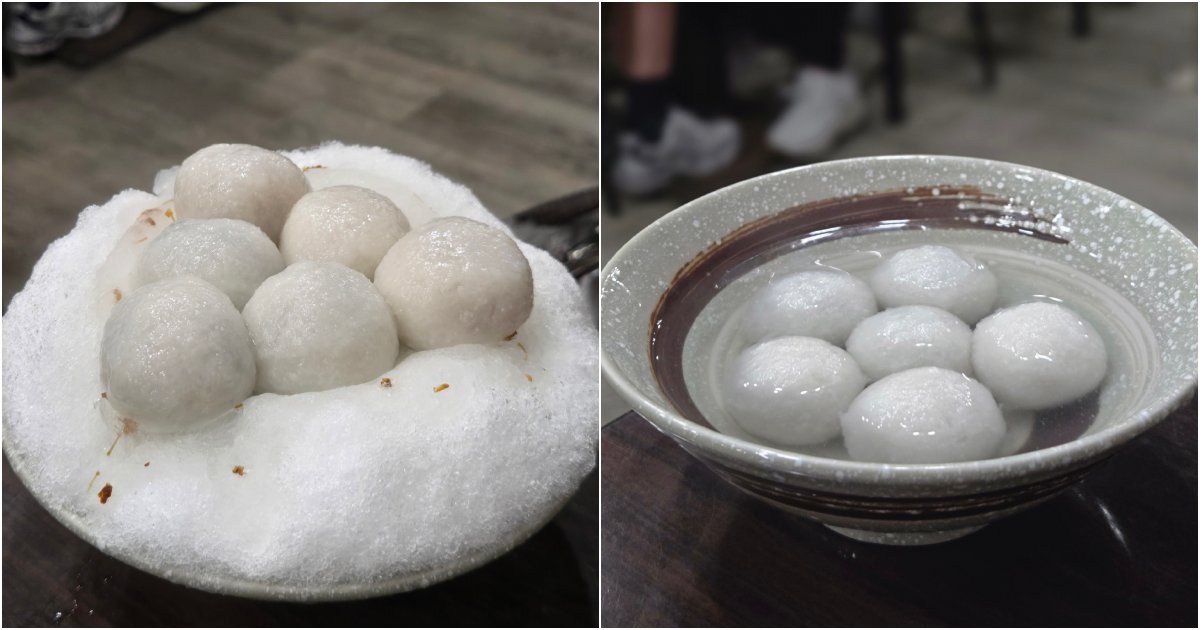
Symbolism: Family Togetherness & Reunion
The round shape of tāngyuán represents completeness and unity. The pronunciation is also similar to tuányuán, which means “reunion.” They are a staple for the Lantern Festival but are enjoyed throughout the CNY period to emphasise the importance of family bonds.
- Flavours: These glutinous rice balls are typically filled with sweet black sesame, crushed peanuts, or red bean paste. They are served in a hot, sweet ginger-infused soup, which is believed to warm the body and the heart.
Best red packet designs: Our favourite angpao envelopes for a prosperous 2026
6. Longevity Noodles (长寿面 – Chángshòu Miàn)
Symbolism: Health & Long Life
These noodles are longer than normal noodles and are served uncut. The length of the noodle represents the length of the eater’s life. They are often served stir-fried with chives and mushrooms or in a simple, clear chicken broth.
- The Rule: You must try to eat the noodle by slurping it in one continuous piece without breaking it, as a broken noodle symbolises a shortened life. It is the ultimate dish for wishing good health upon elders.
7. Tangerines & Oranges (桔 & 橙 – Jú & Chéng)
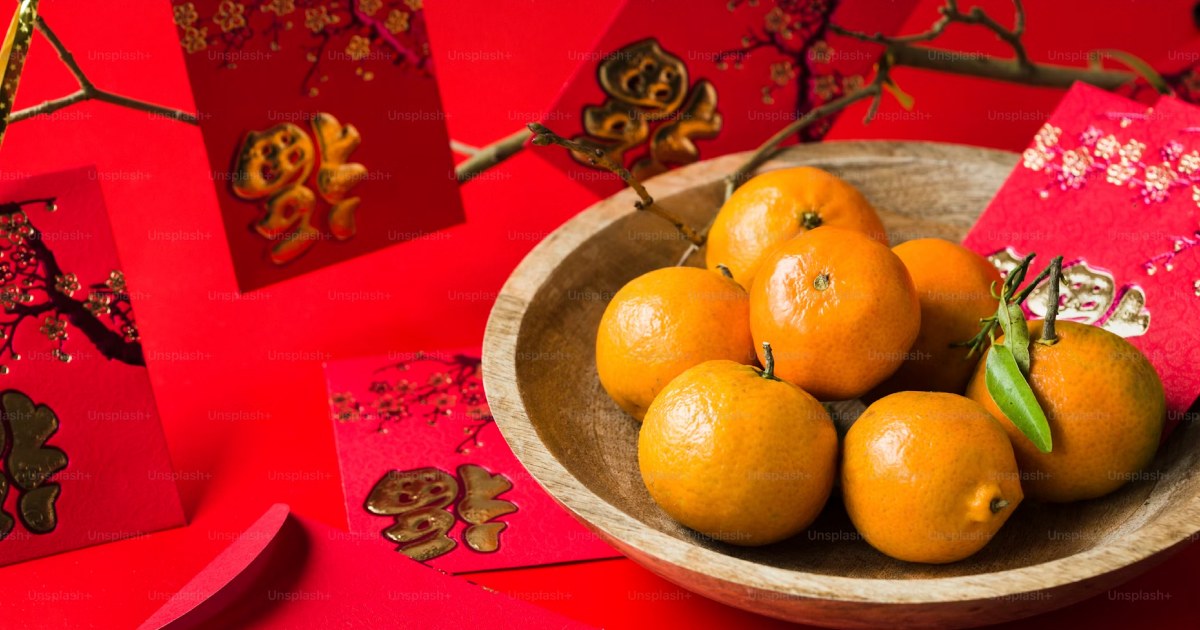
Symbolism: Luck & Success
Tangerines (jú) sound like the word for “luck” (jí), and oranges (chéng) sound like the word for “success” (chéng). Their bright, golden colour also represents gold and wealth entering the home.
- The Stems: When gifting these, fruits with the stems and leaves still attached are highly preferred. This symbolises fertility and the continuation of the family line, representing a “long life” for the family tree.
8. Roasted Crispy Pork Belly (烧肉 – Shāo Ròu)
Symbolism: Purity & Good Health
In many dialects, the “red” skin of the roasted pork symbolises fire, which is believed to ward off evil spirits and bring “booming” luck (hóng hóng huǒ huǒ) to the household.
- Texture: The contrast between the crunchy, golden crackling and the tender meat symbolises a year of varied but harmonious experiences. It is often served as a centrepiece during the all-important Reunion Dinner to signal strength and vitality for the year ahead.
9. Yusheng / Prosperity Toss (鱼生 – Yúshēng)
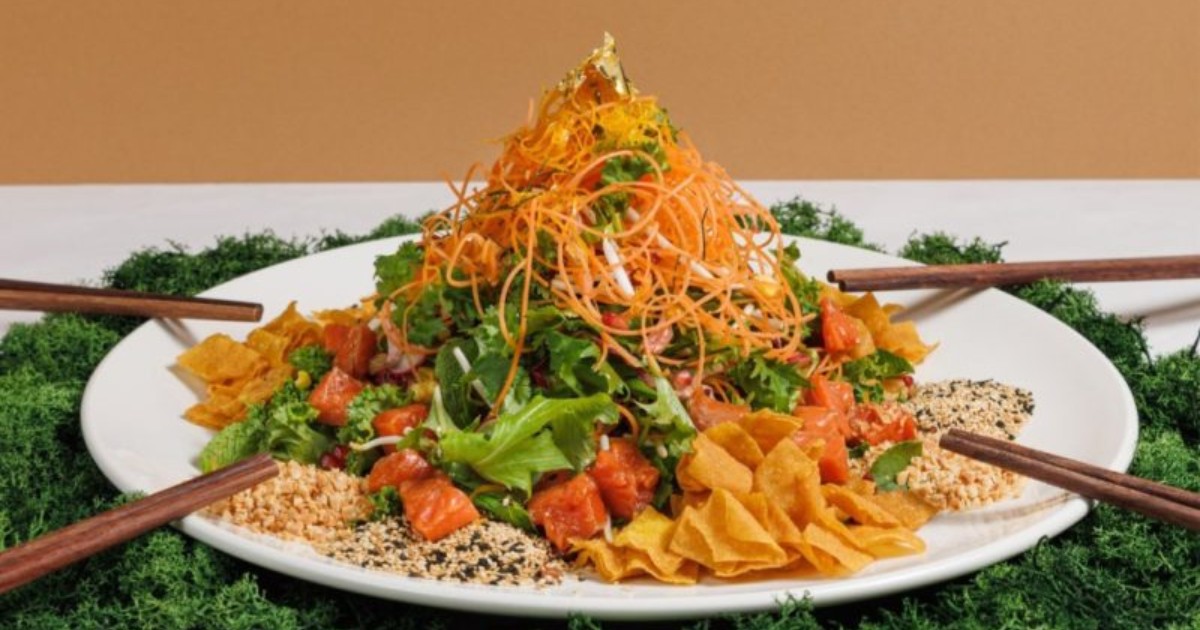
Symbolism: Increasing Abundance & Good Fortune
Mainly popular in Singapore and Malaysia, this is a raw fish salad where families stand up and toss the ingredients high into the air with chopsticks while shouting auspicious wishes (Lo Hei).
- The Meaning: Every ingredient added represents a specific blessing. Adding oil represents “money flowing in from all directions,” while the lime juice represents “good luck and great profit” (dà jí dà lì). The higher you toss, the more your fortunes will grow in the coming months!
People also read:
Which restaurants can I visit for my CNY reunion dinner?
Where can I get the best pineapple tarts from in Singapore?
Where can I get CNY snacks in JB?