 Malaysia
 Singapore
 Thailand

When discussing the birthplace of dim sum, a common misconception is that it originated in Hong Kong. But did you know that it actually came into existence within Guangzhou (aka the city of Canton) during the 10th century where rising trade and merchant activity was getting popular?
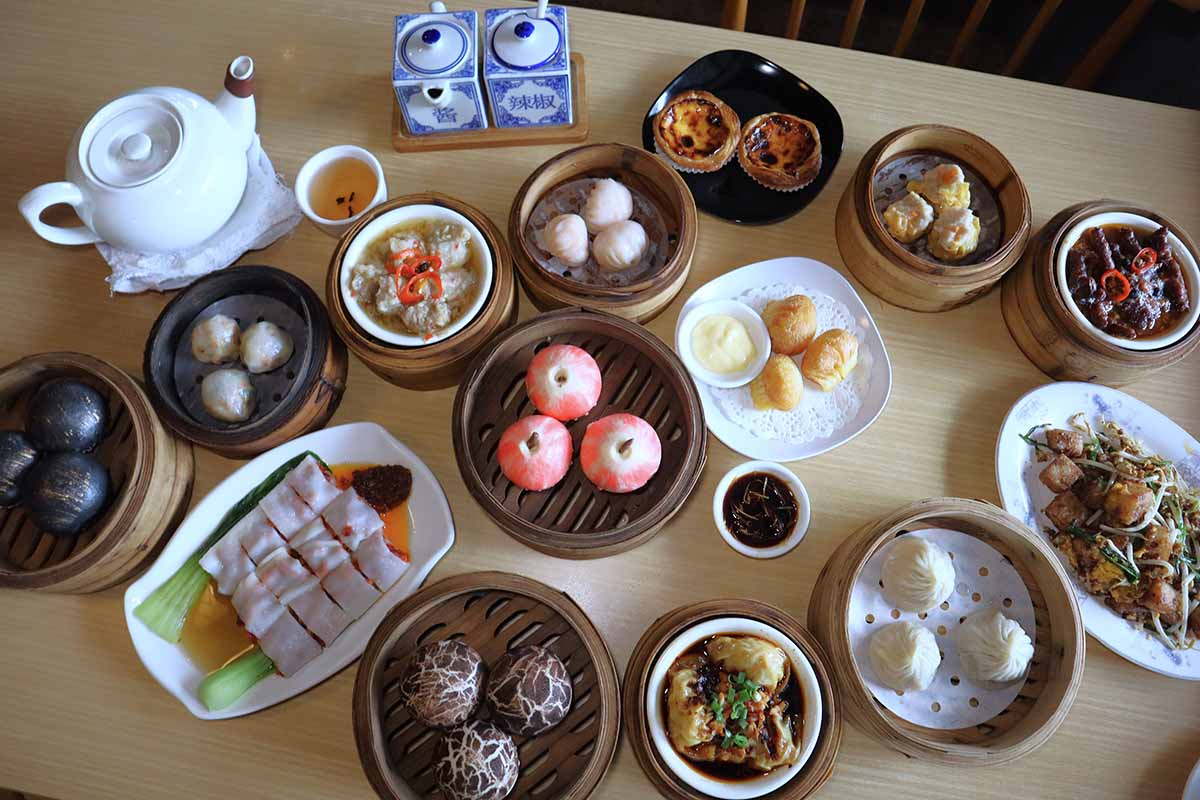
Between 10am and 2pm, it was customary for people to frequent teahouses for ‘yum cha‘ — a light meal paired with tea that serves as the cultural precursor to the modern concept of brunch. The small food items that are served with the tea are referred to as dim sum or dian xin (点心), which means ‘touch the heart’.
Growing up, my memory with dim sum was limited to just 4 items, big pau, siew mai, char siew pau, and har kow. That was until my parents brought me to a Chinese restaurant where a pushcart full of steamed and deep-fried items was wheeled from table to table. Drawing on my years of culinary exploration, let’s take a deeper dive into the intricate world of dim sum.
What are the various types of dim sum?
Steamed
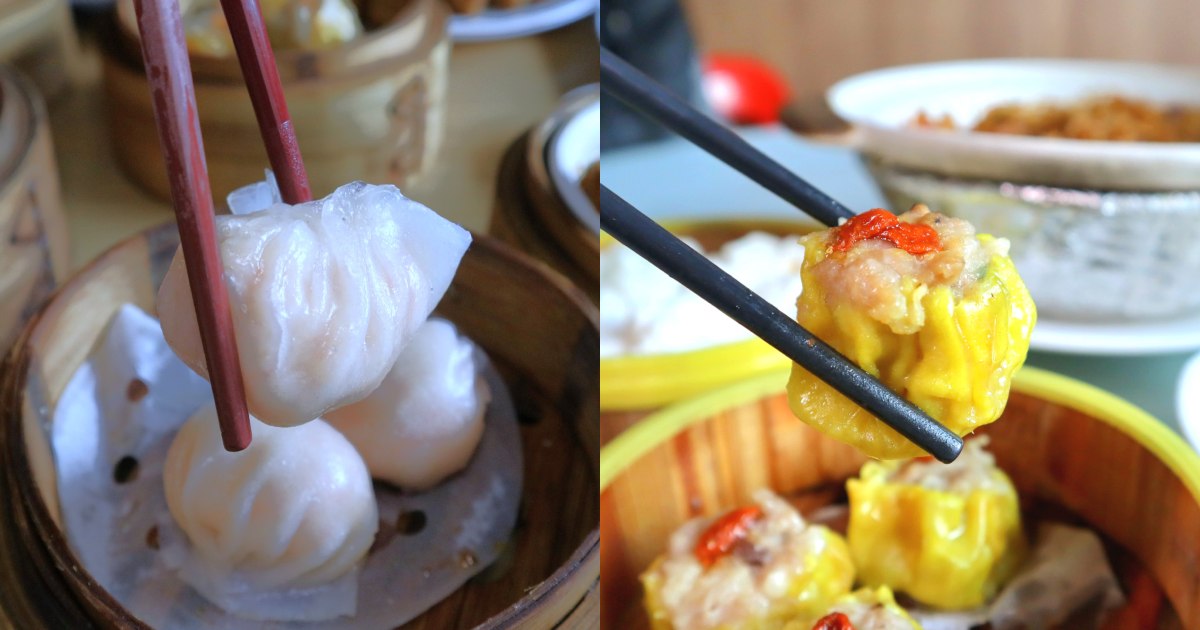
Less oily and lighter on the palate, steamed dim sum is usually placed inside bamboo baskets and left to cook in the oven. Examples include dumplings like the crowd-favourite Har Gow, a translucent dumpling filled with shrimp. A good version should have thin and slightly-bouncy skin, giving way to fresh, plump pieces of shrimp.
There’s also the ever-popular Siew Mai, a pork and shrimp dumpling which sometimes contain shiitake mushrooms — cheaper renditions don’t even include the shrimp at times. A yellow wanton skin is wrapped around it with the top exposed. Usually, salmon roe, tobiko, or even wolfberries (something red) are placed on top of the exposed meat area.
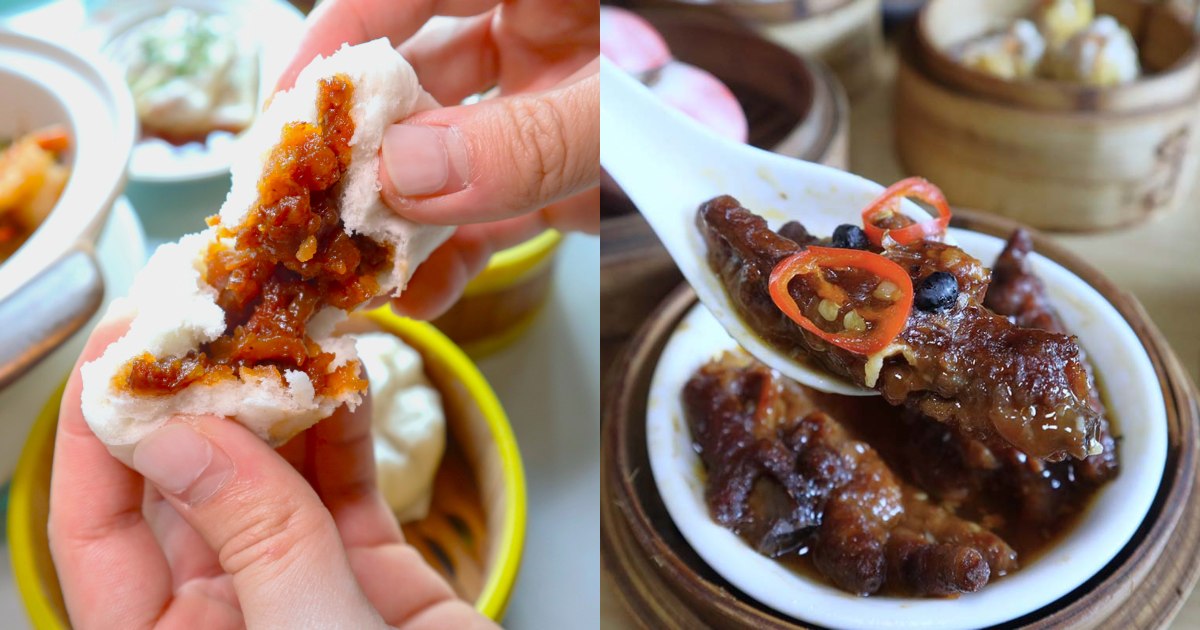
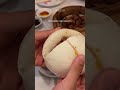
Paus are soft, fluffy steamed buns, typically stuffed with either sweet or savoury fillings. Common savoury varieties include Char Siew Pau, Chicken Pau, or Meat Pau (usually pork). The Big Pau (大包) is roughly twice the size, usually containing seasoned minced pork, boiled egg, and chives — some fancy ones may even contain mushrooms.
Then there’s also the infamous ‘Amy Yip’ Pau that’s popular across the causeway. It’s twice the size of a Big Pau with a combination of minced pork and chicken (sometimes just pork), hardboiled egg, lap cheong, and mushrooms. The name is inspired by the voluptuous figure of Hong Kong actress Amy Yip.
Some items like Chicken Feet and Pork Ribs are seasoned with black beans in sauces and steamed in dishes for convenient consumption.
There’s also Chee Cheong Fun, steamed rice rolls served the traditional way with sesame oil, sweet sauce, and soya sauce. You can also savour them Hong Kong-style, stuffed with various ingredients like prawn, char siew, among others.
Fried
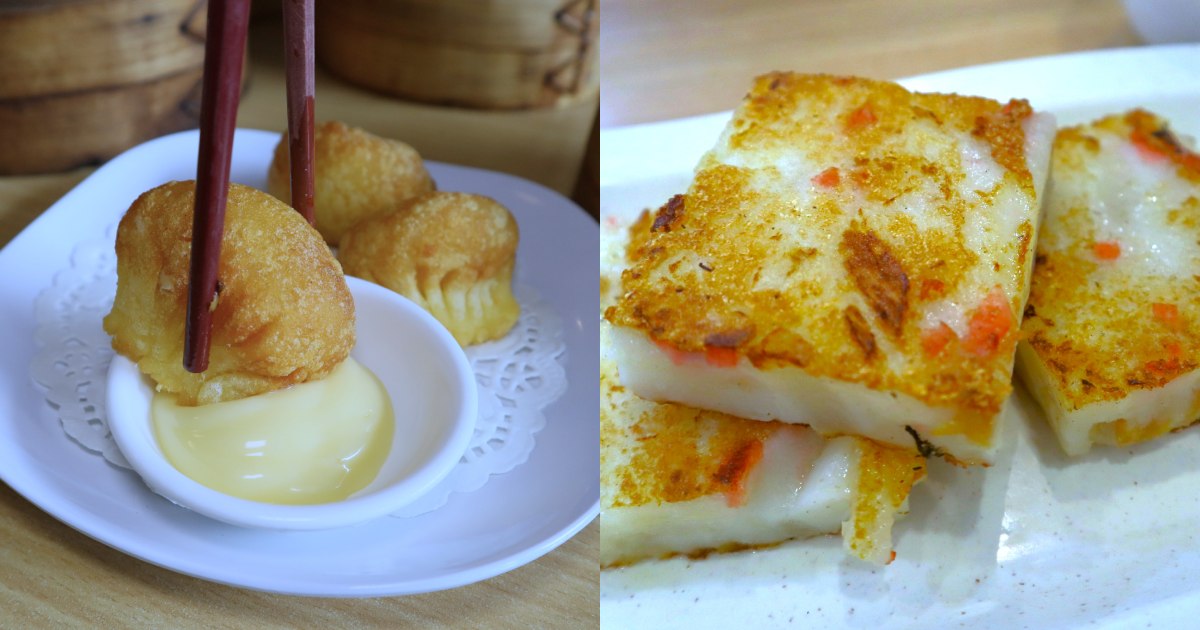
Ahh… my guilty pleasure — fried dim sum. You have your quintessential Spring Rolls, stuffed with shredded turnip and carrots. Yam Puffs have a bird nest-like exterior that’s light and crispy, giving way to a moist yam texture and filled with seasoned minced pork and shrimp.
Fried Prawn Dumplings are also popular, served with luscious mayo by the side.
How about pan-fried Carrot Cake (or white radish cake)? These savoury goodies are usually steamed in the oven before they’re pan-fried till slightly crispy.
Baked
Almost every dim sum spot never fails to include Egg Tarts in their menu. There are 2 main versions — Hong Kong and Portuguese. The former is mellower and milky with a shortcrust pastry while the latter (my favourite) has a sweeter, richer custard-like filling with torched surface, encased in a flaky puff pastry.
There’s also baked Char Siew Sou, a crispy and flaky pastry that’s often made with lard, and stuffed with scrumptious char siew filling. It’s usually crowned with sesame seeds, and shaped in triangles or rectangles.
Sweet
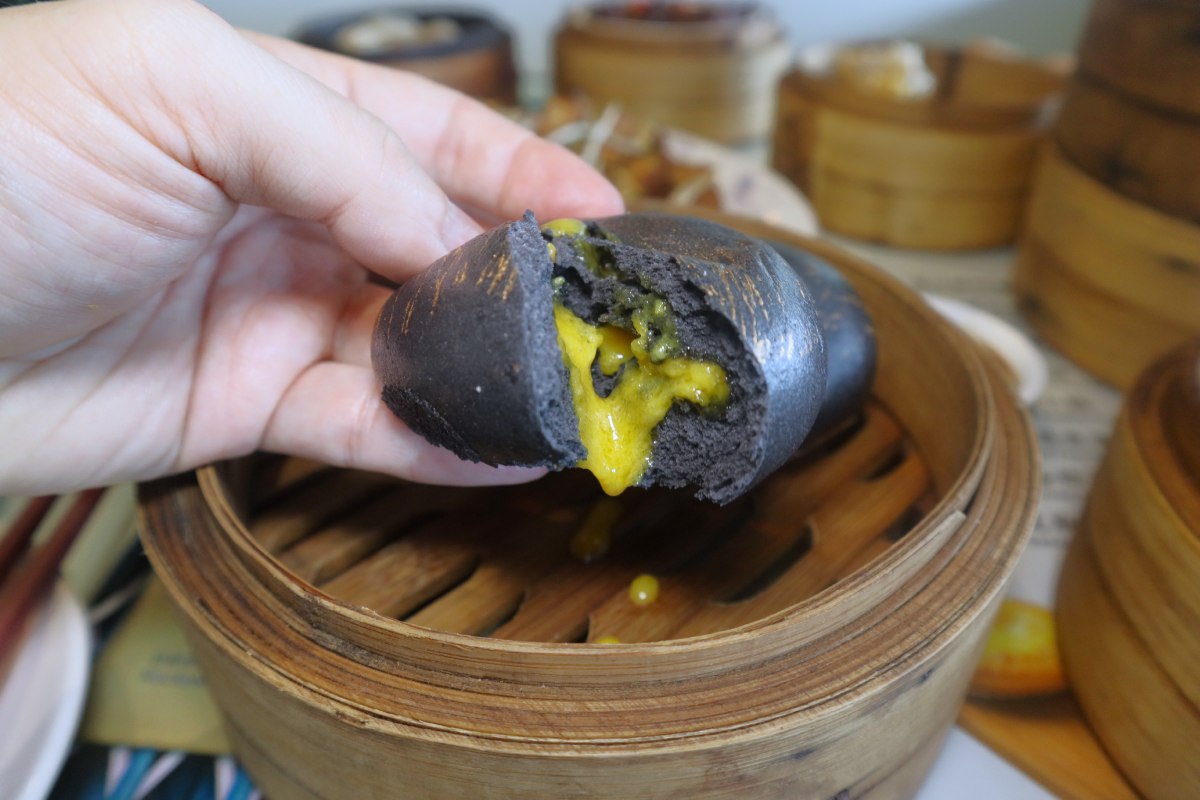
Usually served as a dessert, sweet paus like Lotus and Tau Sar (red bean) are stuffed within soft, pillowy buns. There’s also the lava-like Egg Custard bun, commonly known as liu sha bao.
Sesame Balls or jian dui are delightfully chewy round orbs made of glutinous rice flour, encrusted with nutty sesame seeds, and stuffed with red bean, lotus, or mung bean paste.
Believe it or not, Mango Pudding belongs in the realm of dim sum in the form of dessert. The pudding, served cold, is jelly-like and made from fresh mangoes. It’s usually enjoyed with drizzles of evaporated milk and diced mango.
Rice-based
What types of dim sum to order?
Truth be told, there’s no right or wrong when it comes to dim sum selections, as taste is deeply subjective — it ultimately boils down to personal preference and mood.
To get the full experience, my suggestion would be getting a bit of everything from the various categories that I’ve mentioned. It’s even better when dining in a larger group, as it allows you to try a wider variety of dishes.
What are the usual dim sum ordering methods in Singapore?
For older dim sum establishments in Singapore that are not up-to-date with their systems, a handful of places still wheel trolleys table to table for you to take your pick. Alternatively, many restaurants still favour the traditional paper menu, where you simply tick your selections and quantities before handing it to the server.
In contrast, more contemporary establishments utilise QR code ordering, allowing you to browse and place orders seamlessly via a provided tablet or your own smartphone.
People also read:
Which dim sum spot in Singapore has no GST and service charge?