 Malaysia
 Singapore
 Thailand

Some destinations live in your imagination for years before you finally make it there. The south of France was one of mine — a long-held dream built on images of sun-drenched promenades, impossibly blue water, markets fragrant with lavender and citrus, and a pace of life so effortlessly beautiful it almost seems unfair. Last month, in April, I finally went.
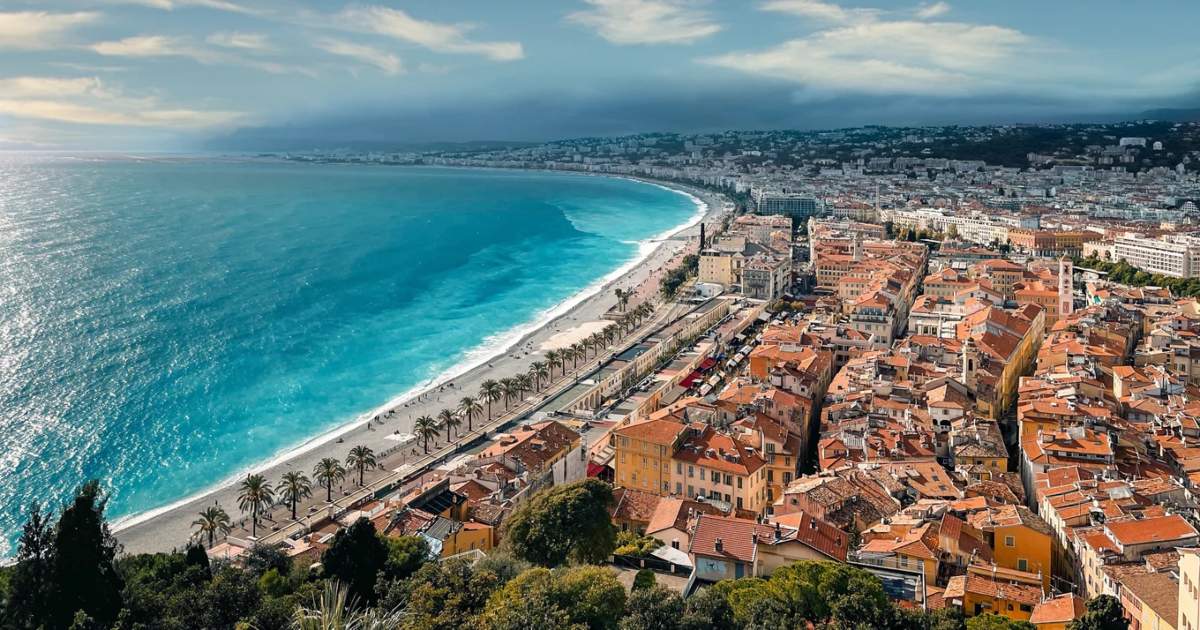
7 days. Paris first, then Nice. The City of Light followed by the Côte d’Azur — and honestly, as far as ways to spend a week go, I’m not sure it gets much better than that. Paris delivered everything I’d hoped for and then some, and Nice — well, Nice made me understand why people fall so completely and helplessly in love with the French Riviera and never quite recover.
This is everything I did, where I stayed, and why you should absolutely go.
PARIS — 4 Days
Where to stay
Nested discreetly in the heart of Paris’s prestigious 8th arrondissement is my favourite place to stay in Paris: the NH Collection Paris Ponthieu Champs-Élysées.
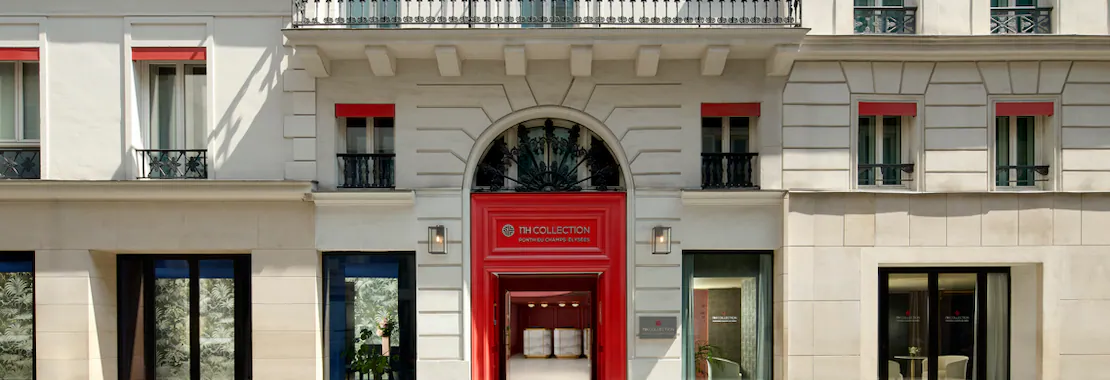
I could tell you its address, what the building looks like, and how to get there but I cannot describe to you the pleasure it gave me to step out of its doors, walk but a minute and find myself on the Avenue des Champs-Élysées, with the Arc de Triomphe just… there. Oh, Paris! (faints)
This elegant boutique hotel was originally built in 1910 but renovated in 2025. Today, it oozes an air of suave sophistication.
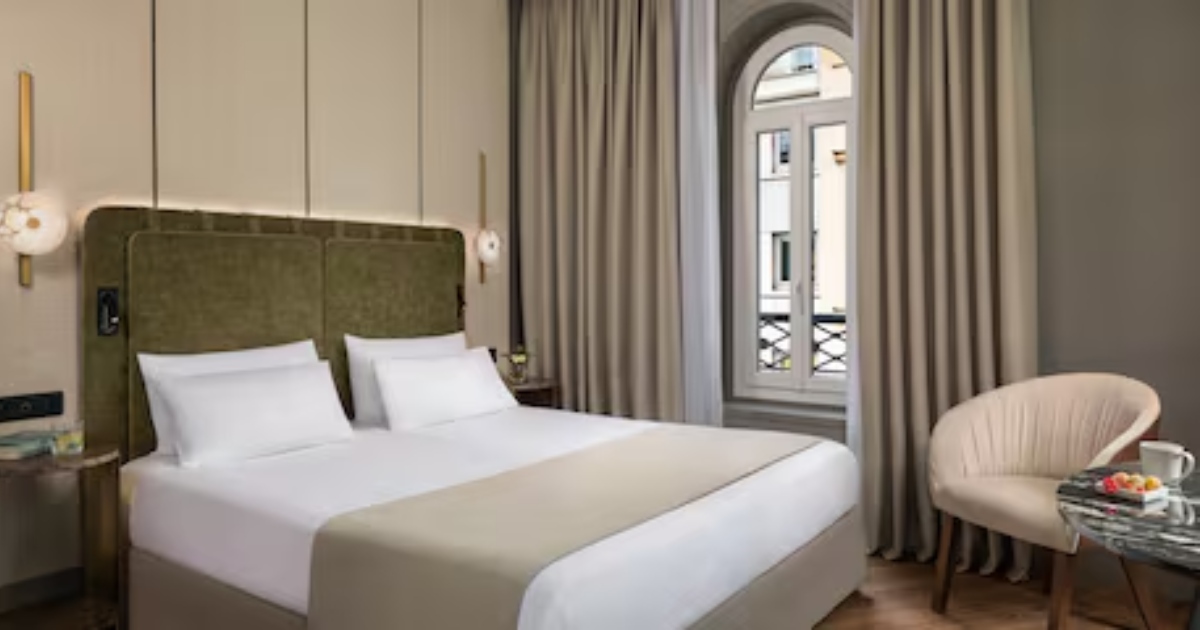
In a city known for its small hotel rooms, my Junior Suite was a positively lavish 24 square metres. Its dedicated sitting area was a welcome transient space between the busy shopping and sightseeing outside and the serenity of the plush bed within. The gentle patter of the rain shower in the spacious bathroom worked almost like a gentle lullaby that soothed me before bedtime. A Nespresso machine, hair dryer and bathrobe made staying in a tempting thought.
NH Hotels have a special feature that conveys their thoughtful hospitality — a Welcome Corner in the lobby. It may seem like a simple touch but the complimentary light refreshments of fruit-infused water, candy and fresh fruit put a smile on my face twice a day, every day. I’ll remember the NH Collection Paris Ponthieu Champs-Élysées for its wonderful people, too. Their attentiveness, warmth and genuine care made an already wonderful city especially memorable.
What to do & see
The Eiffel Tower
There is no preparing yourself for the Eiffel Tower. You can have seen it in a thousand photographs, on postcards, in films — and it will still stop you in your tracks the first time it comes into view. Built in 1889 as a temporary structure for the World’s Fair, Gustave Eiffel’s iron lattice masterpiece was never meant to be permanent, and yet here it stands, more beloved than ever, the undisputed symbol of one of the world’s greatest cities.
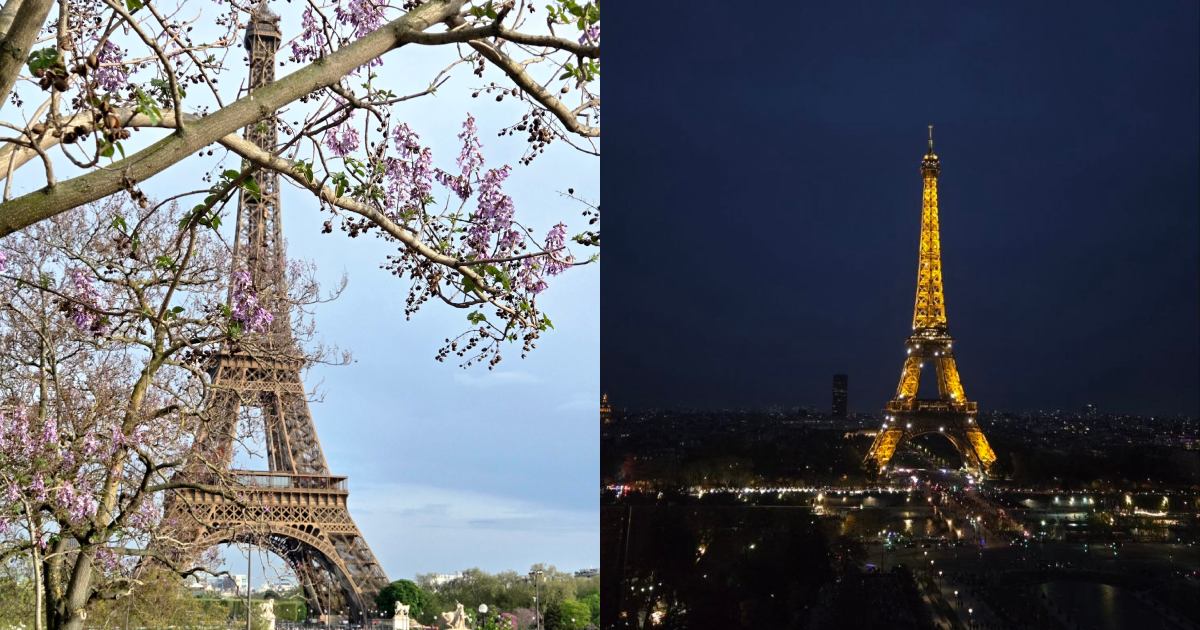
See it at least twice during your stay — once in daylight to fully appreciate the extraordinary scale and engineering of it up close, and once after dark when it erupts into a 5-minute light show every hour on the hour, sending thousands of golden sparks cascading across the Paris skyline. The Trocadéro gardens directly opposite offer the most iconic view, and if you can manage to drag yourself out of bed for sunrise, you’ll have the whole thing almost entirely to yourself — a croissant and coffee in hand, the tower glowing in the early morning light, the city still half asleep. It is one of those rare moments that lives up to every expectation.
If you want to go up, book tickets well in advance — queues without pre-booking can stretch to several hours. The summit offers views stretching up to 70 kilometres on a clear day, but even the first floor, at 57 metres, is spectacular.
The Louvre & Musée d’Orsay
Paris is home to 2 of the most extraordinary museums on the planet, and the remarkable thing is that they sit less than 2 kilometres apart on opposite banks of the Seine — meaning you can, if you’re determined, do both in a single day. I’d recommend giving each its own half day to do them justice.
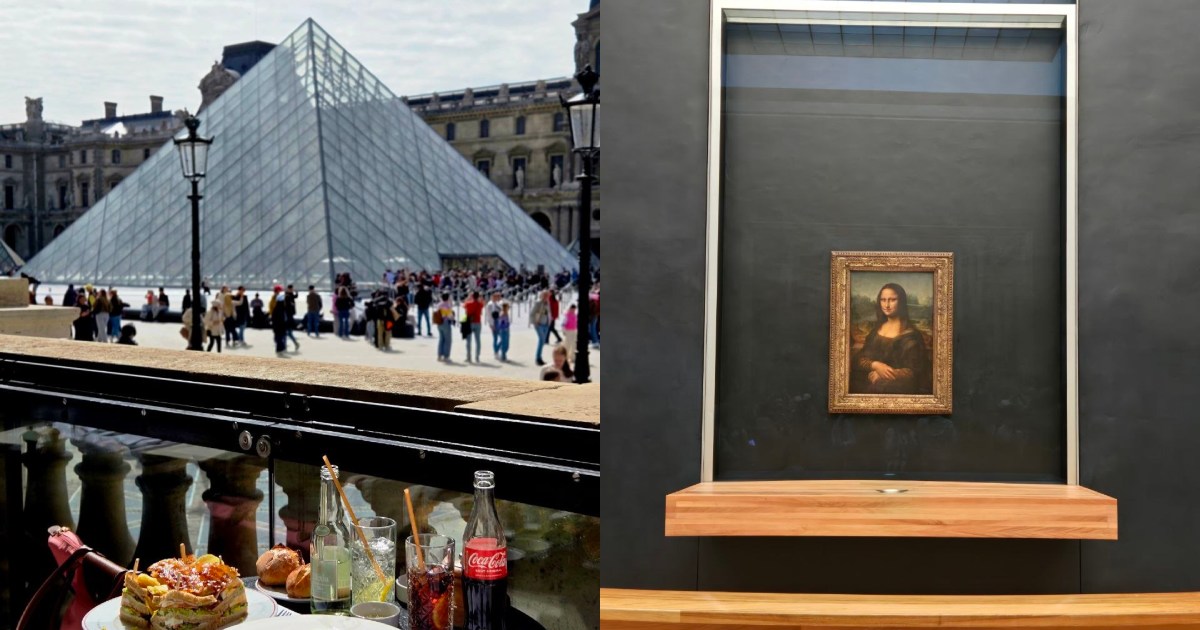
The Louvre is the world’s largest art museum and one of its oldest, housed in a former royal palace of almost incomprehensible grandeur. Its glass pyramid entrance, designed by architect I.M. Pei, is itself an icon. Inside, 35,000 works of art span ancient civilisations to the mid-19th century — you could spend a week and still not see everything.
Pre-book your tickets online to skip the often brutal queues, and head straight for the Denon Wing: the Winged Victory of Samothrace on its dramatic staircase, the Venus de Milo in her quiet alcove, and yes, the Mona Lisa — smaller than you’ll expect and guarded by a thick crowd, but still worth seeing for the sheer fact of it. For a truly unforgettable lunch, reserve a table at Café de Marly — a Parisian institution whose arcaded terrace sits directly overlooking the Louvre’s iconic glass pyramid, making it arguably the most glamorous lunch view in the city.
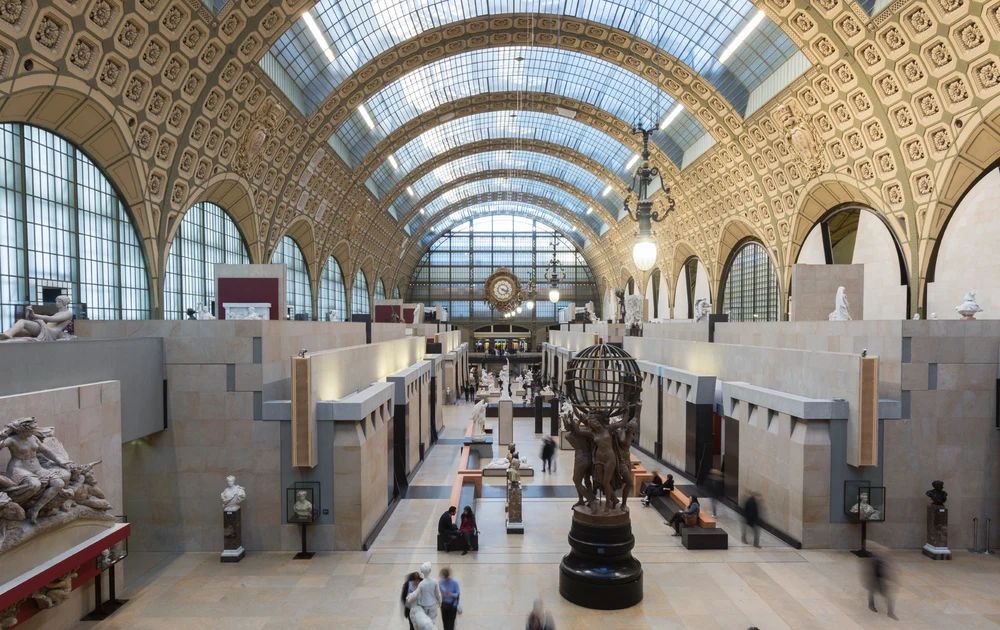
The Musée d’Orsay, housed in a breathtaking Belle Époque railway station on the Left Bank, is in many ways even more rewarding — more intimate in scale, easier to navigate, and home to the world’s finest collection of Impressionist and Post-Impressionist art. Monet’s water lilies, Van Gogh’s self-portraits, Renoir’s dappled garden scenes — these are not reproductions in a textbook but the actual paintings, right there in front of you. Give yourself at least 2 hours and don’t rush it.
Le Marais & Saint-Germain-des-Prés
If the monuments are Paris’s face, then its neighbourhoods are its soul — and 2 in particular are essential. Le Marais, straddling the 3rd and 4th arrondissements, is the city’s most vibrant and characterful quarter: a medieval maze of cobblestoned streets that somehow manages to be simultaneously ancient and effortlessly cool.
Browse the independent boutiques and vintage stores along Rue de Bretagne, and make time for the Place des Vosges — Paris’s oldest planned square, built in 1612, its arcaded red-brick facades enclosing a garden of such calm beauty that sitting there on a bench with a coffee feels like an act of pure privilege. The neighbourhood is also dotted with the most charming little cafés, where pulling up a pavement seat and watching the world go by — students with tote bags, couples sharing a crêpe, the occasional very elegant dog — is an entirely legitimate way to spend an hour of your Paris afternoon.
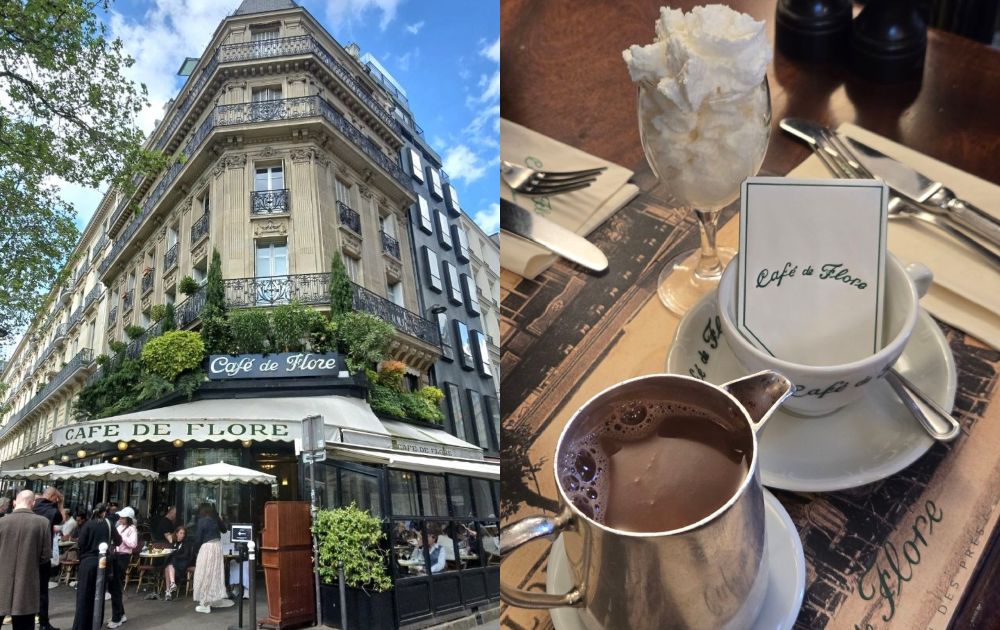
Saint-Germain-des-Prés, on the Left Bank, offers a different but equally intoxicating pleasure. This is the Paris of Hemingway and Sartre, of smoky cafés and philosophical argument — and while it’s considerably more polished today, the atmosphere of intellectual romance lingers. Have a hot chocolate at the legendary Café de Flore, browse the antiquarian booksellers lining the Seine (the famous bouquinistes, who’ve traded here since the 16th century), and lose yourself in the side streets where independent bookshops, art galleries, and excellent bistros sit cheek by jowl in a way that feels distinctly, irreducibly Parisian.
Seine river cruise
Paris is a city that rewards being seen from the water, and a Seine river cruise is one of the most effortless and genuinely rewarding ways to understand the city’s layout and grandeur. From the river, the monuments you’ve been seeing up close all week suddenly fall into a magnificent whole — Notre-Dame Cathedral rising from the Île de la Cité (currently undergoing its final stages of restoration after the 2019 fire and more stunning than ever), the Louvre’s endless stone façades stretching along the Right Bank, the Eiffel Tower appearing around a gentle bend in the river, the grand Haussmann-era bridges each more ornate than the last.
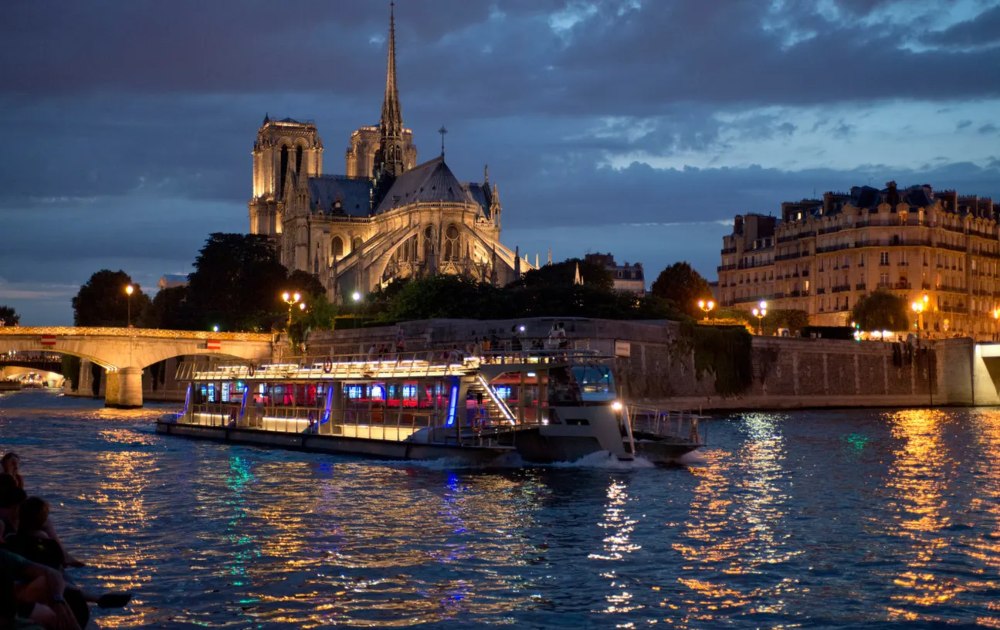
Most cruises last around an hour and depart frequently from the Pont de l’Alma or the Eiffel Tower piers. Bateaux Mouches and Bateaux Parisiens are the most popular operators — audio guides are available in multiple languages. Go at golden hour, when the late afternoon light turns the limestone buildings a warm honey gold and the city looks almost unbearably beautiful. Evening cruises after dark, with the bridges and monuments illuminated, are equally magical and worth considering for your last night in the city.
Walking & shopping on the Champs-Élysées
There is something undeniably thrilling about stepping onto the Avenue des Champs-Élysées for the first time — a grand, tree-lined boulevard stretching nearly two kilometres from the Place de la Concorde all the way up to the Arc de Triomphe, wide enough to feel genuinely majestic and busy enough to hum with an infectious energy at virtually any hour of the day. Often called the most beautiful avenue in the world, it is at once a shopping street, a parade ground, a tourist landmark, and a living symbol of French grandeur — and strolling its full length, in either direction, is one of those simple Paris pleasures that never gets old.
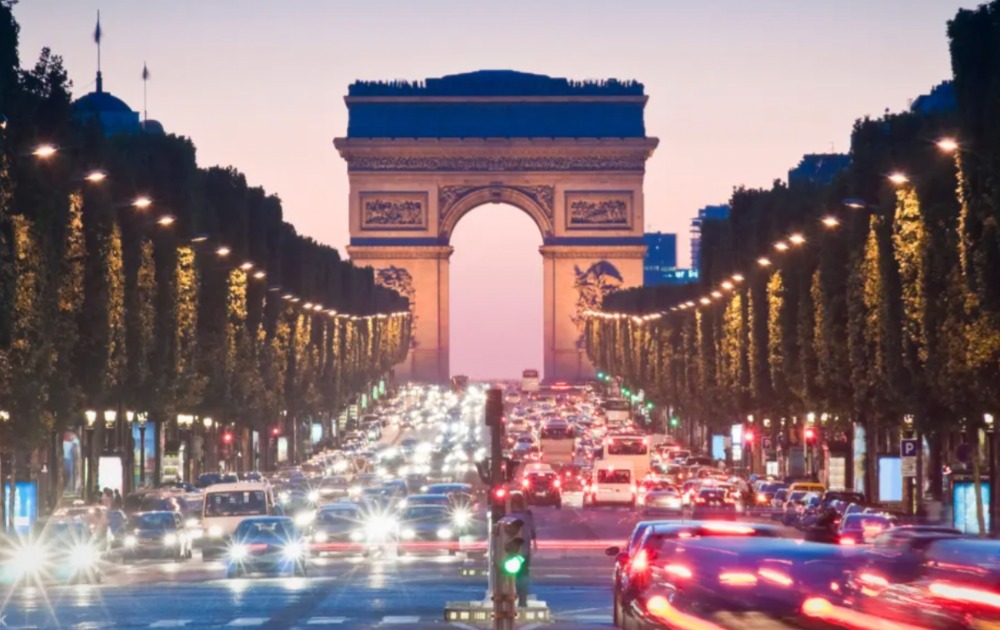
The shopping here skews towards the grand and the global — Louis Vuitton’s flagship store is an unmissable stop (I certainly took advantage of the tax-free shopping) even for non-shoppers, its architecture as impressive as anything inside, and Sephora’s flagship on the Champs-Élysées is one of the largest beauty stores in the world and a dangerous place to enter with a credit card (major damage was done). For something more local, the side streets branching off the avenue — particularly around the 8th arrondissement — are lined with concept stores, designer boutiques, and excellent café terraces that reward a little wandering off the main drag.
At the top of the avenue, the Arc de Triomphe stands as one of the most iconic monuments in France — commissioned by Napoleon in 1806 to honour his armies, its walls engraved with the names of 660 battles and 558 French generals. Climb to the top (tickets required, book ahead) for a panoramic view straight down the Champs-Élysées and out across the city’s Haussmann rooftops in every direction — it is, quite simply, one of the finest views Paris has to offer.
Montmartre & Sacré-Cœur
Perched on the highest hill in Paris, the neighbourhood of Montmartre is unlike anywhere else in the city — a self-contained village of steep cobblestone streets, vine-covered walls, independent studios, and corner cafés that feels as though it has been quietly resisting the march of time for the better part of a century. In the late 19th and early 20th centuries, Montmartre was home to Picasso, Monet, Renoir, Toulouse-Lautrec and Dalí, among many others — drawn by cheap rents, good wine, and an atmosphere of creative freedom. The spirit of all that bohemian energy has never entirely left.
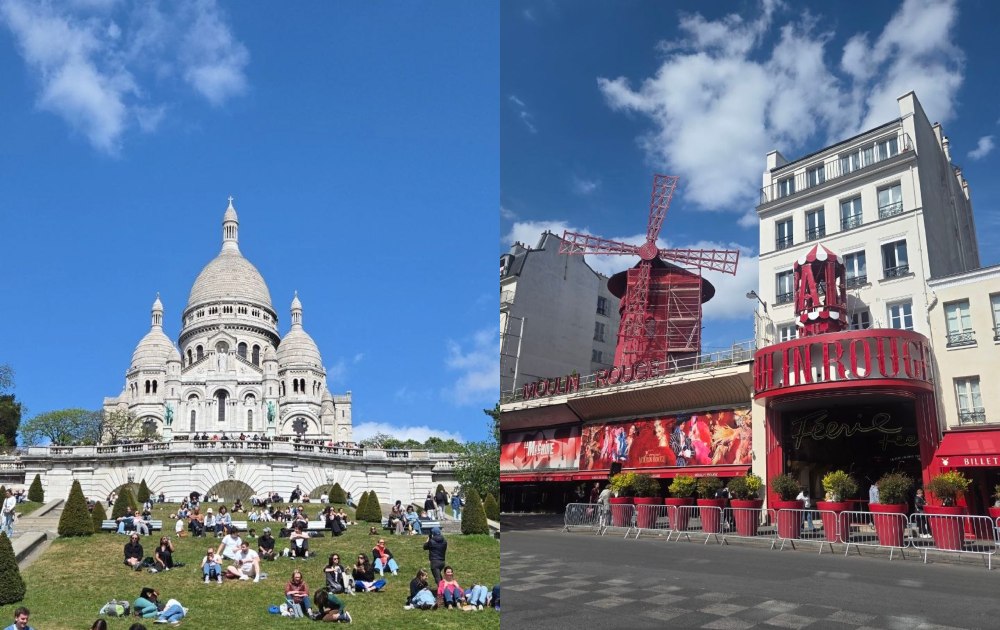
The centrepiece is the Basilique du Sacré-Cœur, the magnificent white Romano-Byzantine church whose gleaming travertine dome dominates the Paris skyline. Arrive early in the morning to beat the crowds that gather on its famous steps throughout the day, and take a few minutes inside — the interior is dim, candlelit, and genuinely moving. The view from the steps, looking out over the Paris rooftops rolling away to the horizon, is one of the finest in the city and entirely free. From the church, wander down through the winding streets to the Place du Tertre, where artists have been selling their work since the 1920s, and settle into one of the terrace cafés for a long, lazy coffee before heading back down the hill.
Eating & drinking
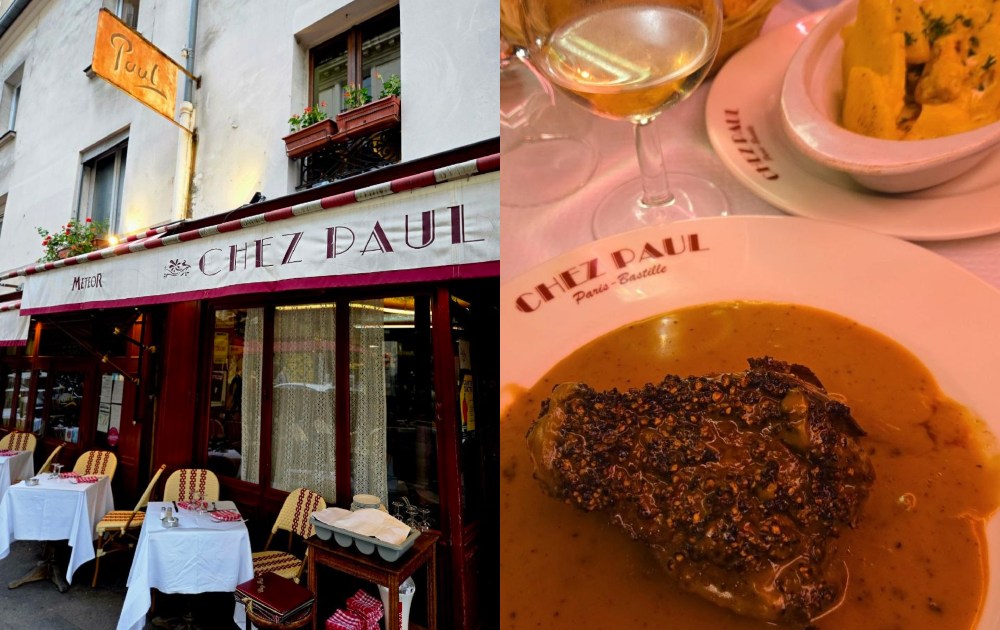
Let’s be clear about something: eating in Paris is not a casual affair. It is an event, a ritual, a commitment — and the city will reward you handsomely for taking it seriously. Breakfast means a flaky, buttery croissant or pain au chocolat from a proper boulangerie (there’s one on virtually every corner and the queue of locals outside tells you everything you need to know about which one to choose). Lunch is best taken at a classic zinc-bar brasserie — steak frites, a glass carafe of Côtes du Rhône, and the particular pleasure of watching Parisian life carry on around you for an unhurried hour or two. My fave French bistro: Chez Paul
Afternoon means macarons. Head to Ladurée on the Champs-Élysées, where the original double-decker macaron was invented, or Pierre Hermé on Rue Bonaparte for what many consider the finest version in the city. Dinner deserves a proper reservation — linen tablecloths, an amuse-bouche you didn’t order, a sommelier who takes the wine selection more seriously than most people take life decisions, and a cheese course that arrives at the end just when you think you couldn’t possibly eat another thing, and which you will demolish entirely. End with a digestif. This is France. You are on holiday. There is no negotiation.
NICE — 3 Days
Where to stay
Côte d’Azur. The French Riviera. Just reading those names transports me back to the Anantara Plaza Nice Hotel on Promenade des Anglais in Nice.
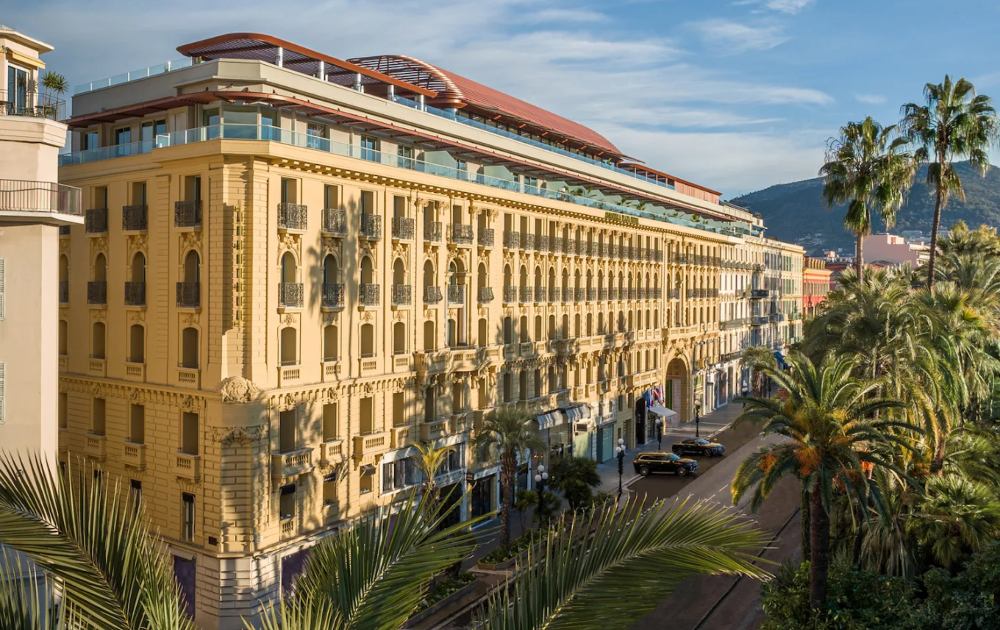
The south of France is known for its ephemeral coastal beauty and this hotel’s majestic blend of Belle Époque architecture and contemporary luxury makes it one of my favourite hotels in one of the most beautiful destinations in the entire world.
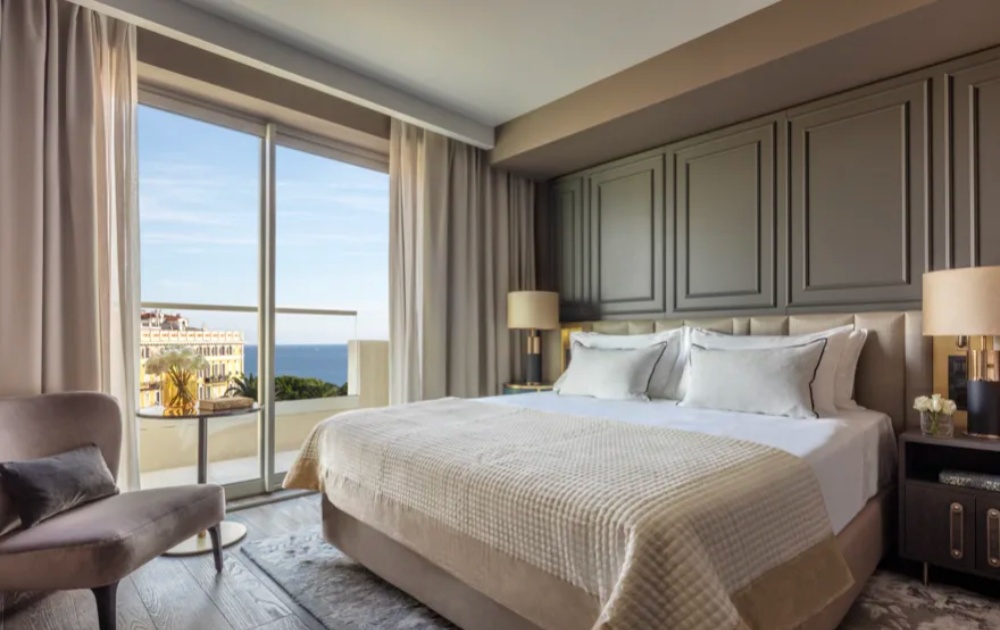
My Premium Panoramic Sea View with Terrace room has much to do with those sentiments. The property is exquisitely perched at a point that rewards guests with enthralling views of the Mediterranean horizon, and the expansive terrace was the ideal place to enjoy the sight of its turquoise waters. Rooms here are designed with a sophisticated, airy aesthetic, with light woods and soft textiles mirroring the coastal surrounds. It’s not rustic, though — inside, the room is comfortably modern and there is a rain shower in the marble-clad bathroom.
As if the serene setting and luxurious rooms weren’t enough to lull you into sweet slumber every night, the Anantara Plaza Nice Hotel’s Anantara Spa makes relaxation an inescapable conclusion. This oasis of tranquillity features 5 treatment rooms, a sauna, and a hammam, focusing on marine-inspired rituals and high-performance skincare.
The spa delivers an experience that feels less like a treatment and more like a full surrender to luxury. The 60-minute signature massage was masterfully executed, melting away every trace of tension with skilled, intuitive hands. What sets it apart is the sheer indulgence of the details — the spa bed was extraordinarily plush and enveloping, rivalling the finest hotel beds, layered with a thick, sumptuously warm blanket that cocooned you in the most blissful comfort. It is the kind of experience that lingers long after you leave — unhurried, deeply restorative, and utterly unforgettable.
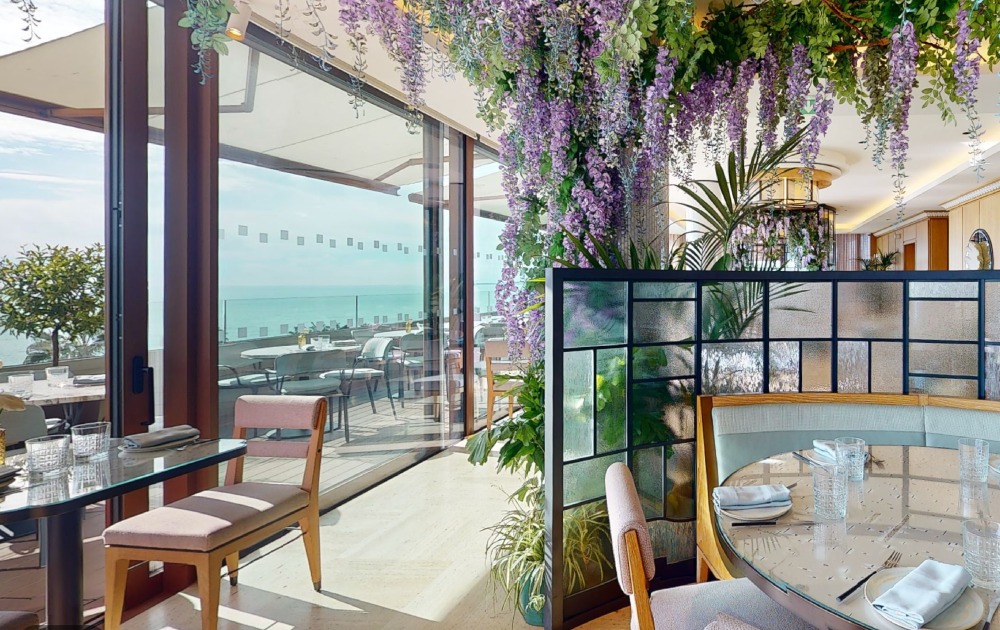
Dining at the hotel is headlined by SEEN by Olivier, a rooftop restaurant and bar that has quickly become a popular local hotspot. SEEN’s vibrant views of the city and the sea pair beautifully with its fusion of Mediterranean and international flavours. Think fresh seafood, vibrant ceviches, and sharing plates designed to be lingered over. Dishes are crafted with the kind of care that makes each one feel considered rather than merely composed, drawing on the extraordinary quality of local Provençal produce while nodding to broader culinary influences. Whether you settle in for a full dinner or arrive earlier for cocktails and small plates as the evening begins, SEEN by Olivier is the kind of rooftop experience that stays with you long after the last glass is finished.
What to do & see
Promenade des Anglais
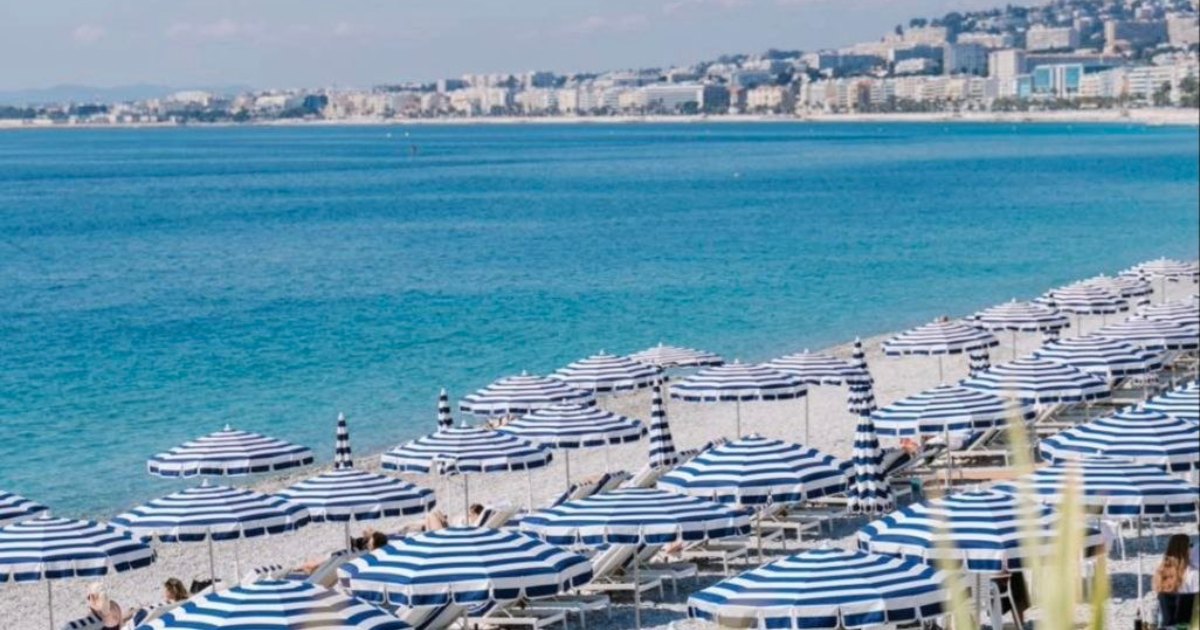
If there is a single street in the world that embodies the idea of la dolce vita (or rather, la belle vie) it is the Promenade des Anglais. Stretching nearly 7 kilometres along the Baie des Anges, this legendary seafront boulevard is Nice’s undisputed beating heart: a sweeping, palm-lined arc of pebble beaches, azure water, and that particular quality of Mediterranean light that makes everything look as though it’s been shot through a golden filter.
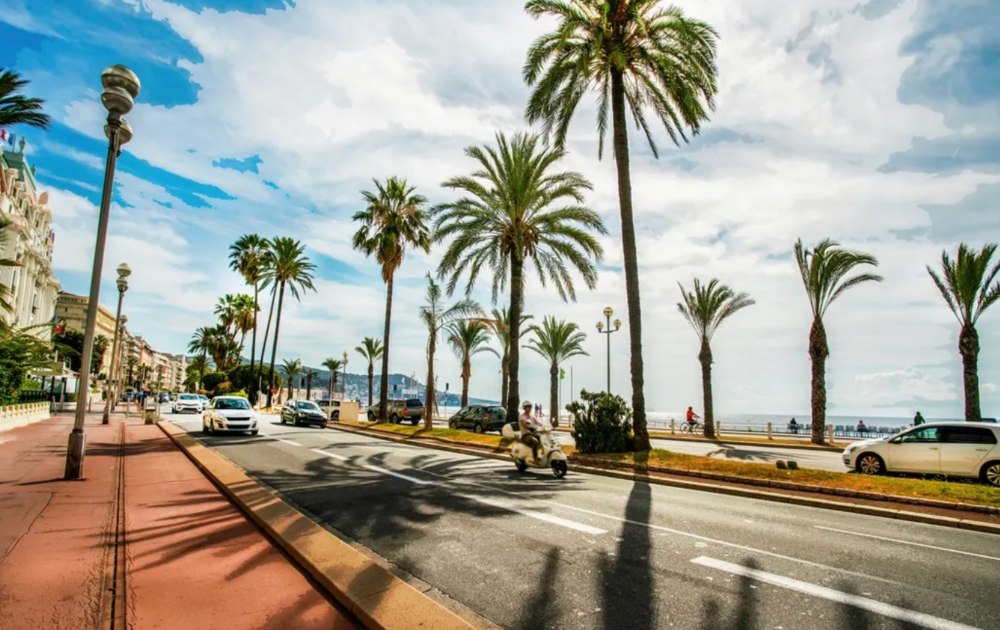
The Promenade takes its name from the English aristocrats and tourists who funded its construction in the 19th century — the Côte d’Azur has been a playground for the wealthy and well-travelled for well over 200 years, and walking its length, you understand exactly why. In the mornings, it belongs to joggers and cyclists; by midday, the beach chairs fill and the parasols go up; by evening, it transforms into one of the world’s great people-watching promenades, couples strolling hand in hand as the sun melts into the sea.
Rent a bike from one of the many Vélobleu stations along the route and cycle the full length before the heat of the day sets in — it takes about 30 leisurely minutes each way and is one of the most pleasurable things you can do in Nice.
Vieux-Nice (Old Town)
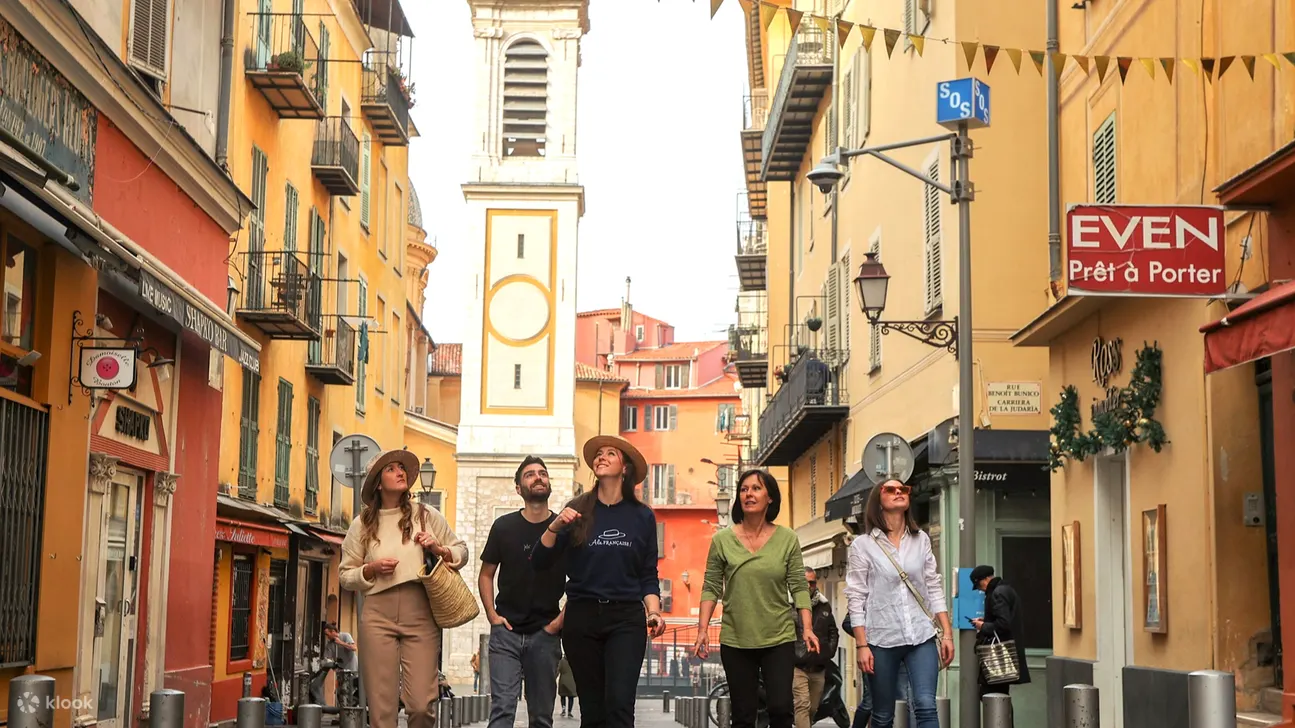
Few city centres in Europe are as immediately and completely captivating as Vieux-Nice — the old town that tumbles down to the seafront in a glorious jumble of 17th and 18th-century Baroque architecture, its buildings painted in the warm terracotta, ochre, and dusty rose tones that have become the defining palette of the French Riviera. The streets here are narrow enough that the buildings on either side almost touch overhead, and walking through them at any time of day feels like stepping into a living painting.
The heart of the old town is the Cours Saleya, a broad market square that bursts into life every morning (except Mondays, when an antiques market takes over) with one of the most spectacular flower and food markets in France. The stalls overflow with Provençal olives, tapenade, fresh herbs, enormous wheels of local cheese, charcuterie, and the vivid cut flowers for which Nice is famous — buckets of roses, mimosa, lavender, and carnations in colours so saturated they barely look real. Come hungry and graze your way through — don’t leave without trying socca, the thin crispy chickpea pancake that is Nice’s most beloved street food, cooked in a wood-fired oven and served in paper with a twist of black pepper. There is nothing quite like it anywhere else in France.
Beyond the market, lose yourself in the labyrinthine back streets: the Baroque Cathédrale Sainte-Réparate on the Place Rossetti (with its magnificent tiled dome), the Chapelle de la Miséricorde, and the endless small squares where locals gather over pastis and conversation at all hours of the day. This is the real Nice — unhurried, warm, and utterly wonderful.
An afternoon at a beach club
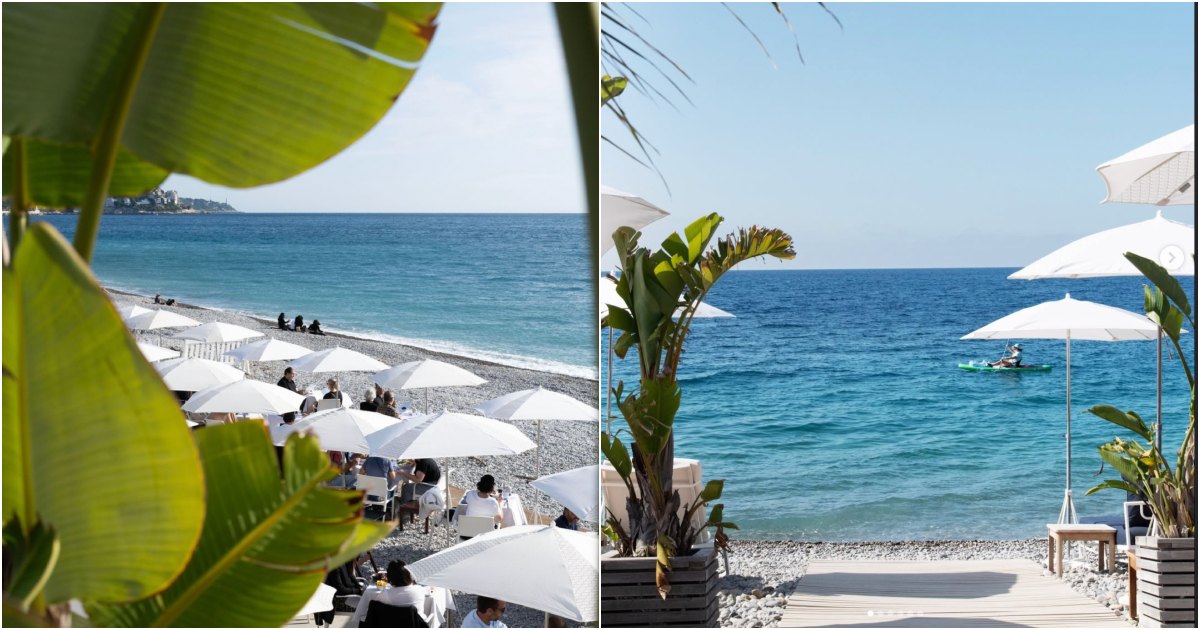
No visit to Nice is complete without a proper beach club afternoon — and the French Riviera does this particular ritual better than anywhere else in the world. This is not merely going to the beach. This is an experience: a sun lounger with a thick cushioned mattress, an umbrella angled precisely against the afternoon sun, a chilled glass of rosé materialising at your side with minimal effort on your part, and the Mediterranean lapping lazily at the pebbles a few metres away. Time slows down in a way that feels almost medicinal.
Ruhl Plage, one of Nice’s most beloved and well-established beach clubs right on the Promenade des Anglais, is the quintessential place to experience this. Set up your lounger, order a long lunch of grilled sea bass and Provençal vegetables, and let the afternoon dissolve entirely. The pebble beaches of Nice are characteristic of the Riviera — different from the sandy beaches further along the coast, but in their own way rather beautiful, the stones smoothed by centuries of tide and gleaming wet in the sun. The water here is extraordinarily clear and a shade of turquoise that looks almost too vivid to be real.
By late afternoon, as the sun begins its slow descent and the light turns that impossibly warm golden colour that only the Mediterranean seems to produce, order one last glass of something cold and watch the world drift by. A beach club afternoon in Nice is not an indulgence — it is, quite simply, the whole point.
Day trip to Monaco & Cannes
The great advantage of basing yourself in Nice is that two of the most glamorous destinations on earth are reachable by train in under an hour — and combining both Monaco and Cannes into a single day trip is not only possible but enormously satisfying.
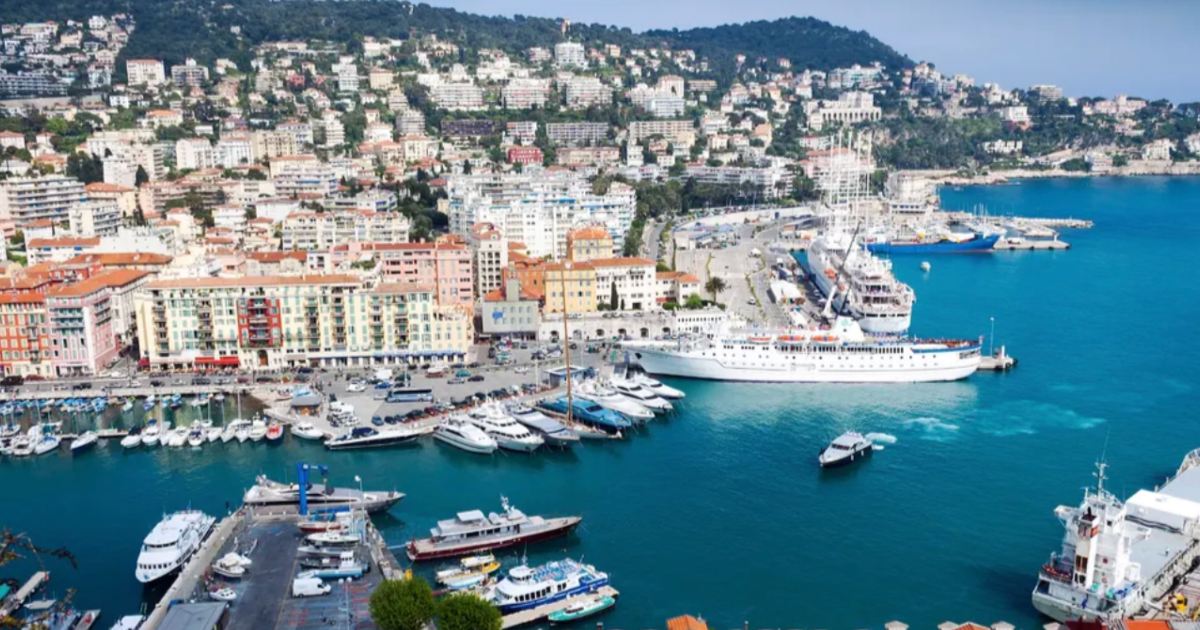
The train to Monaco takes just 20 minutes and runs frequently throughout the day — the journey alone, hugging the clifftops above the sea, is worth the fare. Monaco is the world’s second-smallest country and arguably its most theatrical: a tiny, vertical principality of 2.02 square kilometres crammed with more wealth per square metre than almost anywhere on the planet.
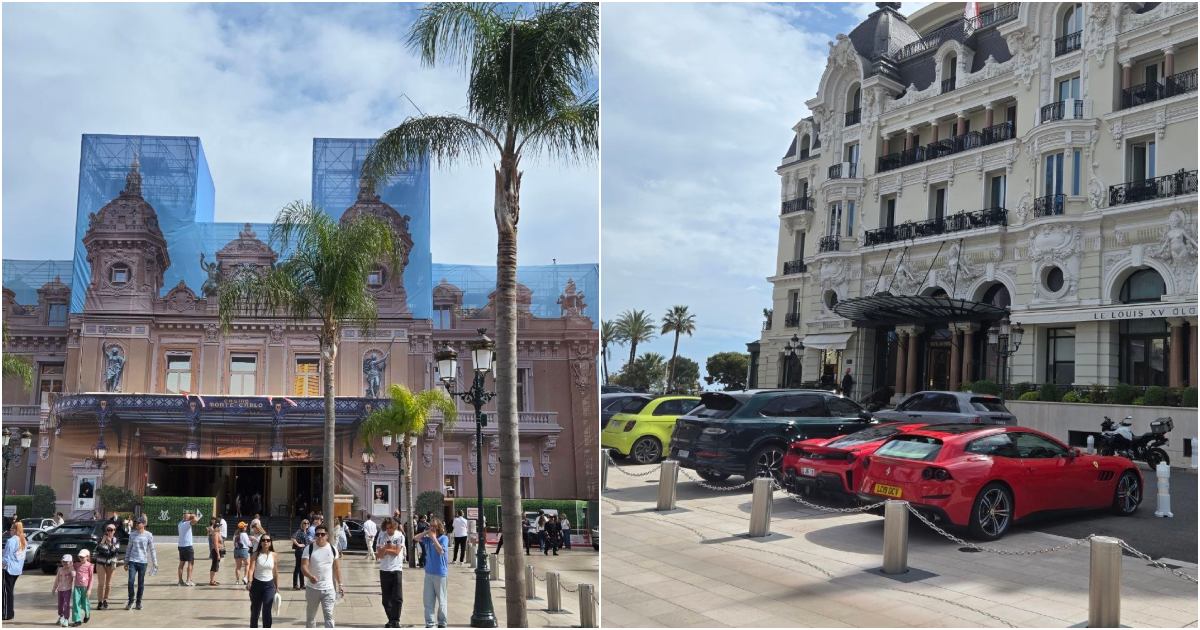
The Casino de Monte-Carlo — a Belle Époque masterpiece of gilded excess — is the obvious centrepiece, and even if you don’t gamble, the surrounding Place du Casino with its parade of Ferraris, Lamborghinis and Rolls-Royces is a spectacle in itself. Take the steep walk or lift up to the old town on the Rock of Monaco, where the Prince’s Palace has stood since the 13th century and the narrow streets offer some of the most dramatic views of the harbour and coastline imaginable.
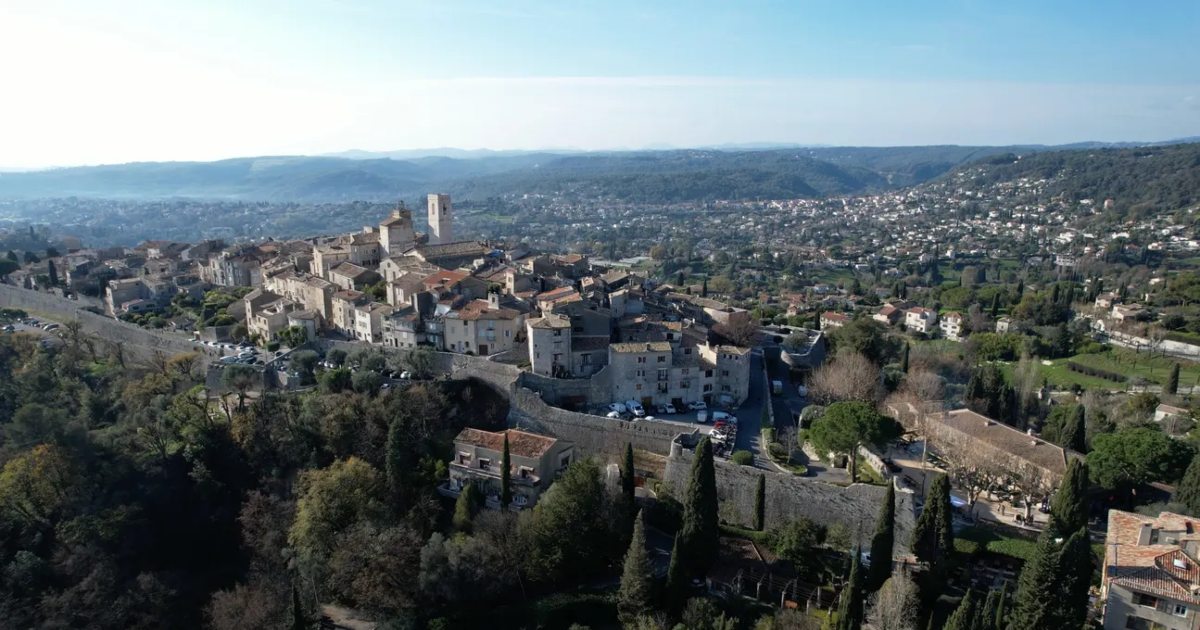
From Monaco, double back on the train to Cannes — around 45 minutes west of Nice. Cannes is best known for its annual film festival, held every May, when the Boulevard de la Croisette becomes the most photographed street in the world and the steps of the Palais des Festivals are walked by the biggest names in cinema.
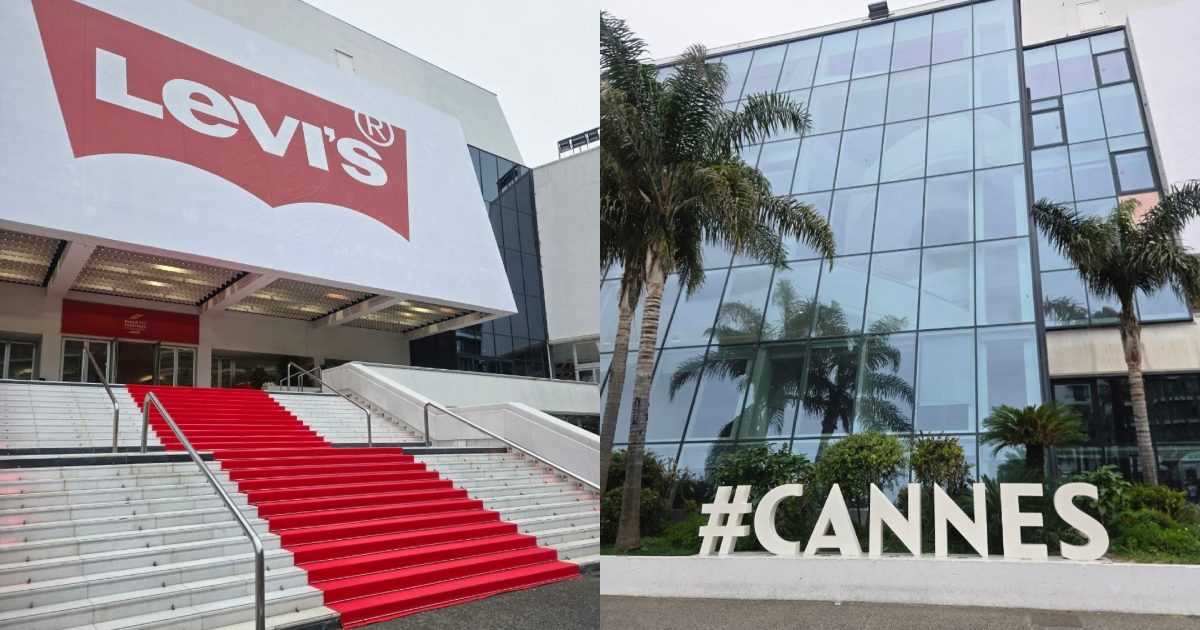
Outside of festival season, the Croisette is a deeply pleasant place to stroll — a wide, palm-lined boulevard flanked on one side by the Mediterranean and on the other by a parade of grand palace hotels (the Carlton, the Martinez, the Majestic) that have been hosting royalty, film stars and oligarchs since the Belle Époque. Snap a photo on the famous Palais steps, browse the Marché Forville for beautiful local produce, flowers and Provençal delicacies, and cap the day with a sundowner at a beachside bar as the golden Riviera light fades slowly into the sea.
Colline du Château (Castle Hill)
Rising dramatically at the eastern end of the Promenade des Anglais, the Colline du Château (or Castle Hill) is Nice’s finest natural viewpoint and one of those rare urban escapes that manages to feel genuinely removed from the city even while being entirely within it. The “castle” itself no longer exists, demolished by Louis XIV in 1706, but the hilltop park that occupies its former site is beautiful in its own right: shaded by ancient trees, dotted with fountains and gardens, and featuring an unexpectedly dramatic artificial waterfall that tumbles down the hillside in a satisfying cascade.
From the summit, the panorama is simply breathtaking — the entire sweep of the Baie des Anges unfurls below, the Promenade curving away to the west, the terracotta rooftops of the old town spreading out to the east, and the Mediterranean shimmering in every direction to the horizon. There is a lift on the seafront side (free of charge) for those who’d rather not climb, though the stepped path up through the park is pleasant and takes no more than 15 minutes. Pack a picnic from the Cours Saleya market, find a bench with a view, and spend an unhurried afternoon up here — it is one of the most quietly wonderful things you can do in Nice.
Eating & drinking the riviera way
Nice occupies a unique and rather privileged position in the culinary landscape of France — it has its own distinct cuisine, shaped by centuries of Italian influence (the city was part of the Kingdom of Sardinia until 1860), Provençal tradition, and the extraordinary quality of local Mediterranean produce, and it is quite unlike anything you’ll find elsewhere in the country.
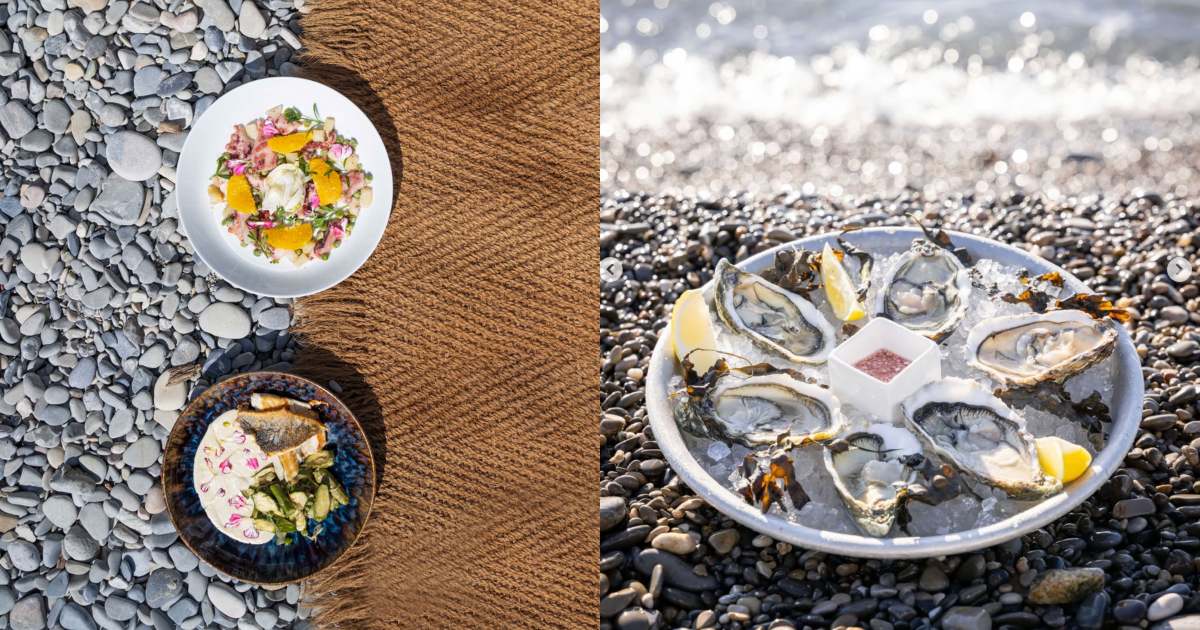
Start with salade Niçoise — but prepare to reconsider everything you thought you knew about it. The authentic version, as made here, contains no lettuce, no cooked vegetables, and absolutely no boiled potatoes: it is a composed arrangement of raw vegetables (tomatoes, cucumber, radishes, broad beans), hard-boiled eggs, anchovies or tuna, and Niçoise olives, dressed simply with olive oil. It is fresh, clean, and revelatory. Other local dishes worth seeking out include pissaladière — a rich, slow-cooked caramelised onion tart topped with anchovies and black olives that is sold in bakeries throughout the old town — and pan bagnat, a round crusty roll packed with salade Niçoise ingredients and pressed until the olive oil soaks through the bread, which is considerably more magnificent than it sounds.
To drink, there is really only one answer: Provençal rosé. The wines of the nearby Provence region — pale, dry, and incomparably refreshing — are perfectly calibrated for drinking in warm weather beside the sea, and Nice’s restaurant terraces and beach bars make it very easy indeed to work through more than one glass. Do not resist.
There is a particular kind of happiness that France produces — unhurried, sensory, and deeply satisfying. It lives in the first bite of a warm croissant on a Paris morning, in the colour of the Mediterranean from a Nice terrace, and in a sun-warmed afternoon with a glass of rosé and nowhere to be. Seven days is enough to fall completely in love, but never quite enough to feel finished. You will leave already planning your return.
People also read:
Where can I travel to for my honeymoon without spending so much?